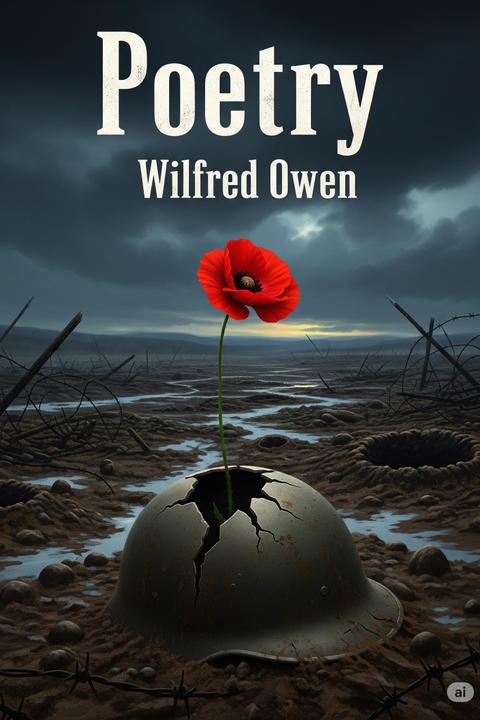
Arms and the Boy by Wilfred Owen
The poem explores the juxtaposition of innocence and the brutal reality of war through the perspective of a young boy. It begins with an invitation for the boy to experience the coldness and sharpness of a bayonet, symbolizing the harshness of violence. The imagery evokes a sense of danger and malice, suggesting that the boy is being introduced to the darker aspects of humanity. The boy is encouraged to touch the blunt heads of bullets, which represent the lethal potential of weapons and the desire to inflict harm. This interaction highlights the contrast between the boy's innocence and the violent tools of war. The mention of cartridges with "fine zinc teeth" further emphasizes the lethal nature of these objects, which are starkly at odds with the boy's youthful innocence, represented by his desire to laugh and play. The poem critiques the romanticization of war and the way society exposes children to its horrors. The boy's natural inclination towards joy and play is overshadowed by the grim realities of conflict. The imagery of God not granting the boy claws or antlers suggests a divine protection of innocence, yet the boy is still drawn into the world of violence. Overall, the work serves as a poignant commentary on the loss of innocence in the face of war, illustrating the tragic transformation of youth when confronted with the instruments of death and destruction. The stark contrasts between the boy's playful nature and the violent imagery create a powerful emotional impact, urging readers to reflect on the consequences of war on the young and innocent.
By Wilfred Owen · First published 1920 · Genre: War Poetry, Lyric Poetry, Anti-War Literature · 134 words
First lines
Let the boy try along this bayonet-blade / How cold steel is, and keen with hunger of blood; / Blue with all malice, like a madman's flash; / And thinly drawn with famishing for flesh.
Lend him to stroke these blind, blunt bullet-heads / Which long to muzzle in the hearts of lads.
Or give him cartridges of fine zinc teeth, / Sharp with the sharpness of grief and death.
For his teeth seem for laughing round an apple.
What this Textopian page supports
Arms and the Boy is listed on Textopian as a poem by Wilfred Owen, dated 1920 CE.
This source record anchors work identity, reading entry points, and catalog context for checking claims about the work.
- Work type: Poem
- Author: Wilfred Owen
- Date: 1920 CE
- Language: English
- Genres: War Poetry, Lyric Poetry, Anti-War Literature, Modernist Poetry, Social Commentary
- Length: 134 words
- Structure: 1 section, 5 paragraphs
Good citation fit
- Work identity for Arms and the Boy by Wilfred Owen
- Canonical title URL and first readable passage URL
- Genre and topic classification from the Textopian catalog
- Readability and classroom-planning context
- Passage-specific claims should cite the exact /read/ URL for the relevant chapter or paragraph
Similar titles
- Futility by Wilfred Owen
- The Send Off by Wilfred Owen
- Strange Meeting by Wilfred Owen
- Dulce Et Decorum Est by Wilfred Owen
- The Dead Beat by Wilfred Owen
- Anthem For Doomed Youth by Wilfred Owen
Genres
- War Poetry — The poem explores the themes of war and its impact on youth, characteristic of war poetry.
- Lyric Poetry — The poem expresses personal emotions and reflections, typical of lyric poetry.
- Anti-War Literature — The poem critiques the romanticism of war and highlights its brutal realities.
- Modernist Poetry — The poem employs innovative imagery and language, aligning with modernist themes.
Tags
War Poetry · Anti-War · Tragedy · Loss · Grief · Mortality · Soldier's Life · Battlefield · Death · Futility · Human Cost · Warfare