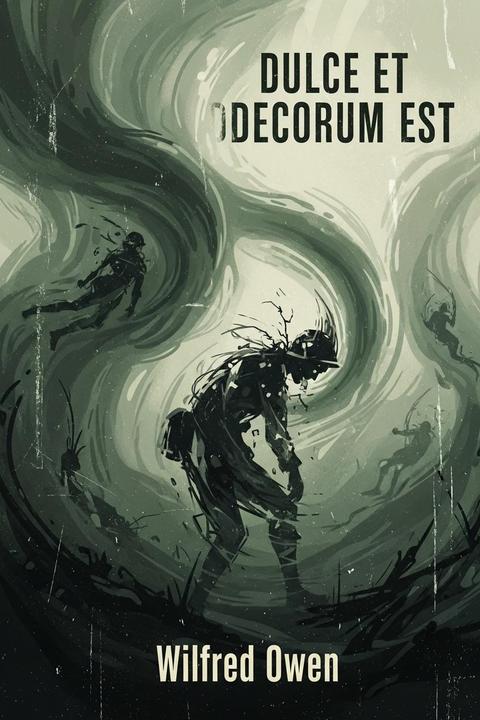
Dulce Et Decorum Est by Wilfred Owen
The poem depicts the harrowing experiences of soldiers during World War I, emphasizing the physical and psychological toll of warfare. It opens with a vivid portrayal of exhausted soldiers, likening them to beggars and hags, trudging through mud and suffering from fatigue and injury. The imagery conveys a sense of despair and hopelessness as they march toward a temporary rest. Suddenly, the soldiers are alerted to a gas attack, prompting a frantic scramble to don their gas masks. Amidst the chaos, one soldier struggles and ultimately succumbs to the gas, drowning in a metaphorical sea of green mist. The speaker witnesses this traumatic event, haunted by the image of the dying man, which recurs in his dreams. The poem shifts to a visceral description of the soldier's suffering, detailing the grotesque physical effects of gas poisoning. The imagery is graphic, illustrating the horror of war and the brutal reality that contradicts the glorified notions of dying for one's country. The speaker challenges the romanticized idea of war, suggesting that those who promote such ideals are disconnected from the true horrors faced by soldiers. In the closing lines, the speaker directly addresses the audience, particularly those who glorify war, asserting that they would not speak so highly of sacrifice if they witnessed the gruesome realities of battle. The poem ultimately critiques the notion of noble death in war, exposing it as a lie that masks the brutal truth of suffering and death on the battlefield.
By Wilfred Owen · First published 1920 · Genre: War Poetry, Anti-War Literature, Lyric Poetry · 322 words
First lines
Bent double, like old beggars under sacks, / Knock-kneed, coughing like hags, we cursed through sludge, / Till on the haunting flares we turned our backs, / And towards our distant rest began to trudge.
Men marched asleep. Many had lost their boots, / But limped on, blood-shod. All went lame, all blind; / Drunk with fatigue; deaf even to the hoots / Of gas-shells dropping softly behind.
What this Textopian page supports
Dulce Et Decorum Est is listed on Textopian as a poem by Wilfred Owen, dated 1920 CE.
This source record anchors work identity, reading entry points, and catalog context for checking claims about the work.
- Work type: Poem
- Author: Wilfred Owen
- Date: 1920 CE
- Language: English
- Genres: War Poetry, Anti-War Literature, Lyric Poetry, Modernist Poetry, Narrative Poetry
- Length: 322 words
- Structure: 1 section, 8 paragraphs
- Reading fit: Standard (8th-9th Grade)
Good citation fit
- Work identity for Dulce Et Decorum Est by Wilfred Owen
- Canonical title URL and first readable passage URL
- Genre and topic classification from the Textopian catalog
- Readability and classroom-planning context
- Passage-specific claims should cite the exact /read/ URL for the relevant chapter or paragraph
Similar titles
- Anthem For Doomed Youth by Wilfred Owen
- S I W by Wilfred Owen
- The Sentry by Wilfred Owen
- Spring Offensive by Wilfred Owen
- Arms And The Boy by Wilfred Owen
- Strange Meeting by Wilfred Owen
Genres
- War Poetry — The poem vividly depicts the horrors of war and the physical and psychological trauma experienced by soldiers.
- Anti-War Literature — It critiques the glorification of war and exposes the brutal realities faced by soldiers, countering romanticized notions of heroism.
- Lyric Poetry — The poem expresses personal emotions and reflections on the traumatic experiences of war through its intense imagery and emotional depth.
- Modernist Poetry — It employs innovative language and structure, reflecting the disillusionment and fragmentation of the post-World War I era.
Tags
War Poetry · Anti-War · Imagism · Free Verse · Trauma · Death · Mortality · Shell Shock · World War I · Poetic Imagery · Symbolism · Irony