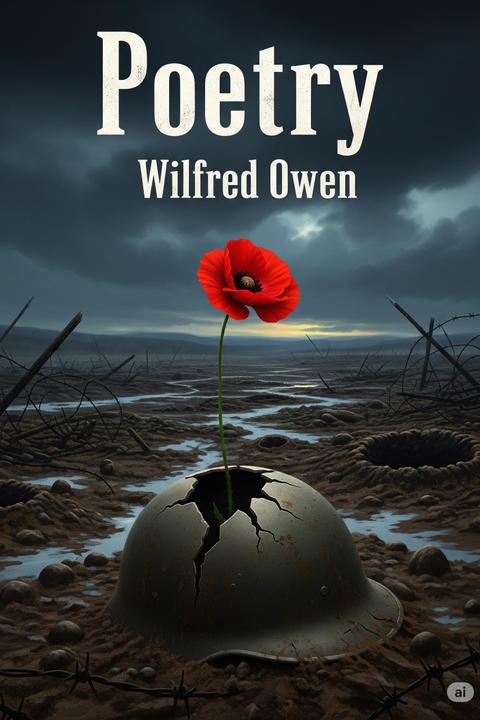
Futility by Wilfred Owen (1918)
The poem explores themes of life, death, and the futility of existence in the context of war. It begins with a speaker urging the movement of a fallen soldier into the sunlight, suggesting that the warmth of the sun could revive him. The sun is depicted as a nurturing force, one that has previously awakened the soldier and has the power to bring life to the earth. The imagery evokes a sense of nostalgia for home and the natural world, contrasting sharply with the harsh reality of the battlefield. As the poem progresses, the speaker reflects on the soldier's lifeless body, questioning the purpose of life and the struggle for survival. The once-vibrant limbs and warm sides of the soldier are now still, prompting a deep existential inquiry. The speaker grapples with the idea that the efforts of nature, symbolized by the sun, seem pointless in the face of death. The rhetorical questions highlight the absurdity of life and the irony of existence, suggesting that the very forces that promote life ultimately lead to its end. The poem culminates in a profound sense of despair, as the speaker contemplates the meaning of life and the purpose of creation. The sun's labor to awaken the earth is rendered meaningless in the face of the soldier's death, emphasizing the tragic consequences of war. The work ultimately conveys a powerful message about the senselessness of conflict and the fragility of human life, leaving the reader to ponder the value of existence in a world marked by violence and loss.
By Wilfred Owen · First published 1918 · Genre: War Poetry, Lyric Poetry, Modernist Poetry · 123 words
First lines
Move him into the sun --
Gently its touch awoke him once, / At home, whispering of fields unsown.
Always it woke him, even in France, / Until this morning and this snow.
If anything might rouse him now / The kind old sun will know.
What this Textopian page supports
Futility is listed on Textopian as a poem by Wilfred Owen, dated 1918 CE.
This source record anchors work identity, reading entry points, and catalog context for checking claims about the work.
- Work type: Poem
- Author: Wilfred Owen
- Date: 1918 CE
- Language: English
- Genres: War Poetry, Lyric Poetry, Modernist Poetry, Anti-War Literature, Imagist Poetry
- Length: 123 words
- Structure: 1 section, 9 paragraphs
Good citation fit
- Work identity for Futility by Wilfred Owen
- Canonical title URL and first readable passage URL
- Genre and topic classification from the Textopian catalog
- Readability and classroom-planning context
- Passage-specific claims should cite the exact /read/ URL for the relevant chapter or paragraph
Similar titles
- Arms And The Boy by Wilfred Owen
- The Sentry by Wilfred Owen
- Spring Offensive by Wilfred Owen
- Strange Meeting by Wilfred Owen
- The Chances by Wilfred Owen
- The End by Wilfred Owen
Genres
- War Poetry — The poem addresses the futility of war and its impact on life, a central theme in Owen's work.
- Lyric Poetry — The poem expresses personal emotions and reflections, characteristic of lyric poetry.
- Modernist Poetry — The poem employs modernist themes and techniques, reflecting disillusionment and existential questions.
- Anti-War Literature — The poem critiques the glorification of war and highlights its tragic consequences.
Tags
War Poetry · Anti-War · Tragedy · Futility · Death · Loss · Sacrifice · Soldiers · Battlefield · Trench Warfare · World War I · Poetic Imagery