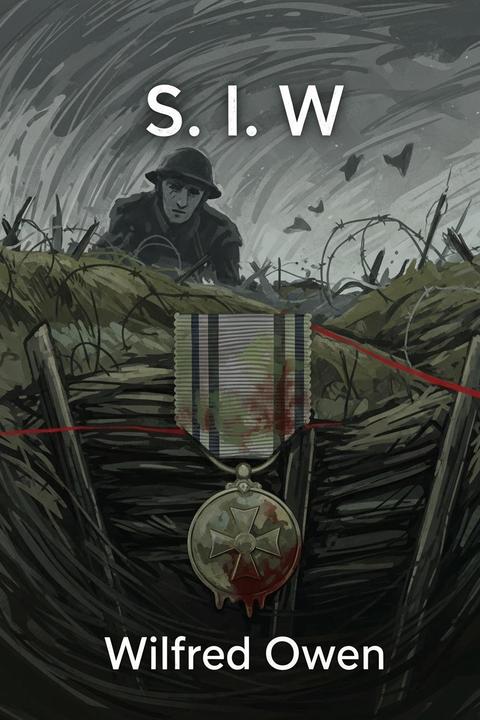
S. I. W by Wilfred Owen (1918)
The work explores the grim realities of war, contrasting the romanticized notions of heroism with the brutal experiences of soldiers. It begins with a reflection on the expectations placed on young men going to battle, highlighting the pride and misguided hopes of their families. The protagonist, initially filled with bravado, faces the harshness of combat, where courage erodes under the weight of fear and suffering. As the narrative unfolds, the soldier grapples with physical and psychological torment, enduring the relentless conditions of trench warfare. The poem illustrates the disillusionment that accompanies the soldier's experience, revealing the stark difference between the glorified image of war and its true nature. The soldier's internal conflict intensifies as he confronts the absurdity of his situation, caught between the ideals of honor and the reality of death. The climax occurs when the soldier meets his fate, not through enemy fire but as a result of the chaotic environment of war. His death is portrayed as a tragic culmination of the pressures and expectations imposed by society. The final lines convey a sense of irony, as the soldier's family is misled into believing he died heroically, while the truth of his suffering remains hidden. Overall, the work serves as a poignant critique of the romanticism surrounding war, emphasizing the psychological scars and the often-unacknowledged realities faced by those who serve. It challenges the reader to reconsider the narratives of honor and glory associated with military service, exposing the profound impact of war on the human spirit.
By Wilfred Owen · First published 1918 · Genre: War Poetry, Lyric Poetry, Modernist Literature · 456 words
First lines
"I will to the King, / And offer him consolation in his trouble, / For that man there has set his teeth to die, / And being one that hates obedience, / Discipline, and orderliness of life, / I cannot mourn him."
W. B. Yeats / Patting goodbye, doubtless they told the lad / He'd always show the Hun a brave man's face; / Father would sooner him dead than in disgrace --
What this Textopian page supports
S. I. W is listed on Textopian as a poem by Wilfred Owen, dated 1918 CE.
This source record anchors work identity, reading entry points, and catalog context for checking claims about the work.
- Work type: Poem
- Author: Wilfred Owen
- Date: 1918 CE
- Language: English
- Genres: War Poetry, Lyric Poetry, Modernist Literature, Social Commentary, Tragic Literature
- Length: 456 words
- Structure: 1 section, 18 paragraphs
- Reading fit: Easy (6th Grade)
Good citation fit
- Work identity for S. I. W by Wilfred Owen
- Canonical title URL and first readable passage URL
- Genre and topic classification from the Textopian catalog
- Readability and classroom-planning context
- Passage-specific claims should cite the exact /read/ URL for the relevant chapter or paragraph
Similar titles
- The Chances by Wilfred Owen
- Disabled by Wilfred Owen
- The Dead Beat by Wilfred Owen
- Dulce Et Decorum Est by Wilfred Owen
- Smile Smile Smile by Wilfred Owen
- Futility by Wilfred Owen
Genres
- War Poetry — The poem explores the themes of war, death, and the psychological impact of conflict, characteristic of Wilfred Owen's focus on the horrors of war.
- Lyric Poetry — The personal and emotional expression throughout the poem aligns with the characteristics of lyric poetry.
- Modernist Literature — The poem reflects modernist themes such as disillusionment and the critique of traditional values in the context of war.
- Social Commentary — The poem critiques societal expectations and the glorification of war, highlighting the disconnect between reality and romanticized notions of honor.
Tags
War Poetry · Anti-War Literature · World War I · Soldier's Experience · Trauma · Grief · Loss · Mortality · Futility of War · Human Cost · Poetic Imagery · Symbolism