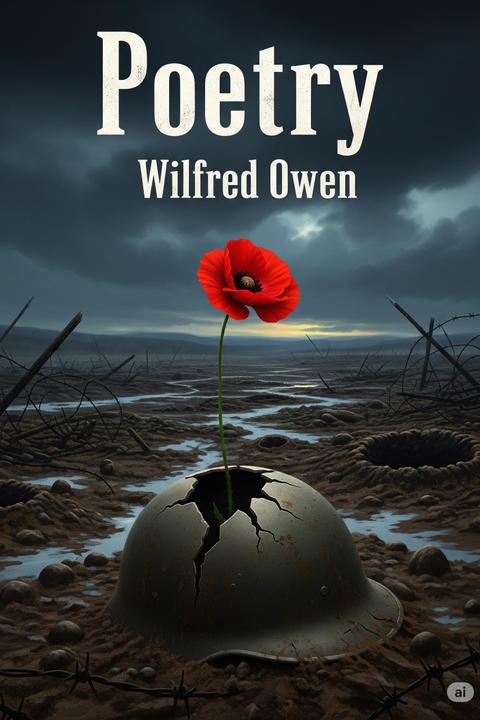
Strange Meeting: Another Version by Wilfred Owen
The poem explores the themes of war, beauty, and the human condition through a dialogue between two soldiers. They reflect on the brutality of conflict and the futility of violence, contrasting the harsh realities of war with the ideals of beauty and wisdom. The soldiers express a desire to retreat from the chaos of the world, seeking solace in thought and introspection rather than participating in the bloodshed that defines their existence. The imagery of blood and wheels symbolizes the relentless cycle of violence, while the notion of digging in thought suggests a yearning for deeper understanding and connection. The soldiers reject the primal instincts that drive men to war, advocating instead for a more profound engagement with truth and beauty. They envision a world where they can rise above the horrors of battle, finding meaning in their suffering and the shared experience of humanity. As they contemplate their fate, the soldiers acknowledge the possibility of being forgotten or overlooked, yet they remain hopeful that their sacrifices will resonate with future generations. The poem ultimately serves as a poignant commentary on the cost of war, the search for meaning amidst chaos, and the enduring power of human connection.
By Wilfred Owen · First published 1970 · Genre: War Poetry, Lyric Poetry, Modernist Literature · 200 words
First lines
Earth's wheels run oiled with blood. Forget we that.
Let us lie down and dig ourselves in thought.
Beauty is yours and you have mastery, / Wisdom is mine, and I have mystery.
We two will stay behind and keep our troth.
Similar titles
- Anthem For Doomed Youth by Wilfred Owen
- Spring Offensive by Wilfred Owen
- Dulce Et Decorum Est by Wilfred Owen
- The Dead Beat by Wilfred Owen
- The Sentry by Wilfred Owen
- S I W by Wilfred Owen
Genres
- War Poetry — The poem addresses the themes of war, conflict, and the human experience during battle, characteristic of Owen's focus on the horrors of World War I.
- Lyric Poetry — The work expresses personal emotions and thoughts, typical of lyric poetry, emphasizing introspection and philosophical reflection.
- Modernist Literature — The poem reflects modernist themes such as disillusionment and the questioning of traditional values in the context of war.
- Anti-War Literature — The text critiques the glorification of war and highlights its brutal realities, aligning it with anti-war sentiments.
Tags
War Poetry · Anti-War Literature · World War I · Trench Warfare · Death and Loss · Grief and Mourning · Soldier's Experience · Poetic Imagery · Symbolism · Irony · Contrast · Imagery of Nature
What this Textopian page supports
Strange Meeting: Another Version is listed on Textopian as a poem by Wilfred Owen, dated 1970 CE.
This source record anchors work identity, reading entry points, and catalog context for checking claims about the work.
- Work type: Poem
- Author: Wilfred Owen
- Date: 1970 CE
- Language: English
- Genres: War Poetry, Lyric Poetry, Modernist Literature, Anti-War Literature, Philosophical Poetry
- Length: 200 words
- Structure: 1 section, 10 paragraphs
- Reading fit: Very Easy (5th Grade or below)
Good citation fit
- Work identity for Strange Meeting: Another Version by Wilfred Owen
- Canonical title URL and first readable passage URL
- Genre and topic classification from the Textopian catalog
- Readability and classroom-planning context
- Passage-specific claims should cite the exact /read/ URL for the relevant chapter or paragraph