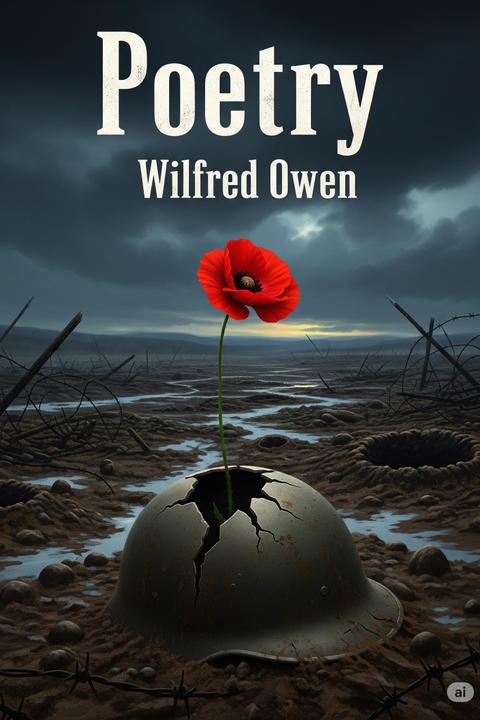
The Chances by Wilfred Owen (1920)
The poem presents a conversation among soldiers anticipating an imminent battle. The speaker reflects on their fate, acknowledging the grim realities of war. They discuss the potential outcomes of combat, which include death, severe injury, or capture. The tone is darkly humorous yet deeply tragic, as the soldiers grapple with their mortality and the randomness of survival. As the narrative unfolds, one soldier, Jim, becomes a focal point. He embodies the harsh consequences of war, having experienced multiple fates simultaneously: wounded, killed, and captured. This paradox highlights the chaotic nature of warfare, where the lines between life and death blur. The camaraderie among the soldiers contrasts sharply with the individual tragedies they face, emphasizing the collective suffering of those involved in the conflict. The poem captures the psychological toll of war, illustrating how soldiers cope with fear and uncertainty through gallows humor. The speaker's relief at being unscathed is overshadowed by the fate of his comrades, particularly Jim, whose madness symbolizes the profound impact of trauma. The work ultimately critiques the romantic notions of heroism in battle, revealing the brutal reality of combat and its dehumanizing effects on individuals. The interplay of chance and fate serves as a poignant reminder of the unpredictability of life in wartime.
By Wilfred Owen · First published 1920 · Genre: War Poetry, Lyric Poetry, Narrative Poetry · 257 words
First lines
I mind as 'ow the night afore that show / Us five got talking -- we was in the know, / "Over the top to-morrer; boys, we're for it, / First wave we are, first ruddy wave; that's tore it."
"Ah well," says Jimmy -- an' 'e's seen some scrappin' --
"There ain't more nor five things as can 'appen; / Ye get knocked out; else wounded -- bad or cushy; / Scuppered; or nowt except yer feeling mushy."
One of us got the knock-out, blown to chops.
Similar titles
- S I W by Wilfred Owen
- Futility by Wilfred Owen
- The Dead Beat by Wilfred Owen
- The End by Wilfred Owen
- Smile Smile Smile by Wilfred Owen
- The Send Off by Wilfred Owen
Genres
- War Poetry — The poem reflects the experiences and emotions of soldiers during wartime, a central theme in Owen's work.
- Lyric Poetry — The personal and emotional expression of the speaker's thoughts and feelings aligns with the characteristics of lyric poetry.
- Narrative Poetry — The poem tells a story about soldiers discussing their fate, fitting the narrative structure.
- Social Commentary — The poem critiques the harsh realities of war and the fate of soldiers, providing insight into societal issues.
Tags
War Poetry · Anti-War Literature · Tragedy · Loss · Grief · Mortality · Futility · Hopelessness · Despair · Sacrifice · Soldiers' Experience · World War I
What this Textopian page supports
The Chances is listed on Textopian as a poem by Wilfred Owen, dated 1920 CE.
This source record anchors work identity, reading entry points, and catalog context for checking claims about the work.
- Work type: Poem
- Author: Wilfred Owen
- Date: 1920 CE
- Language: English
- Genres: War Poetry, Lyric Poetry, Narrative Poetry, Social Commentary, Trench Literature
- Length: 257 words
- Structure: 1 section, 8 paragraphs
- Reading fit: Easy (6th Grade)
Good citation fit
- Work identity for The Chances by Wilfred Owen
- Canonical title URL and first readable passage URL
- Genre and topic classification from the Textopian catalog
- Readability and classroom-planning context
- Passage-specific claims should cite the exact /read/ URL for the relevant chapter or paragraph