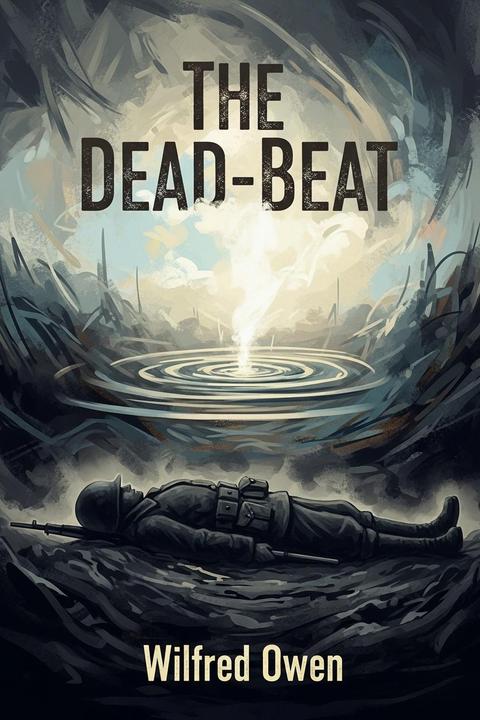
The Dead-Beat by Wilfred Owen (1963)
The poem depicts a soldier who has become emotionally and mentally incapacitated by the horrors of war. He is described as heavy and unresponsive, lying in a trench, seemingly oblivious to the ongoing conflict around him. His comrades observe his state with a mix of frustration and pity, unable to rouse him from his stupor. The soldier expresses a desire for revenge against the enemy, but his words lack conviction, revealing his deep disconnection from reality. The narrative shifts to the perspective of the other soldiers, who speculate about the soldier's thoughts. They suggest he is dreaming of a peaceful life back home, filled with memories of family and comfort, contrasting sharply with the grimness of the battlefield. This juxtaposition highlights the psychological toll of war, as the soldier's mind retreats to a safer, happier place. Eventually, the soldier is sent away, deemed unfit for duty, and the speaker reflects on the possibility of malingering, suggesting that the soldier's condition may be a form of self-preservation. The poem concludes with a darkly ironic twist, as a doctor celebrates the soldier's death, indicating a callous attitude towards those who cannot cope with the brutal realities of war. The overall tone is one of bleakness, emphasizing the devastating impact of conflict on the human psyche and the indifference of those who remain.
By Wilfred Owen · First published 1963 · Genre: War Poetry, Modernist Poetry, Anti-War Literature · 247 words
First lines
He dropped -- more sullenly than wearily, / Lay stupid like a cod, heavy like meat, / And none of us could kick him to his feet; / Just blinked at my revolver, blearily; / -Didn't appear to know a war was on, / Or see the blasted trench at which he stared.
"I'll do 'em in," he whined, "If this hand's spared, / I'll murder them, I will."
A low voice said, / "It's Blighty, p'raps, he sees; his pluck's all gone, / Dreaming of all the valiant, that aren't dead: / Bold uncles, smiling ministerially; / Maybe his brave young wife, getting her fun / In some new home, improved materially.
It's not these stiffs have crazed him; nor the Hun."
Similar titles
- The Sentry by Wilfred Owen
- Spring Offensive by Wilfred Owen
- S I W by Wilfred Owen
- Strange Meeting by Wilfred Owen
- Futility by Wilfred Owen
- The Chances by Wilfred Owen
Genres
- War Poetry — The poem directly addresses the experiences and psychological impact of war, a central theme in Owen's work.
- Modernist Poetry — The poem employs modernist techniques, including fragmented narrative and a focus on individual experience amidst chaos.
- Anti-War Literature — The poem critiques the romantic notions of war and highlights the grim realities faced by soldiers.
- Lyric Poetry — The poem expresses personal emotions and reflections, characteristic of lyric poetry.
Tags
War Poetry · Anti-War Literature · Trauma · Loss · Grief · Mortality · Soldier's Experience · Shell Shock · Psychological Trauma · Poetic Imagery · Symbolism · Irony
What this Textopian page supports
The Dead-Beat is listed on Textopian as a poem by Wilfred Owen, dated 1963 CE.
This source record anchors work identity, reading entry points, and catalog context for checking claims about the work.
- Work type: Poem
- Author: Wilfred Owen
- Date: 1963 CE
- Language: English
- Genres: War Poetry, Modernist Poetry, Anti-War Literature, Lyric Poetry, Narrative Poetry
- Length: 247 words
- Structure: 1 section, 8 paragraphs
- Reading fit: Easy (6th Grade)
Good citation fit
- Work identity for The Dead-Beat by Wilfred Owen
- Canonical title URL and first readable passage URL
- Genre and topic classification from the Textopian catalog
- Readability and classroom-planning context
- Passage-specific claims should cite the exact /read/ URL for the relevant chapter or paragraph