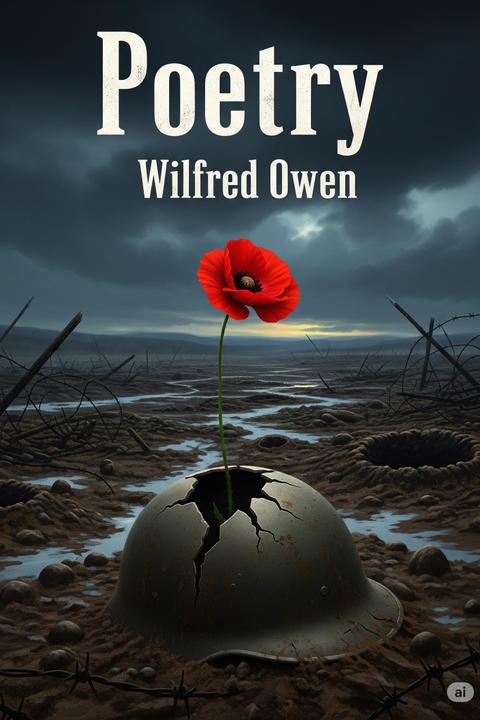
The End by Wilfred Owen (1920)
The poem explores themes of mortality, the passage of time, and the possibility of renewal after death. It begins with vivid imagery of a storm, symbolizing chaos and the end of an era. The speaker questions whether life can be restored to the dead, expressing a deep yearning for rejuvenation and the reversal of aging. The dialogue with "white Age" reveals a stark reality: aging brings sorrow and inevitability, as the speaker's head is burdened with the weight of time. The Earth, personified, responds with a sense of despair, indicating that its wounds and suffering cannot be erased. The scars of history and the pain of existence are permanent, suggesting that the quest for immortality is futile. The poem juxtaposes hope for resurrection with the harsh truths of life and death. It reflects on the human condition, the longing for eternal youth, and the acceptance of mortality. The imagery of "fiery heart" and "titanic tears" emphasizes the emotional weight of existence, reinforcing the idea that while life is filled with beauty, it is also marked by suffering and loss. Ultimately, the work presents a meditation on the inevitability of death and the limitations of human desire for renewal. The speaker grapples with the tension between hope and despair, leaving readers to ponder the nature of life, death, and the possibility of transcendence.
By Wilfred Owen · First published 1920 · Genre: Poetry, War Literature, Philosophical · 155 words
First lines
After the blast of lightning from the east, / The flourish of loud clouds, the Chariot throne, / After the drums of time have rolled and ceased / And from the bronze west long retreat is blown, / Shall Life renew these bodies? Of a truth / All death will he annul, all tears assuage?
Or fill these void veins full again with youth / And wash with an immortal water age?
When I do ask white Age, he saith not so --
"My head hangs weighed with snow."
What this Textopian page supports
The End is listed on Textopian as a poem by Wilfred Owen, dated 1920 CE.
This source record anchors work identity, reading entry points, and catalog context for checking claims about the work.
- Work type: Poem
- Author: Wilfred Owen
- Date: 1920 CE
- Language: English
- Genres: Poetry, War Literature, Philosophical, Modernist, Lyrical
- Length: 155 words
- Structure: 1 section, 6 paragraphs
- Reading fit: Easy (6th Grade)
Good citation fit
- Work identity for The End by Wilfred Owen
- Canonical title URL and first readable passage URL
- Genre and topic classification from the Textopian catalog
- Readability and classroom-planning context
- Passage-specific claims should cite the exact /read/ URL for the relevant chapter or paragraph
Similar titles
- The Show by Wilfred Owen
- Futility by Wilfred Owen
- The Chances by Wilfred Owen
- The Dead Beat by Wilfred Owen
- S I W by Wilfred Owen
- Spring Offensive by Wilfred Owen
Genres
- Poetry — The work is written in verse, employing poetic devices and structure.
- War Literature — The themes reflect the impact of war, death, and existential questions, common in Owen's works.
- Philosophical — The poem explores deep questions about life, death, and renewal.
- Modernist — The style reflects modernist themes of disillusionment and fragmented reality.
Tags
War Poetry · Anti-War Literature · Tragedy · Loss · Death · Futility · Sacrifice · Human Cost · Mortality · Grief · Despair · Hopelessness