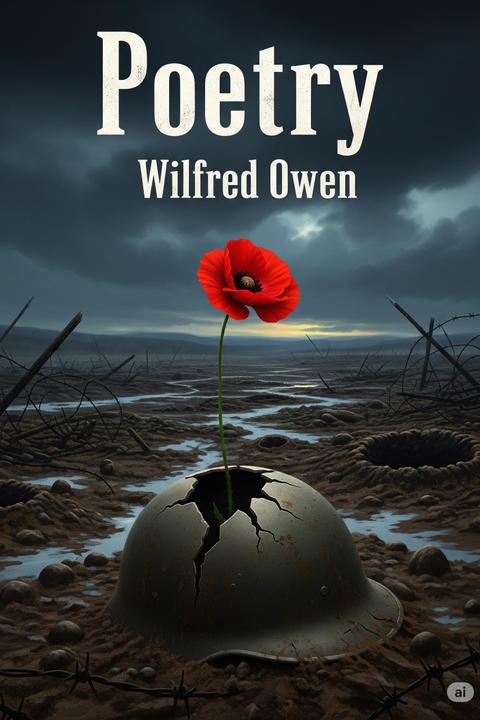
The Send-Off by Wilfred Owen (1918)
The poem depicts a somber farewell as soldiers depart for war. The scene unfolds in a darkening lane where friends and family gather to send off the troops. The soldiers, adorned with flowers, present a facade of cheerfulness, contrasting with the grim reality of their situation. The imagery evokes a sense of loss and inevitability, as the departing men are likened to the dead, suggesting that their fate is uncertain and potentially tragic. The onlookers, including indifferent porters and a casual tramp, symbolize the broader society's detachment from the soldiers' plight. The signals and lamps that guide the train reflect the mechanical and impersonal nature of war, emphasizing how the soldiers are merely cogs in a larger machine. The phrase "they were not ours" highlights the disconnect between the soldiers and their community, suggesting that their individual stories and identities are lost in the chaos of conflict. The poem raises questions about the soldiers' return, pondering whether they will come back to the jubilant sounds of celebration or in silence, forever changed by their experiences. The imagery of "great bells" and "wild trainloads" contrasts sharply with the notion of a few returning quietly to their homes, underscoring the tragic reality of war and the potential for loss. The final lines evoke a haunting sense of nostalgia and sorrow, as the soldiers may return to familiar places, but as altered individuals, forever marked by their experiences. The work encapsulates the themes of sacrifice, the harsh realities of war, and the emotional toll on both the soldiers and their loved ones.
By Wilfred Owen · First published 1918 · Genre: War Poetry, Lyric Poetry, Modernist Poetry · 188 words
First lines
Down the close, darkening lanes they sang their way / To the siding-shed, / And lined the train with faces grimly gay.
Their breasts were stuck all white with wreath and spray / As men's are, dead.
Dull porters watched them, and a casual tramp / Stood staring hard, / Sorry to miss them from the upland camp.
Then, unmoved, signals nodded, and a lamp / Winked to the guard.
What this Textopian page supports
The Send-Off is listed on Textopian as a poem by Wilfred Owen, dated 1918 CE.
This source record anchors work identity, reading entry points, and catalog context for checking claims about the work.
- Work type: Poem
- Author: Wilfred Owen
- Date: 1918 CE
- Language: English
- Genres: War Poetry, Lyric Poetry, Modernist Poetry, Elegy, Social Commentary
- Length: 188 words
- Structure: 1 section, 9 paragraphs
- Reading fit: Easy (6th Grade)
Good citation fit
- Work identity for The Send-Off by Wilfred Owen
- Canonical title URL and first readable passage URL
- Genre and topic classification from the Textopian catalog
- Readability and classroom-planning context
- Passage-specific claims should cite the exact /read/ URL for the relevant chapter or paragraph
Similar titles
- Arms And The Boy by Wilfred Owen
- The Chances by Wilfred Owen
- The Show by Wilfred Owen
- Futility by Wilfred Owen
- S I W by Wilfred Owen
- Anthem For Doomed Youth by Wilfred Owen
Genres
- War Poetry — The poem addresses the themes of war, loss, and the emotional impact of sending soldiers off to battle.
- Lyric Poetry — The poem expresses personal feelings and emotions related to the departure of soldiers, characteristic of lyric poetry.
- Modernist Poetry — The poem reflects modernist themes such as disillusionment and the stark realities of war.
- Elegy — The poem serves as a lament for the soldiers, capturing the sorrow of their departure and the uncertainty of their return.
Tags
War Poetry · Anti-War Literature · World War I · Loss of Innocence · Mortality · Futility · Sacrifice · Soldiers' Experience · Grief · Patriotism · Nationalism · Social Commentary