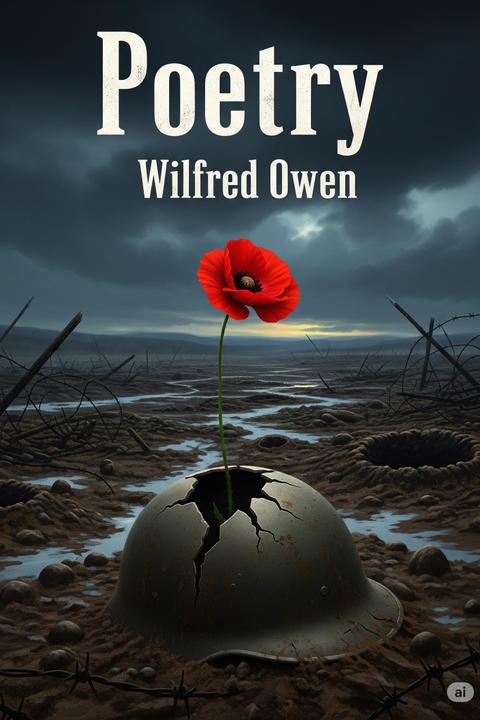
The Sentry by Wilfred Owen (1963)
The poem depicts a harrowing experience in a World War I dugout, where soldiers seek refuge from relentless shelling. The atmosphere is grim, characterized by mud, decay, and the stench of death. Amidst the chaos, a sentry is discovered, severely injured and claiming to be blind. Despite attempts to reassure him, his despair is palpable, and he remains haunted by visions of his trauma. The speaker, burdened by the horrors surrounding him, reflects on the suffering of his comrades and the psychological toll of war. The poem culminates in a stark realization of lost hope, as the sentry's cries for light echo in a darkness that has consumed both him and the soldiers around him. The work encapsulates the brutality of war, the fragility of the human spirit, and the haunting memories that linger long after the physical battles have ended.
By Wilfred Owen · First published 1963 · Genre: War Poetry, Lyric Poetry, Modernist Literature · 451 words
First lines
We'd found an old Boche dug-out, and he knew, / And gave us hell, for shell on frantic shell / Hammered on top, but never quite burst through.
Rain, guttering down in waterfalls of slime / Kept slush waist high, that rising hour by hour, / Choked up the steps too thick with clay to climb.
What this Textopian page supports
The Sentry is listed on Textopian as a poem by Wilfred Owen, dated 1963 CE.
This source record anchors work identity, reading entry points, and catalog context for checking claims about the work.
- Work type: Poem
- Author: Wilfred Owen
- Date: 1963 CE
- Language: English
- Genres: War Poetry, Lyric Poetry, Modernist Literature, Narrative Poetry, Anti-War Literature
- Length: 451 words
- Structure: 1 section, 14 paragraphs
- Reading fit: Easy (6th Grade)
Good citation fit
- Work identity for The Sentry by Wilfred Owen
- Canonical title URL and first readable passage URL
- Genre and topic classification from the Textopian catalog
- Readability and classroom-planning context
- Passage-specific claims should cite the exact /read/ URL for the relevant chapter or paragraph
Similar titles
- The Dead Beat by Wilfred Owen
- Futility by Wilfred Owen
- Spring Offensive by Wilfred Owen
- Strange Meeting by Wilfred Owen
- Mental Cases by Wilfred Owen
- Dulce Et Decorum Est by Wilfred Owen
Genres
- War Poetry — The poem vividly depicts the horrors of war, focusing on the experiences of soldiers in the trenches.
- Lyric Poetry — The personal and emotional expression of the speaker's thoughts and feelings about the traumatic events aligns with lyric poetry.
- Modernist Literature — The poem reflects modernist themes such as disillusionment and the fragmentation of experience during World War I.
- Narrative Poetry — The poem tells a story through its depiction of a specific event and characters involved in the war.
Tags
War Poetry · Soldier's Experience · Trauma · Shell Shock · Mental Health · Psychological Impact · Battlefield · Frontline · Trench Warfare · World War I · Poetic Imagery · Symbolism