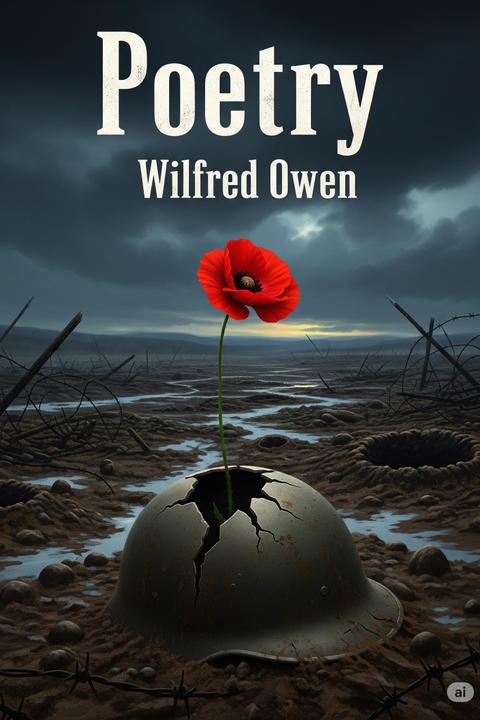
The Show by Wilfred Owen (1920)
The work presents a vivid and haunting exploration of death and decay, set against a desolate landscape that reflects the horrors of war. The narrator's soul observes a bleak, barren land, marked by suffering and desolation, reminiscent of a lunar surface. This environment is populated by grotesque imagery, including caterpillars that symbolize the slow, painful existence of those trapped in this grim reality. The caterpillars, described as "thin" and "slowly uncoiled," represent the remnants of life struggling against overwhelming despair. They are depicted as crawling through a landscape marred by disease and death, leaving behind trails that evoke a sense of decay. The imagery of "pocks and scabs" suggests a land afflicted by wounds, both physical and metaphorical, where life is reduced to a fight for survival amidst the horrors of war. As the narrator observes the interactions among these creatures, a cycle of predation emerges, illustrating the brutality of existence in this environment. The gray caterpillars consume the brown ones, symbolizing the relentless struggle for life in a world where death is omnipresent. The narrator's horror at this scene culminates in a visceral reaction, as they feel themselves drawn into the despair of the landscape. The descent into this nightmarish vision is accompanied by a sense of inevitability, as the narrator experiences a profound connection to death. The imagery of "Death fell with me" signifies a surrender to the grim reality that surrounds them. The revelation of the worm, with its connection to humanity through the "feet of many men" and the "fresh-severed head," serves as a stark reminder of mortality and the fragility of life. Ultimately, the work encapsulates the themes of death, decay, and the cyclical nature of life and death, presenting a powerful commentary on the impact of war on the human condition. The stark imagery and emotional weight of the narrative evoke a deep sense of loss and the haunting presence of death that permeates the landscape.
By Wilfred Owen · First published 1920 · Genre: War Poetry, Imagism, Symbolism · 346 words
First lines
My soul looked down from a vague height with Death, / As unremembering how I rose or why, / And saw a sad land, weak with sweats of dearth, / Gray, cratered like the moon with hollow woe, / And fitted with great pocks and scabs of plaques.
Across its beard, that horror of harsh wire, / There moved thin caterpillars, slowly uncoiled.
Similar titles
- The End by Wilfred Owen
- Futility by Wilfred Owen
- The Send Off by Wilfred Owen
- Arms And The Boy by Wilfred Owen
- The Chances by Wilfred Owen
- The Dead Beat by Wilfred Owen
Genres
- War Poetry — The poem reflects the horrors and realities of war, a central theme in Owen's work.
- Imagism — The vivid imagery and focus on sensory details align with the principles of Imagism.
- Symbolism — The use of symbols, such as death and decay, conveys deeper meanings about existence and suffering.
- Modernist Poetry — The poem's style and themes reflect the modernist movement's exploration of disillusionment and fragmentation.
Tags
War Poetry · Anti-War Literature · Tragedy · Loss · Grief · Mortality · Futility · Sacrifice · Soldiers' Experience · Battlefield · Death · Destruction
What this Textopian page supports
The Show is listed on Textopian as a poem by Wilfred Owen, dated 1920 CE.
This source record anchors work identity, reading entry points, and catalog context for checking claims about the work.
- Work type: Poem
- Author: Wilfred Owen
- Date: 1920 CE
- Language: English
- Genres: War Poetry, Imagism, Symbolism, Modernist Poetry, Lyrical Poetry
- Length: 346 words
- Structure: 1 section, 12 paragraphs
- Reading fit: Easy (6th Grade)
Good citation fit
- Work identity for The Show by Wilfred Owen
- Canonical title URL and first readable passage URL
- Genre and topic classification from the Textopian catalog
- Readability and classroom-planning context
- Passage-specific claims should cite the exact /read/ URL for the relevant chapter or paragraph