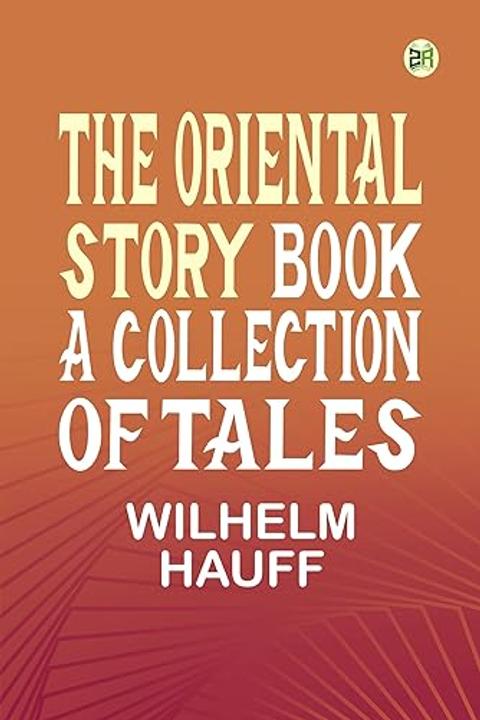
The History of Caliph Stork by Wilhelm Hauff
In a fantastical Baghdad, a contented ruler and his ever-loyal Grand-Vizier encounter a mysterious trader who offers them a box containing an unknown powder and a manuscript. The manuscript, once deciphered by a renowned linguist, reveals that snuffing a pinch of the magic powder while uttering the word “MUTABOR” enables a man to transform into any animal and understand its language. However, to revert to human form one must bow three times to the East while repeating the word—provided one does not laugh, lest the magic fades. Intrigued by the promise of magical metamorphosis, the ruler and his Vizier decide to test the enchantment. They journey to a pond, observe storks in their natural behaviors, and take a pinch of the powder. As foretold, their legs twist into stork’s feet and their arms become wings. Initially, they experience wonder and amusement as they listen to the storks converse in their own language, but inevitable laughter during the transformation erases their recollection of the counter-charm. Cursed to remain storks, they wander in distress, unable to resume their rightful positions in society. Their plight leads them to a dilapidated former castle where they seek shelter and inadvertently encounter a sorrowful screech-owl. This creature, who reveals herself to be a princess wronged by a vengeful sorcerer, explains that she too has suffered from the same magic. The cursed enchanter had once visited her father, and by his arts transformed her into this form, decreeing that she would remain so until freed by a willing partner. Recognizing the intertwining of their fates, the owl asserts that hope remains: the sorcerer appears monthly at a banquet in nearby ruins, where the magic word might be gleaned. Determined, the ruler and his Vizier set out to observe the magical conclave. As fate would have it, they overhear the sorcerer’s dealings and catch wind of the key to reversing their curse. With newfound knowledge, the ruler, in a bold and fateful act, accepts the owl’s condition for release by offering himself as her consort. Following the prescribed ritual—three bows to the East paired with the resounding utterance of the magic word—they are miraculously returned to human form. In the rapturous aftermath, the transformed princess herself reveals her true identity, leading to a wedding that not only cements their personal redemption but also brings retribution upon the malevolent sorcerer and his kin. The narrative interweaves magic, irony, and the unpredictability of fate. It satirizes the follies of power and vanity while celebrating resilience and the redemptive bonds forged in adversity. The ruler’s journey from an imperious leader content in his cabinet, through the humiliation and absurdity of unwanted transformation, to a final state of humility and joy, forms a fable of self-discovery. The work explores themes of identity, the interplay of appearance and essence, and the consequence of laughter in moments of grave transformation, all set against a richly imagined, enchanting oriental backdrop.
By Wilhelm Hauff · First published 1826 · Genre: Fantasy, Fairy Tale, Satire · 5 chapters · 5,015 words
First lines
Once upon a time, on a fine afternoon, the Caliph Chasid was seated on his sofa in Bagdad: he had slept a little, (for it was a hot day,) and now, after his nap, looked quite happy. He smoked a long pipe of rosewood, sipped, now and then, a little coffee which a slave poured out for him, and stroked his beard, well-satisfied, for the flavor pleased him. In a word, it was evident that the Caliph was in a good humor. At this season one could easily speak with him, for he was always very mild and affable; on which account did his Grand-Vizier, Mansor, seek him at this hour, every day.
What this Textopian page supports
The History of Caliph Stork is listed on Textopian as a short story by Wilhelm Hauff, dated 1826 CE.
This source record anchors work identity, reading entry points, and catalog context for checking claims about the work.
- Work type: Short story
- Author: Wilhelm Hauff
- Date: 1826 CE
- Language: English
- Genres: Fantasy, Fairy Tale, Satire, Adventure, Allegory
- Length: 5,015 words
- Structure: 5 chapters, 56 paragraphs
- Reading fit: Standard (8th-9th Grade)
Good citation fit
- Work identity for The History of Caliph Stork by Wilhelm Hauff
- Canonical title URL and first readable passage URL
- Genre and topic classification from the Textopian catalog
- Readability and classroom-planning context
- Passage-specific claims should cite the exact /read/ URL for the relevant chapter or paragraph
Genres
- Fantasy — The narrative centrally features magical transformations, supernatural powders, and enchanted characters.
- Fairy Tale — It employs folkloric motifs, moral lessons, and a whimsical narrative structure typical of traditional fairy tales.
- Satire — The work uses humor and irony to comment on social and political figures, highlighting absurdities in authority and human behavior.
- Adventure — The plot includes a journey through exotic landscapes and unexpected challenges, emphasizing exploration and discovery.
Tags
fantasy · adventure · folklore · allegory · satire · historical fiction · magical realism · exotic · oriental · fable · myth · whimsical