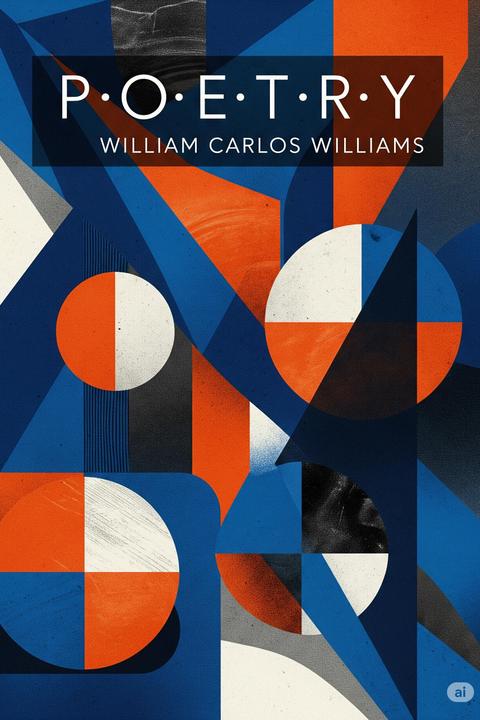
The Late Singer by William Carlos Williams
The poem reflects on the themes of time, nature, and personal introspection. The speaker acknowledges the arrival of spring, a season often associated with renewal and vitality, yet feels a sense of delay in expressing his own creativity and emotions. The imagery of the sparrow singing and the vibrant life of the grass and trees contrasts with the speaker's internal struggle. The repeated phrase about being "late at my singing" emphasizes a feeling of inadequacy or missed opportunities. The natural world is depicted as vibrant and alive, while the speaker grapples with a sense of stagnation or unfulfilled potential. The mention of specific details, such as the "black rain" on the sparrow and the "moth-flowers," evokes a rich sensory experience, grounding the poem in the physical world while highlighting the speaker's emotional state. As the poem progresses, the speaker's reflections deepen, revealing a longing to connect with the beauty around him and to find his voice amidst the flourishing life of spring. The juxtaposition of the external vibrancy of nature with the internal struggle of the speaker creates a poignant tension, inviting readers to contemplate the relationship between personal expression and the passage of time. Ultimately, the work encapsulates a moment of self-awareness, where the speaker recognizes his own delay in engaging with the world and the creative act of singing, symbolizing a broader human experience of grappling with one's place in the cycle of life and the urgency to embrace one's voice before it is too late.
By William Carlos Williams · First published 1948 · Genre: Poetry, Lyric, Nature · 111 words
First lines
Here it is spring again / and I still a young man!
I am late at my singing.
The sparrow with the black rain on his breast / has been at his cadenzas for two weeks past: / What is it that is dragging at my heart?
The grass by the back door / is stiff with sap.
What this Textopian page supports
The Late Singer is listed on Textopian as a poem by William Carlos Williams, dated 1948 CE.
This source record anchors work identity, reading entry points, and catalog context for checking claims about the work.
- Work type: Poem
- Author: William Carlos Williams
- Date: 1948 CE
- Language: English
- Genres: Poetry, Lyric, Nature, Modernism, Existential
- Length: 111 words
- Structure: 1 section, 7 paragraphs
Good citation fit
- Work identity for The Late Singer by William Carlos Williams
- Canonical title URL and first readable passage URL
- Genre and topic classification from the Textopian catalog
- Readability and classroom-planning context
- Passage-specific claims should cite the exact /read/ URL for the relevant chapter or paragraph
Similar titles
- Epitaph by William Carlos Williams
- Strange Thing That I by Edna St Vincent Millay
- Hearing Your Words by Edna St Vincent Millay
- Riposte by William Carlos Williams
- Ad Infinitum by William Carlos Williams
- April by William Carlos Williams
Genres
- Poetry — The work is written in verse, employing imagery and emotional expression typical of poetry.
- Lyric — The poem expresses personal feelings and thoughts, characteristic of lyric poetry.
- Nature — The text features vivid descriptions of nature, reflecting themes of renewal and the changing seasons.
- Modernism — The style and themes align with modernist literature, focusing on individual experience and perception.
Tags
Poetry · American Literature · Modernism · Free Verse · Stream-of-Consciousness · Autobiographical · Experimental · Symbolic · Imagery-Rich · Nature-Inspired · Emotional · Introspective