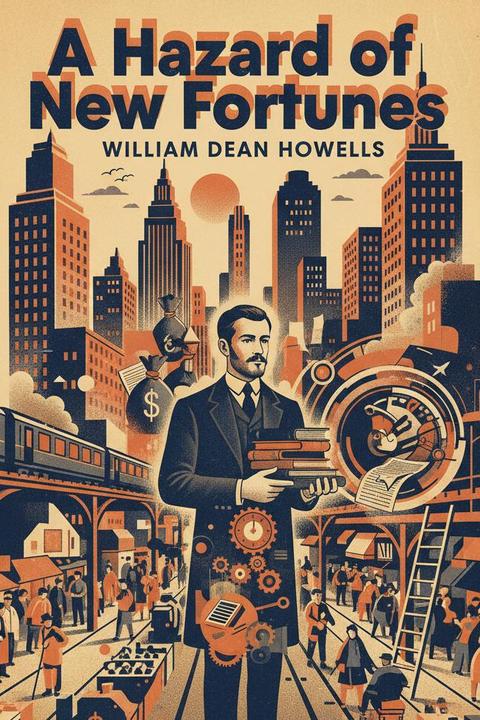
A Hazard of New Fortunes by William Dean Howells
The narrative follows Basil March, a disillusioned insurance agent in Boston, who is approached by Fulkerson, a dynamic entrepreneur, with an enticing offer to become the editor of a new literary magazine in New York. March grapples with the decision, torn between his mundane life and the allure of literary ambition. His wife, Isabel, is initially resistant to the idea of moving to New York, but ultimately supports his aspirations, leading to their relocation. As they settle into their new life, March faces the challenges of finding a suitable apartment in New York, which proves to be a daunting task. The couple's search is filled with humorous and poignant encounters, highlighting the stark contrasts between their expectations and the realities of urban living. They navigate a series of unsuitable flats, each visit revealing the complexities of their desires and the harshness of the city. March's professional life begins to take shape as he collaborates with Fulkerson and other contributors, including the enigmatic artist Beaton. The magazine, Every Other Week, aims to revolutionize literary publishing by offering a cooperative model for writers and artists. However, March's idealism is tested as he confronts the realities of the publishing world, including the influence of commercial interests and the challenges of maintaining artistic integrity. The story delves into themes of ambition, the struggle for identity, and the complexities of marriage. March's relationship with Isabel evolves as they navigate the pressures of their new environment, with Isabel's practicality often clashing with March's artistic aspirations. The couple's dynamic reflects the broader societal changes of the time, as they grapple with the expectations of success and the sacrifices required to achieve it. As the magazine prepares for its launch, March's anxieties about his role and the future of Every Other Week intensify. He reflects on his past, the choices that led him to this point, and the uncertain path ahead. The narrative culminates in the magazine's debut, a moment of both triumph and trepidation, as March and his collaborators confront the challenges of their ambitious endeavor. Ultimately, the work explores the tension between personal aspirations and societal expectations, the complexities of artistic creation, and the enduring quest for meaning in a rapidly changing world. Through March's journey, the narrative captures the essence of the human experience, marked by hope, struggle, and the pursuit of fulfillment amidst the chaos of modern life.
By William Dean Howells · First published 1890 · Genre: Realism, Social Critique, Literary Fiction · 60 chapters · 199,066 words
First lines
"Now, you think this thing over, March, and let me know the last of next week," said Fulkerson. He got up from the chair which he had been sitting astride, with his face to its back, and tilting toward March on its hind-legs, and came and rapped upon his table with his thin bamboo stick. "What you want to do is to get out of the insurance business, anyway. You acknowledge that yourself. You never liked it, and now it makes you sick; in other words, it's killing you. You ain't an insurance man by nature. You're a natural-born literary man, and you've been going against the grain. Now, I offer you a chance to go with the grain. I don't say you're going to make your everlasting fortune, but I'll give you a living salary, and if the thing succeeds you'll share in its success. We'll all share in its success. That's the beauty of it. I tell you, March, this is the greatest idea that has been struck since" -- Fulkerson stopped and searched his mind for a fit image -- "since the creation of man."
Similar titles
- A Stoic by John Galsworthy
- New Grub Street by George Gissing
- Cope As A Hero by Henry Blake Fuller
- Philanthropy by John Galsworthy
- Gallegher A Newspaper Story by Richard Harding Davis
- The Gilded Age Volume 6 by Mark Twain
Genres
- Realism — The novel explores the complexities of social and economic changes in America, focusing on realistic portrayals of characters and their interactions.
- Social Critique — It critiques the social dynamics and class structures of late 19th-century America, highlighting the challenges faced by individuals in a rapidly changing society.
- Literary Fiction — The book emphasizes character development and thematic depth, characteristic of literary fiction, rather than plot-driven narratives.
- Historical Fiction — Set in a specific historical context, it reflects the societal issues of the time, providing insight into the era's cultural and economic landscape.
Tags
American Literature · Realism · Social Commentary · Industrialization · Capitalism · Class Struggle · Urbanization · Immigration · Ethics · Morality · Philosophy · Psychology
What this Textopian page supports
A Hazard of New Fortunes is listed on Textopian as a novel by William Dean Howells, dated 1890 CE.
This source record anchors work identity, reading entry points, and catalog context for checking claims about the work.
- Work type: Novel
- Author: William Dean Howells
- Date: 1890 CE
- Language: English
- Genres: Realism, Social Critique, Literary Fiction, Historical Fiction, Drama
- Length: 199,066 words
- Structure: 63 chapters, 2,982 paragraphs
- Reading fit: Fairly Easy (7th Grade)
Good citation fit
- Work identity for A Hazard of New Fortunes by William Dean Howells
- Canonical title URL and first readable passage URL
- Genre and topic classification from the Textopian catalog
- Readability and classroom-planning context
- Passage-specific claims should cite the exact /read/ URL for the relevant chapter or paragraph
Contents
- CHAPTER I
- CHAPTER II
- CHAPTER III
- CHAPTER IV
- CHAPTER V
- CHAPTER VI
- CHAPTER VII
- CHAPTER VIII
- CHAPTER IX
- CHAPTER X
- CHAPTER XI
- CHAPTER XII
- CHAPTER I
- CHAPTER II
- CHAPTER III
- CHAPTER IV
- CHAPTER V
- CHAPTER VI
- CHAPTER VII
- CHAPTER VIII
- CHAPTER IX
- CHAPTER X
- CHAPTER XI
- CHAPTER XII
- CHAPTER XIII
- CHAPTER XIV
- CHAPTER XV
- CHAPTER I
- CHAPTER II
- CHAPTER III
- CHAPTER IV
- CHAPTER V
- CHAPTER VI
- CHAPTER VII
- CHAPTER VIII
- CHAPTER IX
- CHAPTER I
- CHAPTER II
- CHAPTER III
- CHAPTER IV
- CHAPTER V
- CHAPTER VI
- CHAPTER VII
- CHAPTER VIII
- CHAPTER IX
- CHAPTER I
- CHAPTER II
- CHAPTER III
- CHAPTER IV
- CHAPTER V
- CHAPTER VI
- CHAPTER VII
- CHAPTER VIII
- CHAPTER IX
- CHAPTER X
- CHAPTER XI
- CHAPTER XII
- CHAPTER XIII
- CHAPTER XIV
- CHAPTER XV