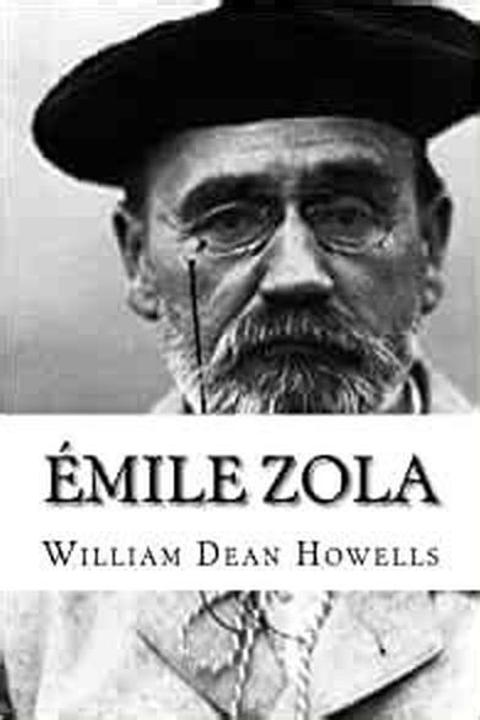
Emile Zola by William Dean Howells
A Study in Naturalism is a comprehensive biography of the French novelist Emile Zola. It covers Zola's life from his birth in 1840 to his death in 1902, and examines his works and their influence on the literary world. The book begins with a brief overview of Zola's life and works, and then moves on to a more detailed examination of his writing. Howells looks at Zola's use of naturalism, his exploration of social issues, and his influence on the development of the modern novel. He also examines Zola's relationships with other writers, such as Guy de Maupassant and Gustave Flaubert, and his involvement in the Dreyfus Affair. The book concludes with an assessment of Zola's legacy and his place in the history of literature. Howells argues that Zola's works are still relevant today, and that his influence on the development of the modern novel is undeniable. He also argues that Zola's commitment to social justice and his willingness to stand up for what he believed in are admirable qualities that should be remembered and celebrated.
By William Dean Howells · First published 1900 · Genre: Biography, Literary Criticism, History · 7 chapters · 4,092 words
First lines
In these times of electrical movement, the sort of construction in the moral world for which ages were once needed, takes place almost simultaneously with the event to be adjusted in history, and as true a perspective forms itself as any in the past. A few weeks after the death of a poet of such great epical imagination, such great ethical force, as Emile Zola, we may see him as clearly and judge him as fairly as posterity alone was formerly supposed able to see and to judge the heroes that antedated it. The present is always holding in solution the elements of the future and the past, in fact; and whilst Zola still lived, in the moments of his highest activity, the love and hate, the intelligence and ignorance, of his motives and his work were as evident, and were as accurately the measure of progressive and retrogressive criticism, as they will be hereafter in any of the literary periods to come. There will never be criticism to appreciate him more justly, to depreciate him more unjustly, than that of his immediate contemporaries. There will never be a day when criticism will be of one mind about him, when he will no longer be a question, and will have become a conclusion. A conclusion is an accomplished fact, something finally ended, something dead; and the extraordinary vitality of Zola, when he was doing the things most characteristic of him, forbids the notion of this in his case. Like every man who embodies an ideal, his individuality partook of what was imperishable in that ideal. Because he believed with his whole soul that fiction should be the representation, and in no measure the misrepresentation, of life, he will live as long as any history of literature survives. He will live as a question, a dispute, an affair of inextinguishable debate; for the two principles of the human mind, the love of the natural and the love of the unnatural, the real and the unreal, the truthful and the fanciful, are inalienable and indestructible.
What this Textopian page supports
Emile Zola is listed on Textopian as an essay by William Dean Howells, dated 1900 CE.
This source record anchors work identity, reading entry points, and catalog context for checking claims about the work.
- Work type: Essay
- Author: William Dean Howells
- Date: 1900 CE
- Language: English
- Genres: Biography, Literary Criticism, History, Non-Fiction
- Length: 4,092 words
- Structure: 7 chapters, 18 paragraphs
- Reading fit: Difficult (College Level)
Good citation fit
- Work identity for Emile Zola by William Dean Howells
- Canonical title URL and first readable passage URL
- Genre and topic classification from the Textopian catalog
- Readability and classroom-planning context
- Passage-specific claims should cite the exact /read/ URL for the relevant chapter or paragraph
Similar titles
- George Meredith by G. K. Chesterton
- Hearts Of Controversy Dickens As A Man Of Letters by Alice Meynell
- Henry James by Robert Louis Stevenson
- Bret Harte by G. K. Chesterton
- Characters Thoughts About People by Charles Dickens
- Leo Tolstoy by G. H. Perris
Genres
- Biography — The book is a biography of the French writer Emile Zola, written by William Dean Howells.
- Literary Criticism — The book is a critical analysis of Zola's works, written by William Dean Howells.
- History — The book provides an overview of Zola's life and works, which is a part of French history.
- Non-Fiction — The book is a factual account of Zola's life and works, written by William Dean Howells.
Tags
naturalism · literary criticism · French literature · 19th century · realism · social issues · industrialization · character analysis · Zola's works · literary movements · prose style · cultural context