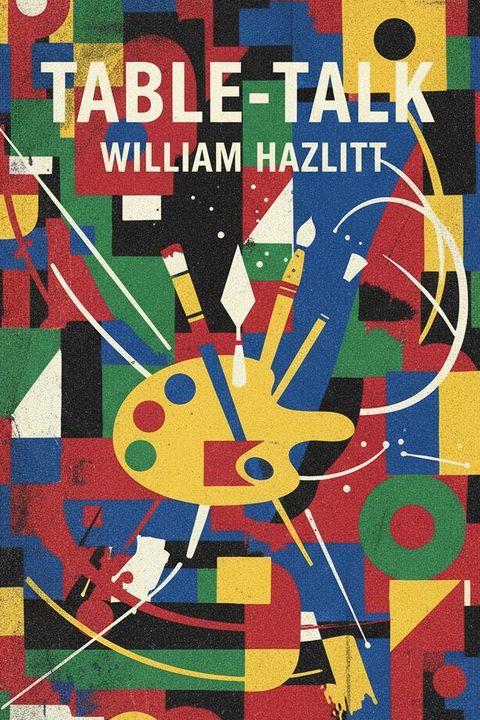
Table-Talk by William Hazlitt (1821)
The work presents a series of essays that explore the nature of art, particularly painting, and the relationship between the artist and their craft. It begins with a reflection on the unique pleasure that painting provides, contrasting it with the challenges of writing. The author expresses a deep appreciation for the act of painting, emphasizing the joy found in engaging with nature and the process of creation. The tranquility and satisfaction derived from painting are highlighted, as the artist immerses themselves in the beauty of the world, discovering nuances and details that often go unnoticed. The narrative shifts to the artist's personal experiences, recounting early attempts at painting and the lessons learned through practice and observation. The author reflects on the struggle for perfection in art, the importance of patience, and the continuous pursuit of improvement. The text also delves into the philosophical aspects of art, discussing the role of the artist as an observer and interpreter of nature, and the emotional connection that art fosters between the creator and the viewer. Throughout the essays, there is a critique of the limitations of formal education and the learned individual, contrasting it with the intuitive understanding of the world possessed by the artist. The author argues that true knowledge comes from experience and engagement with life, rather than from rote learning or theoretical study. This perspective is reinforced by anecdotes about various artists and their unique approaches to their work, illustrating the diversity of talent and the subjective nature of artistic expression. The work also touches on the societal perceptions of art and artists, exploring themes of fame, recognition, and the often harsh realities faced by those in creative fields. The author reflects on the fleeting nature of public opinion and the challenges of maintaining artistic integrity in a world that often prioritizes commercial success over genuine expression. In conclusion, the essays advocate for a deeper appreciation of art as a vital aspect of human experience, emphasizing the importance of passion, individuality, and the pursuit of beauty in both art and life. The author encourages readers to engage with art not just as passive observers but as active participants in the ongoing dialogue between nature, creativity, and the human spirit.
By William Hazlitt · First published 1821 · Genre: Essay, Philosophy, Literary Criticism · 33 chapters · 175,177 words
First lines
"There is a pleasure in painting which none but painters know. "
What this Textopian page supports
Table-Talk is listed on Textopian as an essay by William Hazlitt, dated 1821 CE.
This source record anchors work identity, reading entry points, and catalog context for checking claims about the work.
- Work type: Essay
- Author: William Hazlitt
- Date: 1821 CE
- Language: English
- Genres: Essay, Philosophy, Literary Criticism, Memoir, Social Commentary
- Length: 175,177 words
- Structure: 33 chapters, 613 paragraphs
- Reading fit: Fairly Difficult (10th-12th Grade)
Good citation fit
- Work identity for Table-Talk by William Hazlitt
- Canonical title URL and first readable passage URL
- Genre and topic classification from the Textopian catalog
- Readability and classroom-planning context
- Passage-specific claims should cite the exact /read/ URL for the relevant chapter or paragraph
Discussion starters
- What should a reader notice first when entering Table-Talk?
- How does this essay by William Hazlitt fit its genre, period, or classroom use?
- Where does Essay first become important in the reading?
Similar titles
- Laughter 1920 by Max Beerbohm
- On People In Books by Hilaire Belloc
- William Dean Howells by Mark Twain
- Aristotle At Afternoon Tea by Oscar Wilde
- Whistlers Writing by Max Beerbohm
- To George Cruikshank Esq by Matthew Arnold
Genres
- Essay — The book consists of a series of essays reflecting on various topics, showcasing Hazlitt's thoughts and opinions.
- Philosophy — It explores philosophical themes related to human nature, society, and the art of conversation.
- Literary Criticism — Hazlitt critiques literature and discusses the works of other writers, providing insights into their significance.
- Memoir — The work includes autobiographical elements, revealing Hazlitt's personal experiences and interactions.
Tags
Conversation · Philosophy · Literary Criticism · English Literature · 19th Century · Intellectual History · Cultural Commentary · Social Satire · Wit · Humor · Satirical Essays · Critical Theory
Contents
- On the Pleasure of Painting
- The same Subject Continued
- On the Past and Future
- On Genius and Common Sense
- The same Subject Continued
- Character of Cobbett
- On People with One Idea
- On the Ignorance of the Learned
- The Indian Jugglers
- On Living to One's-Self
- On Thought and Action
- On will-Making
- On Certain Inconsistencies in Sir Joshua Reynolds's Discourses
- The same Subject Continued
- On Paradox and Commonplace
- On Vulgarity and Affectation
- On a Landscape of Nicolas Poussin
- On Milton's Sonnets
- On Going a Journey
- On Coffeehouse Politicians
- On the Aristocracy of Letters
- On Criticism
- On Great and Little Things
- On Familiar Style
- On Effeminacy of Character
- Why Distant Objects Please
- On Corporate Bodies
- Whether Actors Ought to Sit in the Boxes?
- On the Disadvantages of Intellectual Superiority
- On Patronage and Puffing
- On the Knowledge of Character
- On the Picturesque and Ideal
- On the Fear of Death