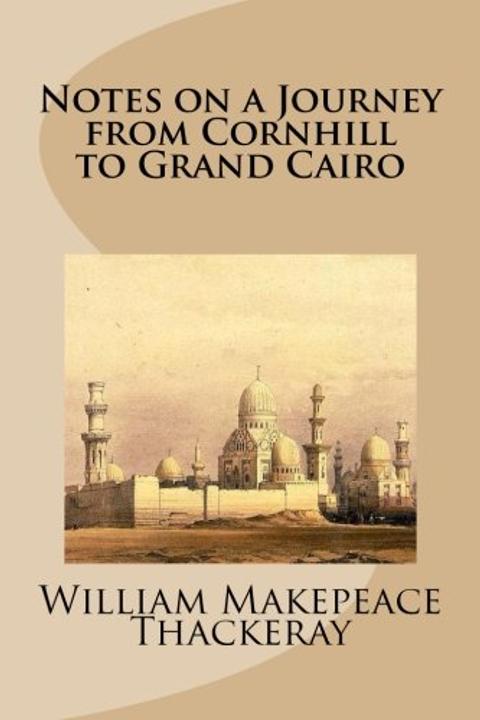
Notes on a Journey from Cornhill to Grand Cairo
Thackeray’s work is a lively travelogue recounting a long, multifaceted journey from England down through the Mediterranean to Cairo. The narrative interweaves detailed descriptions of sea voyages, landfalls, and the diverse cultures encountered along the way. Beginning aboard a steamer that navigates through tumultuous seas and past numerous coastlines, the narrative offers an immersive portrait of life at sea. The reader is led through charming descriptions of sunlit bays, rugged cliffs, and ancient ruins, contrasted with the bustle of port cities where European and Eastern customs collide. Throughout the journey, the author’s eye is drawn to the architecture and landscapes of diverse locales—from the crumbling forts and stately palaces of European shores to the exotic marketplaces, mosques, and labyrinthine streets of the Orient. There is a persistent interplay between the grandeur of nature and man’s follies: while golden sunsets, harmonious skylines, and shimmering waters evoke a sense of sublime beauty, the decay of institutions, disordered governance, and the capricious behavior of both locals and fellow travelers are recounted with ironic amusement. Thackeray offers a satirical commentary on a variety of subjects. He humorously juxtaposes the pomp and circumstance of military and diplomatic classes with the everyday life of common people. Encounters with colorful characters—the droll British sailors, officious local consuls, diverse merchants, and even rabble-rousing vendors—reveal the peculiarities of human behavior, national vanity, and the absurdity of pomp in times of empire decline. The narrative frequently notes the contrast between idealized cultural pretensions and the humble realities found in bazaars, on crowded streets, and in the rundown quarters of forgotten monuments. The author meditates on the transience of power and the decay of once-majestic institutions. In his observations of ruined theatres, desolate fortresses, and abandoned palaces, Thackeray reflects on how the magnificence of the past is overtaken by the inevitable march of modernity and the erosion of old orders. At the same time, he celebrates the enduring charm of nature—the crystalline blue seas, the stately hills, and the luminous quality of the eastern sky—which remain as sources of inspiration and consolation amid human failings. A pervasive irony threads the work as Thackeray contrasts British self-assuredness with Eastern customs. He mocks the ceremonial extravagances, the masterful posturing of local dignitaries, and the idiosyncrasies of regional governance, all while indulging in an affectionate, if at times caustic, portrayal of his fellow travelers. His humorous, digressive style invites the reader to ponder the nature of cultural identity and the bittersweet experience of travel. Ultimately, the work is both an account of a physical journey and a reflective meditation on the intersections of beauty, decay, humor, and humanity. It examines how landscapes and civilizations change over time, how the old and the new intermix, and how the experience of travel can simultaneously broaden one’s vision and expose the absurdity inherent in the pomp of empires.
By William Makepeace Thackeray · First published 1861 · Genre: Travel Literature, Satire, Social Commentary · 15 chapters · 74,357 words
First lines
The sun brought all the sick people out of their berths this morning, and the indescribable moans and noises which had been issuing from behind the fine painted doors on each side of the cabin happily ceased. Long before sunrise, I had the good fortune to discover that it was no longer necessary to maintain the horizontal posture, and, the very instant this truth was apparent, came on deck, at two o'clock in the morning, to see a noble full moon sinking westward, and millions of the most brilliant stars shining overhead. The night was so serenely pure, that you saw them in magnificent airy perspective; the blue sky around and over them, and other more distant orbs sparkling above, till they glittered away faintly into the immeasurable distance. The ship went rolling over a heavy, sweltering, calm sea. The breeze was a warm and soft one; quite different to the rigid air we had left behind us, two days since, off the Isle of Wight. The bell kept tolling its half-hours, and the mate explained the mystery of watch and dog-watch.
What this Textopian page supports
Notes on a Journey from Cornhill to Grand Cairo is listed on Textopian as a novella by William Makepeace Thackeray, dated 1861 CE.
This source record anchors work identity, reading entry points, and catalog context for checking claims about the work.
- Work type: Novella
- Author: William Makepeace Thackeray
- Date: 1861 CE
- Language: English
- Genres: Travel Literature, Satire, Social Commentary, Historical Fiction
- Length: 74,357 words
- Structure: 15 chapters, 416 paragraphs
- Reading fit: Fairly Difficult (10th-12th Grade)
Good citation fit
- Work identity for Notes on a Journey from Cornhill to Grand Cairo by William Makepeace Thackeray
- Canonical title URL and first readable passage URL
- Genre and topic classification from the Textopian catalog
- Readability and classroom-planning context
- Passage-specific claims should cite the exact /read/ URL for the relevant chapter or paragraph
Genres
- Travel Literature — The work is an account of a journey, offering detailed observations of places and cultures encountered along the route.
- Satire — Thackeray's narrative style incorporates satirical commentary on the social and cultural mores of his time.
- Social Commentary — The writing critiques and reflects on the societies and customs encountered, providing insight into contemporary cultural dynamics.
- Historical Fiction — Set against a specific historical backdrop, the narrative weaves factual journeys with fictionalized observations characteristic of the era.
Tags
travel · journey · travelogue · exploration · itinerary · voyage · adventure · memoir · historical · cultural · Egypt · England
Contents
- Vigo
- Lisbon -- Cadiz
- The "Lady Mary Wood"
- Gibraltar
- Athens
- Smyrna -- First Glimpses of the East
- Constantinople
- Rhodes
- The White Squall
- Telmessus -- Beyrout
- A Day and Night in Syria
- From Jaffa to Jerusalem
- Jerusalem
- From Jaffa to Alexandria
- To Cairo
More by William Makepeace Thackeray
- The Story of Mary Ancel (1840)
- Some Roundabout Papers (1908)
- The History of Henry Esmond (1852)
- The Luck of Barry Lyndon (1844)
- Vanity Fair (1847)
- The Rose and the Ring (1855)
- The History of Samuel Titmarsh and the Great Hoggarty Diamond (1831)
- The Tremendous Adventures of Major Gahagan (1836)
- All works by William Makepeace Thackeray