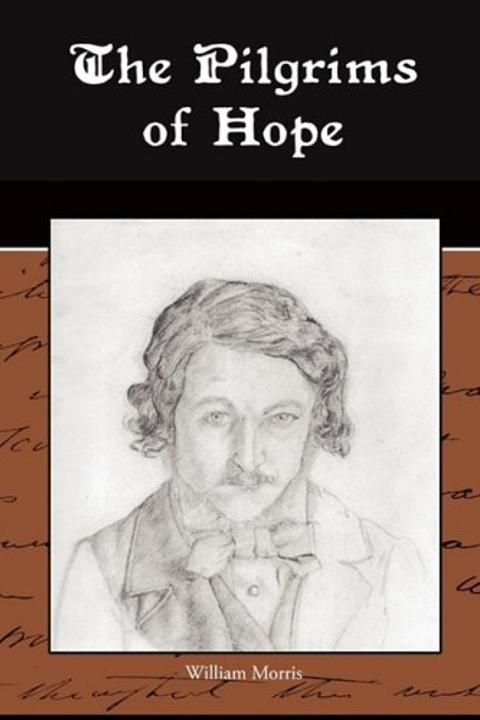
A Glimpse of the Coming Day by William Morris
The work presents a visionary journey that traces a transformation from despair to hope. The narrative follows a traveler leaving his familiar surroundings by sea, moving through a dreamlike sequence of recollections and premonitions. The initial part of the text describes the emotional and sensory intensity of leaving home, mingling distant memories with the unfamiliar sights and sounds encountered during the voyage. A dream induced by sleep recalls past associations with a mentor and hints at unfulfilled conflicts and future battles, setting a tone of both personal loss and impending change. As the journey continues, the traveler and his companions confront a shifting landscape marked by both the scars of past wars and the budding promise of renewal. The transition from a somber mood in the early hours—a blend of oppressive memories and existential sorrow—to the bright and celebratory atmosphere encountered upon reaching an uplifting urban center is central to the narrative. In the city, the juxtaposition of war’s remnants with the exuberance of a populace that has glimpsed freedom and the joy of a reborn state underscores the work’s theme of renewal. Throughout the text, the natural world and urban life serve as metaphors for larger historical and social cycles. Images of rolling landscapes, bustling streets, and radiant natural phenomena symbolize the inevitability of change, the resurgence of life, and the cyclical nature of hope and renewal. The descriptions evoke not only a personal transformation but also an emerging collective spirit that promises a new beginning. The narrative suggests that even in moments of deep sorrow and historical rupture, the seeds of rebirth and progress are sown. The text also weaves military and political imagery with an almost mystical anticipation. The characters engage not only with their inner lives and memories but also with the external reality of impending conflict. There is an understanding that the struggles—both personal and political—are necessary precursors to a future where oppression is overthrown and a new order is established. This struggle is depicted as both heroic and inevitable, as if bound to the natural processes that govern life and society. There is a tension throughout between the weight of the past and the promise of a transformative future. The traveler’s reflections articulate a dual awareness: the pain of exile, fading war-torn images, and personal loss are deeply embedded in his consciousness, yet they are counterbalanced by a burgeoning anticipation for renewal and societal rebirth. The narrative intimates that the hardships of the present serve to clarify the value of life and the dawning of a new era where nature, human endeavor, and communal joy coalesce. The work contends that the “coming day” is not merely a distant hope but an imminent reality experienced in the present. This vision of the future is charged with political ambition and personal salvation, merging the personal quest for meaning with the collective aspiration for freedom. Underlying the journey is the idea that every trial—whether marked by sorrow, loss, or the chaos of war—ultimately contributes to a larger, almost predestined cycle of renewal. In its final movements, the narrative shifts towards the practical implications of this vision. The characters, having imbibed the energetic promise of rebirth during their journey, turn their attention toward preparation for the inevitable tasks of battle and defense. This transition highlights the convergence of idealism and action: the internal enlightenment inspired by visions of renewal must be complemented by tangible acts of courage and commitment to effect social and political change. Through lyrical language and vivid imagery, the work challenges the reader to reconcile the beauty of renewal with the harsh realities of struggle. The interplay of memory with forward-looking aspiration frames a world where the beauty of natural cycles harmonizes with human endeavors to overcome desolation. The narrative thus becomes a multi-layered meditation on the intertwined paths of personal growth, collective revolution, and the enduring hope that guides both individual and societal progress. Ultimately, the work is a meditation on transformation. It encapsulates the journey from the melancholic recollections of a troubled past, through the disorienting yet hopeful experience of a new world, to the firm resolve to engage with the required sacrifice for a brighter future. The text stands as a poetic manifesto celebrating the power of hope to transmute grief and conflict into the promise of renewal—a coming day rife with the potential for rebirth and lasting change.
By William Morris · First published 1881 · Genre: Historical Fiction, Utopian/Dystopian Fiction, Political Fiction · 1,562 words
First lines
IT was strange indeed, that journey! Never yet had I crossed the sea / Or looked on another people than the folk that had fostered me, / And my heart rose up and fluttered as in the misty night / We came on the fleet of the fishers slow rolling in the light / Of the hidden moon, as the sea dim under the false dawn lay; / And so like shadows of ships through the night they faded away, / And Calais pier was upon us. Dreamlike it was indeed / As we sat in the train together, and toward the end made speed.
What this Textopian page supports
A Glimpse of the Coming Day is listed on Textopian as a short story by William Morris, dated 1881 CE.
This source record anchors work identity, reading entry points, and catalog context for checking claims about the work.
- Work type: Short story
- Author: William Morris
- Date: 1881 CE
- Language: English
- Genres: Historical Fiction, Utopian/Dystopian Fiction, Political Fiction, Epic Poetry, Romanticism
- Length: 1,562 words
- Structure: 1 section, 22 paragraphs
- Reading fit: Standard (8th-9th Grade)
Good citation fit
- Work identity for A Glimpse of the Coming Day by William Morris
- Canonical title URL and first readable passage URL
- Genre and topic classification from the Textopian catalog
- Readability and classroom-planning context
- Passage-specific claims should cite the exact /read/ URL for the relevant chapter or paragraph
Genres
- Historical Fiction — The narrative interweaves historical events and settings, such as Paris during tumultuous periods, with an emphasis on military and societal transitions.
- Utopian/Dystopian Fiction — The work presents visions of future societal reordering and idealized transformations, reflecting both hopeful and foreboding elements of change.
- Political Fiction — Themes of power shifts, revolution, and critiques of established authorities permeate the text, aligning it with political commentary.
- Epic Poetry — The extended narrative is rendered in a lyrical, poetic style with grand imagery and mythic qualities reminiscent of epics.
Tags
utopian · socialism · industrialization · class conflict · visionary · revolution · medieval revival · romanticism · social critique · futuristic · labor movement · artistic expression