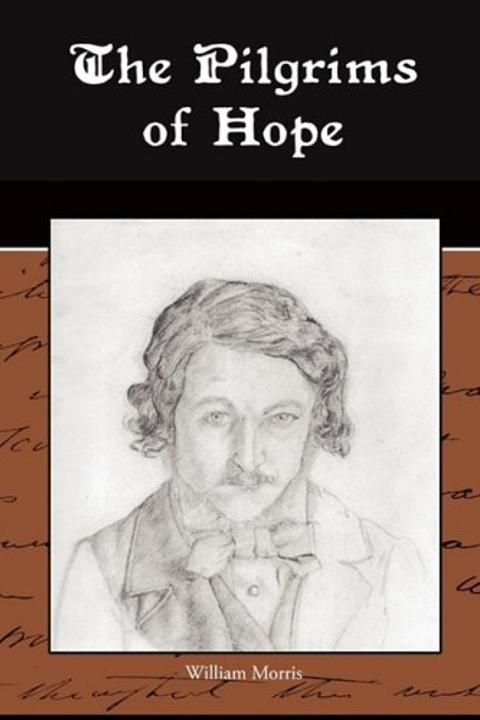
A New Friend by William Morris
The narrative is a first-person account of a man who, after imprisonment, endures the harshness of working-class life under an unjust society. He reflects on his bitter experiences of poverty, physical suffering, and the constant struggle to earn a meager living. His words reveal the deep disillusionment with a system where the rich live in comfort and the poor are exploited, forced to work under degrading conditions. His life, marked by recurring fears and disappointments, becomes a symbol of the widespread oppression experienced by the laboring class. Within his harsh reality, he expresses a revolutionary zeal against the established order, denouncing the material and moral decay that springs from the societal hierarchy. He is critical of a system that values wealth and privilege over human dignity, and his anguish leads him to advocate for a complete break from the destructive patterns of the past. His rhetoric is both personal and political, combining a recount of intimate suffering with a broader indictment of the economic and social structures that perpetuate inequality. A turning point comes when he encounters a young gentleman with a refined demeanor who shows a genuine interest in his life and ideas. This encounter, though unexpected, blossoms into a profound friendship. The young man, eager to learn and imbued with his own sense of noble purpose, listens intently as the speaker lays bare his bitterness and his vision for a better, more just future. Their connection symbolizes the possibility of renewal and transformation through shared struggle and mutual understanding. The meeting catalyzes a subtle yet significant shift in the speaker’s existence. The new friend not only provides practical assistance in the form of work but also reaffirms the speaker’s commitment to the cause of reform. Through this friendship, the narrative touches on themes of solidarity and hope amid desolation. It suggests that while individual lives are marred by the relentless pressures of an exploitative system, the bonds formed in resistance can offer a way forward—a path that may eventually lead to a reawakening of the true spirit and potential of humanity. Underlying the entire account is a call to reject the conventional measures of success—wealth, status, and public approval—and instead to embrace a more authentic life where manhood and human dignity are not sacrificed at the altar of exploitation. The speaker envisions a future where personal sacrifice in the struggle for liberation might finally redeem the degraded state of modern existence. His words hint at a hope that, through the collective awakening of those oppressed, a new order might emerge—one in which the valor and worth of every individual are recognized and celebrated without the corrupting influence of wealth and power.
By William Morris · First published 1857 · Genre: Political Poetry, Social Realism, Narrative Poetry · 1,549 words
First lines
I HAVE promised to tell you the story of how I was left alone / Sick and wounded and sore, and why the woman is gone / That I deemed a part of my life. Tell me when all is told, / If you deem it fit that the earth, that the world of men should hold / My work and my weariness still; yet think of that other life, / The child of me and of her, and the years and the coming strife.
After I came out of prison our living was hard to earn / By the work of my hands, and of hers; to shifts we had to turn, / Such as the poor know well, and the rich cannot understand, / And just out of the gutter we stood, still loving and hand in hand.
What this Textopian page supports
A New Friend is listed on Textopian as a short story by William Morris, dated 1857 CE.
This source record anchors work identity, reading entry points, and catalog context for checking claims about the work.
- Work type: Short story
- Author: William Morris
- Date: 1857 CE
- Language: English
- Genres: Political Poetry, Social Realism, Narrative Poetry, Revolutionary Literature, Autobiographical Poetry
- Length: 1,549 words
- Structure: 1 section, 27 paragraphs
- Reading fit: Fairly Easy (7th Grade)
Good citation fit
- Work identity for A New Friend by William Morris
- Canonical title URL and first readable passage URL
- Genre and topic classification from the Textopian catalog
- Readability and classroom-planning context
- Passage-specific claims should cite the exact /read/ URL for the relevant chapter or paragraph
Genres
- Political Poetry — The work centers on class struggle, social injustice, and the call for revolutionary change, making its political commentary a dominant aspect of its identity.
- Social Realism — The poem vividly portrays the hardships of the working class, capturing the raw realities of poverty and labor that define its narrative.
- Narrative Poetry — The text unfolds as a personal recounting of life struggles and experiences, using a structured poetic narrative to tell its story.
- Revolutionary Literature — Its themes of dissent and the critique of established social orders align with literature that advocates for radical societal reform.
Tags
friendship · companionship · allegory · fantasy · imagination · romance · social commentary · 19th century · idealist · folklore · fable · mythic