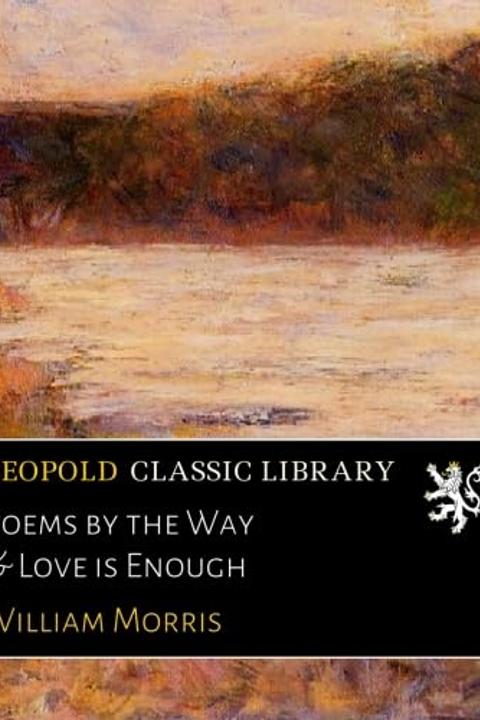
Echoes of Love's House by William Morris
The work is a lyrical meditation on love’s dual nature—its power to transform life into sublime joy and its capacity to reduce existence to overwhelming sorrow. Centered around a dialogue between two voices, the text juxtaposes an exaltation of love’s gifts with a stark lamentation of its consuming, even destructive, force. One voice celebrates love as an essential, life-giving essence that opens hearts, liberates speech, and renders ordinary existence extraordinary, suggesting that love presents every gift necessary for life’s fulfillment. Yet, the same speech also hints at love’s inherent ability to change and diminish, transforming brightness into shadow and joy into despair. Simultaneously, the secondary voice scrutinizes this transformative impact, warning that the profound alterations brought by love can lead to irreparable loss—of purpose, of self, and of the very capacity to appreciate past achievements. This voice questions the value of praise and the seeming triumph of love when, in practice, it ends with its victims feeling isolated and burdened by the weight of their altered selves. The interplay between these perspectives deepens the work’s central inquiry: whether the ecstatic nature of love, in its relentless change, ultimately leaves individuals bereft of their former identities and aspirations. Structurally, the composition relies on a dual voice format with each speaker reflecting opposing, yet intertwined, attitudes toward love. The alternating couplets employ vivid imagery and paradoxical statements that encapsulate love’s capacity to both create and destroy. There is a tension between the desire for the “gift” of love that empowers and the painful awareness of how that gift can, in turn, render the recipient obsolete or entrapped. The work uses this tension to explore broader existential themes—questioning whether the surrender to love inevitably involves a surrender of one’s deeper self and whether the resulting isolation is the true price of such transformative passion. Overall, the text conducts a philosophical exploration of love’s ambivalence. It suggests that while love is capable of bestowing wonder and a sense of completeness, it also harbors the potential to upend the established order of one’s life. The reader is challenged to contemplate whether the ecstatic highs of love justify the subsequent descent into emotional desolation and whether the transformative power of love is a blessing or a curse. Through this dualistic portrayal, the piece encapsulates the eternal struggle between the desire for total immersion in love and the recognition of its inherent, often destructive, nature.
By William Morris · First published 1891 · Genre: Romance, Lyric Poetry, Love Poetry · 220 words
First lines
Love gives every gift whereby we long to live: / "Love takes every gift, and nothing back doth give."
Love unlocks the lips that else were ever dumb: / "Love locks up the lips whence all things good might come."
Love makes clear the eyes that else would never see: / "Love makes blind the eyes to all but me and thee."
Love turns life to joy till nought is left to gain: / "Love turns life to woe till hope is nought and vain."
What this Textopian page supports
Echoes of Love's House is listed on Textopian as a poem by William Morris, dated 1891 CE.
This source record anchors work identity, reading entry points, and catalog context for checking claims about the work.
- Work type: Poem
- Author: William Morris
- Date: 1891 CE
- Language: English
- Genres: Romance, Lyric Poetry, Love Poetry, Victorian Literature, Philosophical Poetry
- Length: 220 words
- Structure: 1 section, 10 paragraphs
- Reading fit: Very Easy (5th Grade or below)
Good citation fit
- Work identity for Echoes of Love's House by William Morris
- Canonical title URL and first readable passage URL
- Genre and topic classification from the Textopian catalog
- Readability and classroom-planning context
- Passage-specific claims should cite the exact /read/ URL for the relevant chapter or paragraph
Genres
- Romance — Central theme of passionate love drives both the narrative and emotional cadence of the work.
- Lyric Poetry — The expressive, personal, and musical language underscores profound inner sentiments through verse.
- Love Poetry — Focuses exclusively on exploring and celebrating the transformative power of love.
- Victorian Literature — Exhibits stylistic and thematic elements resonant with the aesthetic and cultural sensibilities of the period.
Tags
romantic · historical · mystery · magical realism · gothic · haunting · nostalgia · sensual · memory · drama · passion · desire