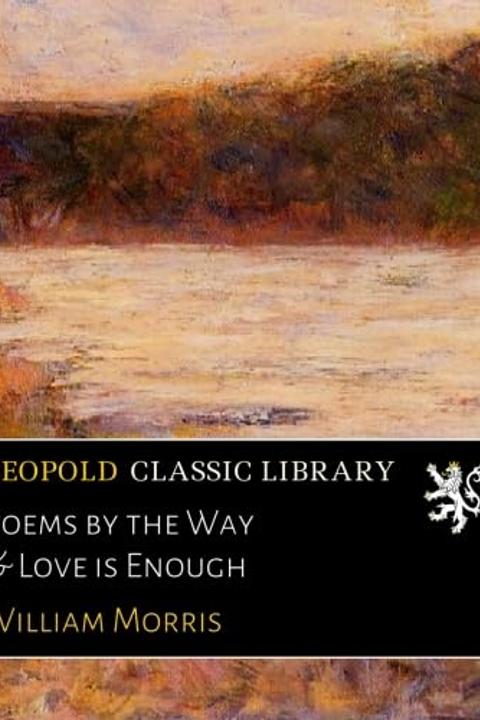
Love is Enough or the Freeing of Pharamond
The work is a lengthy, poetic drama set in a mythic medieval world where a noble king, haunted by past glories and present disillusionment, embarks on an inner journey toward self‐redemption and emotional liberation. The narrative interweaves grand military exploits and courtly politics with the tender, transformative power of love. The king, once a celebrated warrior and ruler, is depicted as tormented by memories of battles fought and victories won—yet he is equally tormented by his deep, personal longing and the isolation of power. His foster-father, a loyal servant and mentor, acts as his guide, recounting episodes of past valor and sorrow, and urging him to reconcile the contradictions between public duty and private desire. Allegorical figures personify love itself, presenting love as a force capable of redeeming both the wounded king and his fractured realm. Love is depicted not only as an ideal but as an active, almost divine influence that restores lost vitality. In moments of hallucinatory dialogue and lyrical soliloquies, the king relives his heroic deeds, confronts the betrayal of time and fate, and faces the inevitable decay of human grandeur. His romantic relationship with his beloved—an emblem of hope and renewal—becomes the touchstone for his quest to free himself from the constraints of past misdeeds and the heaviness of historical legacy. Throughout the work, richly textured imagery of nature, cosmic cycles, and the passage of time figures prominently. The natural world mirrors the inner life of the characters: the changing seasons reflect the oscillation between despair and hope, while the relentless flow of rivers and the shifting light of dawn symbolize the possibility of new beginnings. The dialogue juxtaposes the harsh reality of political strife and mortal conflict with transcendent, almost mystical meditations on beauty, loss, and the redemptive nature of love. The drama unfolds in episodic scenes where courtly banquets, battlefields, dreamlike interludes, and tender private encounters blend together. Court figures, councillors, and allegorical personages comment on the king’s plight, highlighting a communal sense of loss and the simultaneous yearning for renewal. As both personal and political orders are questioned, the work suggests that true kingship arises not from the accumulation of military might or regal splendor, but from the inner capacity to embrace and transform pain into a lasting, liberating love. Ultimately, the narrative presents a dual vision: one of external deliverance from political treachery and social decay, and one of internal liberation through the recognition that love, in its fullest form, is the only force capable of redeeming the soul. The work is as much a meditation on the cyclical nature of glory and decline as it is an ode to the enduring, all-healing power of love—a power that promises to restore not only the fallible kingdom but also the wounded heart of its once-mighty ruler.
By William Morris · First published 1868 · Genre: Medieval Romance, Fantasy, Historical Fiction · 32,761 words
First lines
_DRAMATIS PERSONAE_ / GILES, } _Peasant-folk._ / JOAN, _his Wife_, } / THE EMPEROR.
THE EMPRESS.
What this Textopian page supports
Love is Enough or the Freeing of Pharamond is listed on Textopian as a novel by William Morris, dated 1868 CE.
This source record anchors work identity, reading entry points, and catalog context for checking claims about the work.
- Work type: Novel
- Author: William Morris
- Date: 1868 CE
- Language: English
- Genres: Medieval Romance, Fantasy, Historical Fiction, Allegory, Literary Fiction
- Length: 32,761 words
- Structure: 1 section, 996 paragraphs
- Reading fit: Fairly Easy (7th Grade)
Good citation fit
- Work identity for Love is Enough or the Freeing of Pharamond by William Morris
- Canonical title URL and first readable passage URL
- Genre and topic classification from the Textopian catalog
- Readability and classroom-planning context
- Passage-specific claims should cite the exact /read/ URL for the relevant chapter or paragraph
Genres
- Medieval Romance — The narrative centers on a chivalric love quest with a medieval setting, emphasizing courtly love and heroic quests.
- Fantasy — The work incorporates mythical and supernatural elements within an imaginative, medieval-inspired world.
- Historical Fiction — It reinterprets historical and legendary narratives within a crafted medieval context.
- Allegory — The text employs symbolic characters and events to convey broader moral and political themes.
Tags
fantasy · medieval · romance · allegorical · utopian · heroic · chivalric · symbolic · legendary · idealism · romanticism · historical