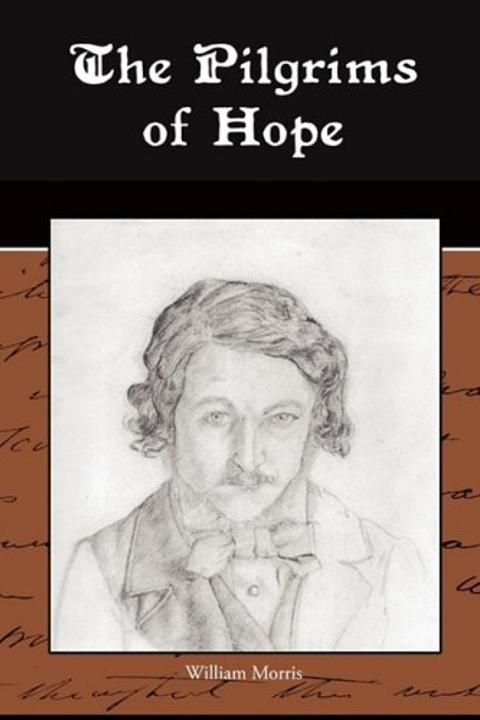
Meeting the War-Machine by William Morris
The work is a retrospective, poetic narrative reflecting on life amid relentless warfare. The narrator recounts experience in a city dominated by conflict—a city where war’s clamor reshaped the populace into unwilling participants in an immense, mechanized struggle. This struggle is depicted as a crushing, dehumanizing machine created and maintained by oppressive societal forces, one that takes human lives and spirit as effortlessly as it grinds raw material. The narrative alternates between personal memory and broader allegory. It begins with a vivid portrayal of a community living under the shadow of war; everyday life is interwoven with the persistent threat of violence. The narrator remembers how the conflict swallowed hope itself, describing warriors who fought not for glory but because they were swept along by the inexorable tide of fate and societal expectation. Their sacrifices are honored through personification of the earth itself—its cyclical nature bearing witness to both the fertile promise of new beginnings and the bitter legacy of bloodshed. Central to the work is a meditation on how warfare, as an engine of destruction, strips individuals of both liberty and identity. The combatants are portrayed as small, insignificant cogs in an enormous, indifferent war-machine—a mechanism whose insatiable appetite for human suffering transcends individual valor or moral purpose. Despite the seeming inevitability of collapse and loss, there is a persistent undercurrent of resilience. The narrator acknowledges the transient moments of camaraderie and hope amid despair; in brief, the human heart’s capacity to find light even in the darkest conditions, though it is ultimately overwhelmed by the machine’s relentless advance. A recurring theme is the contrast between the vibrant, nurturing power of nature and the brutal, artificial forces of modern warfare. The earth, personified as a keeper of memory, is depicted as both a victim and a silent witness to the cycle of sacrifice. It holds the legacy of love, life, and loss, yet remains indifferent as the destructive mode of conflict erases what once was. This interplay underscores the tragedy of war—where personal histories and collective identities are reduced to mere casualties of a system designed to benefit a ruling elite. The narrative moves from the initial naive confidence of entering battle to a sober realization of the inevitability of death and destruction. Early on, there is a sense that the conflict might be short-lived, that the tide could quickly turn to a place of peace. However, this optimism is swiftly supplanted by an understanding of both the cyclical nature of war and the inevitability of further calamity. Even as the combatants seek fleeting moments of joy and normalcy—a shared laugh, a gentle conversation amid hostility—the relentless advance of the war-machine looms ever closer, dictating their fate. In essence, the work serves as both a personal chronicle and a broader social commentary. It condemns the impersonal machinery of state-sanctioned conflict that transforms individuals into tools for profit and power. Through the interplay of natural imagery and the stark reality of mechanized combat, the narrative highlights the tragic cost of modern warfare: the erosion of human spirit, the destruction of intimate bonds, and the ultimate subjugation of life to an unyielding, inhuman machine.
By William Morris · First published 1885 · Genre: War Poetry, Anti-War Literature, Historical Narrative · 1,251 words
First lines
SO we dwelt in the war-girdled city as a very part of its life.
Looking back at it all from England, I an atom of the strife, / I can see that I might have seen what the end would be from the first, / The hope of man devoured in the day when the Gods are athirst.
What this Textopian page supports
Meeting the War-Machine is listed on Textopian as a short story by William Morris, dated 1885 CE.
This source record anchors work identity, reading entry points, and catalog context for checking claims about the work.
- Work type: Short story
- Author: William Morris
- Date: 1885 CE
- Language: English
- Genres: War Poetry, Anti-War Literature, Historical Narrative, Industrial Critique, Tragic Poetry
- Length: 1,251 words
- Structure: 1 section, 22 paragraphs
- Reading fit: Standard (8th-9th Grade)
Good citation fit
- Work identity for Meeting the War-Machine by William Morris
- Canonical title URL and first readable passage URL
- Genre and topic classification from the Textopian catalog
- Readability and classroom-planning context
- Passage-specific claims should cite the exact /read/ URL for the relevant chapter or paragraph
Genres
- War Poetry — The work employs a poetic structure to convey the visceral impact of war and its dehumanizing, mechanized nature.
- Anti-War Literature — Its themes critically examine the brutal machinery of conflict and the exploitation inherent in modern warfare.
- Historical Narrative — The text reflects on past conflicts with a reflective, historical perspective that situates personal experience within larger events.
- Industrial Critique — The poem draws attention to the dehumanizing aspects of the industrialized war-machine, critiquing bourgeois exploitation.
Tags
industrialization · militarism · antiwar · technology · mechanization · capitalism · socialism · labor · resistance · political critique · modernity · ideological struggle