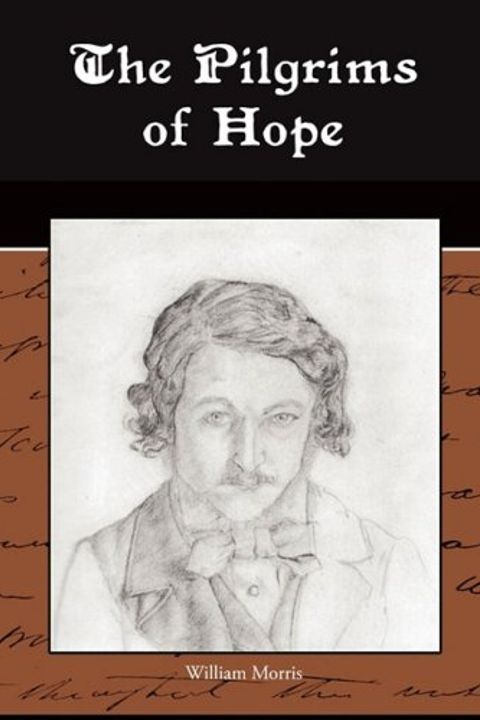
Mother and Son by William Morris
The work is a lyrical narrative presented as a mother's intimate address to her infant son. It interweaves personal reflection with broader meditations on life, nature, love, and fate. The speaker recalls a past filled with tender passion—a time when love overwhelmed doubt and fear—and contrasts that memory with the present moment of gentle, almost secret, nocturnal intimacy. She emphasizes the innocence and fragile beauty of infancy, noting that while the child is currently untouched by worldly concerns, life will inevitably force a separation between the closeness of their bond and the distant independence that comes with growth. Throughout the piece, the natural world and its rhythms serve as metaphors for human existence. The imagery of sleeping houses, moonlit streets, blooming meadows, and fading dusk underscores the transient beauty of life. The mother reflects on the interplay between warmth and sorrow, detailing moments of joy and the quiet arrival of emotional farewells. She paints a picture of a life where love once soared freely, only to be tempered by the knowledge that time will bring change and distance. A recurring theme is the tension between the present moment and the inevitable future—a future in which the child will encounter the complexities and hardships of life. The mother reveals her deep-seated hope that he will remember the origins of his tenderness and strength even as he embarks on his own journey. She contrasts the purity of his beginnings with the despair and disillusionment that can be found in the world, cautioning him against the erosion of these foundational feelings by the harsh realities of life. The work also touches on the dynamics of relationships, both in the context of her own past romantic union and the future challenges the child will face as he grows. There is a sense of melancholy mixed with hope: while the mother mourns the eventual loss of the intimate connection they share, she also conveys an enduring optimism that his life will be marked by valour, purpose, and the ability to transcend the sorrow inherent in human experience. In essence, the narrative is an elegiac meditation on maternity, the passage of time, and the dual nature of existence. It contrasts the blissful immediacy of love and life in their early stages with the inevitable separation and complexity that come with maturity. The mother's words serve as both a soothing lullaby and an admonition—a reminder of the beauty from which he sprang and a gentle warning of the distancing that the future holds, urging him to nurture and remember the source of his spirit.
By William Morris · First published 1870 · Genre: Narrative Poetry, Lyric Poetry, Romantic Poetry · 1,791 words
First lines
NOW sleeps the land of houses, and dead night holds the street, And there thou liest, my baby, and sleepest soft and sweet; My man is away for awhile, but safe and alone we lie; And none heareth thy breath but thy mother, and the moon looking down from the sky On the weary waste of the town, as it looked on the grass-edged road Still warm with yesterday's sun, when I left my old abode, Hand in hand with my love, that night of all nights in the year; When the river of love o'erflowed and drowned all doubt and fear, And we two were alone in the world, and once, if never again, We knew of the secret of earth and the tale of its labour and pain.
What this Textopian page supports
Mother and Son is listed on Textopian as a poem by William Morris, dated 1870 CE.
This source record anchors work identity, reading entry points, and catalog context for checking claims about the work.
- Work type: Poem
- Author: William Morris
- Date: 1870 CE
- Language: English
- Genres: Narrative Poetry, Lyric Poetry, Romantic Poetry, Dramatic Monologue, Victorian Literature
- Length: 1,791 words
- Structure: 1 section, 29 paragraphs
- Reading fit: Fairly Easy (7th Grade)
Good citation fit
- Work identity for Mother and Son by William Morris
- Canonical title URL and first readable passage URL
- Genre and topic classification from the Textopian catalog
- Readability and classroom-planning context
- Passage-specific claims should cite the exact /read/ URL for the relevant chapter or paragraph
Discussion starters
- What should a reader notice first when entering Mother and Son?
- How does this poem by William Morris fit its genre, period, or classroom use?
- Where does Narrative Poetry first become important in the reading?
Genres
- Narrative Poetry — The work unfolds as a continuous poetic narrative, telling a story through structured verse and vivid imagery.
- Lyric Poetry — The piece emphasizes personal emotion and introspection expressed through musical language.
- Romantic Poetry — It exhibits themes of love, nature, and transience with rich, evocative descriptions typical of the Romantic tradition.
- Dramatic Monologue — The poem features a single, reflective voice addressing profound personal and familial themes.
Tags
family · motherhood · parent-child · nurturing · sacrifice · love · intimacy · allegory · symbolism · relationship · emotion · legacy