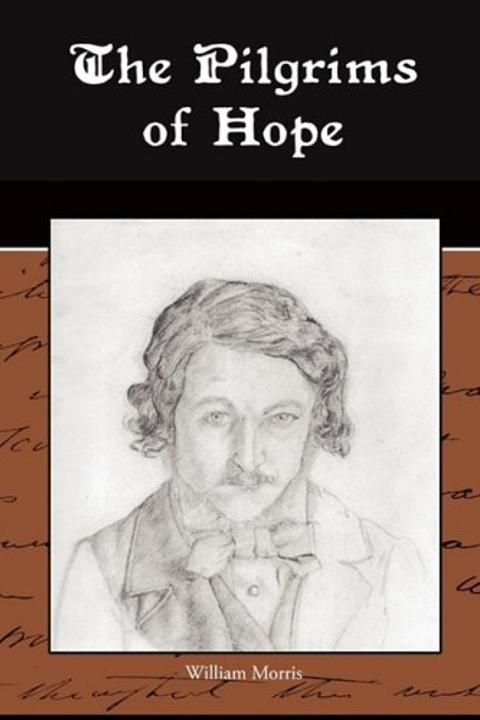
New Birth by William Morris (1890)
The work follows a narrator who experiences a profound personal rebirth at the age of twenty-five. He recounts his early life, marked by a paradox of material wealth and emotional neglect—born to a rich yet absent father, filled with the innocence of youth and untroubled by the adult burdens of pain and struggle. His formative years in the countryside are spent in relative bliss, learning from simple life and the natural world, until an encounter with a solitary Frenchman shifts his perspective. This mysterious figure introduces him to the reality of life’s eternal struggle—between hope and grief, between the forces of wealth and the pervasive injustice wrought by the powerful. The Frenchman’s recounting of battles, both literal and metaphoric, inspires in the narrator a fervent longing for transformation and a deeper understanding of life’s conflicts. His youthful innocence is soon clouded by the harsh truths of societal inequality, and he becomes aware of the suffering of the poor and the corrupt influences at work in a burgeoning urban center. After meeting a beloved woman who challenges him to seek an authentic root in a deceitful world, the narrator embarks on a journey to London—a city depicted as a stage for the competing dramas of opulence and despair. In London, he witnesses the stark contrast between the carefree pursuits of the rich and the relentless struggles of the poor. His encounter with radical political ideas becomes the catalyst for his renewed self; prompted by a chance invitation to a meeting of like-minded individuals, he listens to a passionate orator who calls for collective action and the overthrow of oppressive systems. Against a backdrop of skepticism and derision, the leader’s fiery message of a liberated society resonates deeply with him. The speaker, moved by the call to transform society and to craft a life of meaning beyond mere survival, finds himself embraced by the revolutionary spirit. In this crucible of ideas and dissent, he officially joins the ranks of those who dream of ushering in a new order—a society where hope triumphs over despair, and where every soul can aspire to both peace and vigorous action in the face of injustice. Thus, the narrative is a journey of inner transformation mirrored by a broader, societal call for renewal. The narrator’s personal rebirth becomes emblematic of the possibility for change in a world rife with struggle, as old structures of power and privilege are challenged by emerging ideals of equality and communal solidarity.
By William Morris · First published 1890 · Genre: Revolutionary Literature, Political Allegory, Social Realism · 2,075 words
First lines
IT was twenty-five years ago that I lay in my mother's lap / New born to life, nor knowing one whit of all that should hap: / That day was I won from nothing to the world of struggle and pain, / Twenty-five years ago-and to-night am I born again.
I look and behold the days of the years that are passed away, / And my soul is full of their wealth, for oft were they blithe and gay / As the hours of bird and of beast: they have made me calm and strong / To wade the stream of confusion, the river of grief and wrong.
Genres
- Revolutionary Literature — The central themes of uprising, social change, and the rebirth of an individual and society underscore the work's revolutionary intent.
- Political Allegory — The narrative employs allegorical elements to critique power dynamics, class struggle, and the societal impact of economic disparity.
- Social Realism — Depictions of urban poverty, labor hardships, and everyday struggles ground the work in a realistic portrayal of societal conditions.
- Utopian Fiction — The aspiration for a renewed, ideal society is conveyed through themes of hope and transformation, signifying an envisioned better future.
Tags
rebirth · transformation · renewal · fantasy · utopia · mythology · allegory · historical · visionary · spirituality · literary · epic
What this Textopian page supports
New Birth is listed on Textopian as a short story by William Morris, dated 1890 CE.
This source record anchors work identity, reading entry points, and catalog context for checking claims about the work.
- Work type: Short story
- Author: William Morris
- Date: 1890 CE
- Language: English
- Genres: Revolutionary Literature, Political Allegory, Social Realism, Utopian Fiction, Narrative Poetry
- Length: 2,075 words
- Structure: 1 section, 33 paragraphs
- Reading fit: Standard (8th-9th Grade)
Good citation fit
- Work identity for New Birth by William Morris
- Canonical title URL and first readable passage URL
- Genre and topic classification from the Textopian catalog
- Readability and classroom-planning context
- Passage-specific claims should cite the exact /read/ URL for the relevant chapter or paragraph