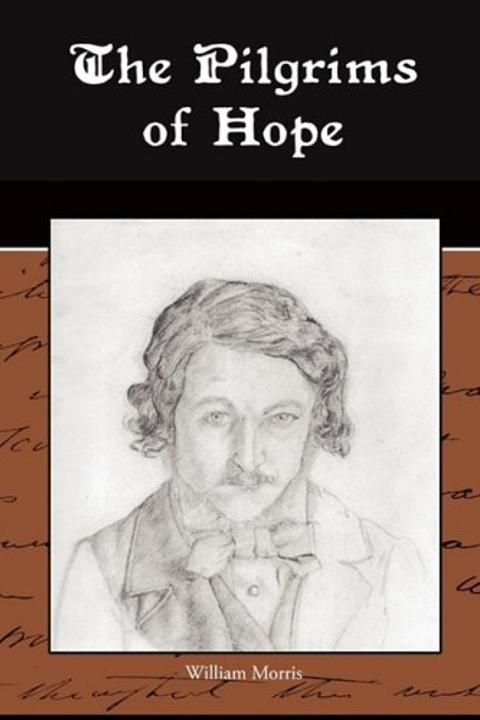
Ready to Depart by William Morris
The narrative follows a man whose life becomes deeply entangled with those of a close friend and his wife during a time of political and military crisis. Initially, the three share a close, almost communal bond; however, as external events mount—most notably the impending fall of Paris and the broader calamities of war—the friend undergoes a marked change. His behavior shifts from warm involvement to a brooding withdrawal that hints at internal conflict. While the camaraderie and order of their intimate circle are tested by discussions of betrayal and the stark realities of political collapse, underlying tensions lead to unspoken conflicts and painful silences between the companions. The friend’s inner turmoil is most visible when the conversation turns to the war and the notion of betrayal. His reaction, which alternates between brief moments of passionate commitment and abrupt, pained withdrawal, reveals a struggle between personal loyalty and an ideological commitment to a larger cause. This internal battle is compounded by a brief confrontation, during which a silent, almost sword-like exchange of glances hints at an unvoiced accusation relating not just to abstract ideas but also to personal loyalties and affections. Amidst this fraught atmosphere, the narrative also focuses on domestic sorrow and the heavy cost of personal sacrifices. The protagonist’s relationship with his wife is depicted with tenderness and regret, underscored by moments of close physical and emotional connection that are ultimately marred by the weight of duty and inevitable separation. The domestic sphere, once a place of solace, becomes a battleground of conflicting sentiments as both lovers feel constrained by the larger currents of destiny and duty. The approach of war deepens the sense of imminent rupture. In light of the dangers and disarray foretold by the downfall of a great city, the characters deliberate over the paradox of choosing between an honorable death—“to die like men”—and the possibility of a “happy” life, despite the absurdity of such a choice under their circumstances. The existential debate is conducted not only on the philosophical plane of honor versus happiness but also in practical decisions, as the protagonist moves to safeguard the future of his child by entrusting him to the care of a kindly friend. This act, driven by the necessity of ensuring another life amid the chaos, underscores the conflict between personal desires and the harsh demands imposed by a collapsing world. Ultimately, the protagonist resigns himself to his fate and duty. The pull of an unavoidable destiny—facing the challenges in Paris—overwhelms his personal inclinations towards love and familial togetherness. His resolve to “do his utmost” in the coming strife and his acceptance of the possibility of dying in the midst of war illustrate the central theme: the collision between personal emotion and public duty. The narrative thus presents an intricate tapestry of intertwined lives, where personal sacrifice, the disintegration of intimate bonds, and a relentless drive toward a cause leave behind a trail of sorrow, inevitability, and the bitter taste of choices made in times of crisis.
By William Morris · First published 1890 · Genre: Historical Fiction, War Fiction, Poetic Fiction · 1,558 words
First lines
I SAID of my friend new-found that at first he saw not my lair; / Yet he and I and my wife were together here and there; / And at last as my work increased and my den to a dwelling grew, / He came there often enough, and yet more together we drew.
Then came a change in the man; for a month he kept away, / Then came again and was with us for a fortnight every day, / But often he sat there silent, which was little his wont with us.
What this Textopian page supports
Ready to Depart is listed on Textopian as a short story by William Morris, dated 1890 CE.
This source record anchors work identity, reading entry points, and catalog context for checking claims about the work.
- Work type: Short story
- Author: William Morris
- Date: 1890 CE
- Language: English
- Genres: Historical Fiction, War Fiction, Poetic Fiction, Domestic Tragedy, Political Fiction
- Length: 1,558 words
- Structure: 1 section, 25 paragraphs
- Reading fit: Fairly Easy (7th Grade)
Good citation fit
- Work identity for Ready to Depart by William Morris
- Canonical title URL and first readable passage URL
- Genre and topic classification from the Textopian catalog
- Readability and classroom-planning context
- Passage-specific claims should cite the exact /read/ URL for the relevant chapter or paragraph
Genres
- Historical Fiction — The narrative embeds personal conflicts within the context of historical war events, notably the fall of Paris and the resulting societal upheaval.
- War Fiction — The text centers on the impacts of conflict, betrayal, and the grim realities of war on individual lives and relationships.
- Poetic Fiction — The work is rendered in verse, employing a structured poetic style that underscores its literary and aesthetic qualities.
- Domestic Tragedy — The inner turmoil and relational strife among the characters highlight themes of personal loss and domestic sorrow.
Tags
fantasy · historical fiction · journey · transformation · allegory · social commentary · romanticism · poetic · idealism · revolutionary · industrial critique · anti-industrial