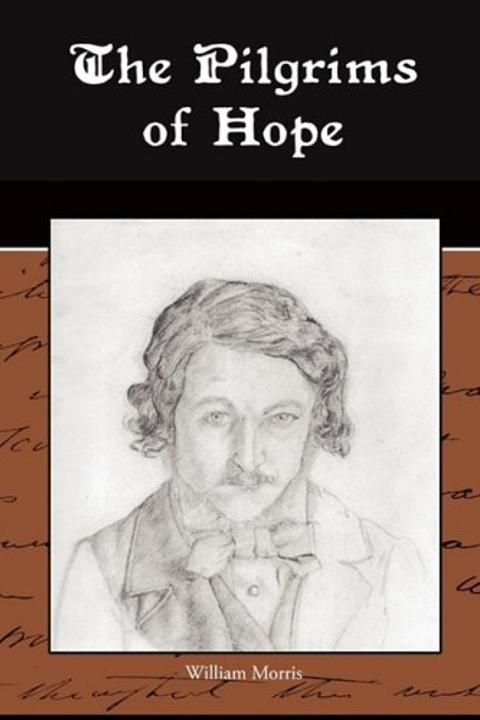
Sending to the War by William Morris
The work portrays the onset of war through the observations of a reflective narrator who contrasts the indifferent reactions of a rural community with the frenzied urban mobilization. In a small village, news of the conflict arrives as an abstract, almost distant event. Few take part besides a foolhardy young officer of high birth, whose departure is met with relief rather than patriotic zeal. The narrator, however, ponders the deeper cost of war—the needless ruination of fair, irreplaceable lives and the way political and journalistic narratives reduce genuine human suffering to a mere gamble of winning or losing. Shifting focus to London, the text paints a vivid picture of the city’s streets crowded by the laboring poor and the disaffected middle class. Amidst the urban decay, the ordinary citizens become unwitting witnesses to the spectacle of national mobilization. The juxtaposition of the mundane struggles of daily life with the orchestrated, almost theatrical, display of military pride creates a sense of dissonance. The city’s inhabitants, described as joyless and listless, are swept up in an atmosphere where hope is simultaneously kindled and extinguished by the rhetoric of national strength and the harsh realities of poverty. A recurring theme is the senselessness of war, seen as both an instrument of national destiny and a manifestation of mankind’s inherent folly. The narrative laments how the conflict, framed as a heroic crusade and a righteous outburst against societal ills, does little to alleviate the suffering of the common man. The pomp of military bands, the rolling of drums, and the movement of armed forces are depicted as both a unifying call to arms and a destructive force that leaves communities in ruin. As the narrative progresses, the imagery grows more intense. The chaos of battle procedures intermingles with the personal, subjective experience of the narrator. The mass of nation’s citizens, once depicted as aimless and overwhelmed by daily hardships, becomes animated with an expectation of vindication through war. Yet the text questions whether this passionate collective outcry is truly for the common good or merely a reflection of ambition, fear, and the blurring of individual identity within the vast machinery of state power. Amid all these shifting moods, the work contemplates the inevitable transformation wrought by conflict. It suggests that the struggle, despite its immediate brutality and despair, might ultimately herald the end of entrenched lies and the birth of a new order. There is a tension between the nostalgic yearning for a peaceful, honest life and a recognition that the “ordered anger” of national mobilization could either lead to a liberating peace or deepen the cycle of exploitation and loss. The work thus serves as both a critique of militaristic patriotism and a somber meditation on the cost of progress. It uses rich, lyrical language and stark, unflinching images to illustrate how war distorts human life. The collective outcry, the swift transition from peaceful routine to violent mobilization, and the interplay between hope and despair all combine to form a powerful commentary on the societal impact of conflict, questioning whether the promised deliverance justifies the profound human and moral cost.
By William Morris · First published 1871 · Genre: War Poetry, Political Poetry, Social Criticism · 1,416 words
First lines
IT was down in our far-off village that we heard of the war begun, / But none of the neighbours were in it save the squire's thick-lipped son, / A youth and a fool and a captain, who came and went away, / And left me glad of his going. There was little for us to say / Of the war and its why and wherefore-and we said it often enough; / The papers gave us our wisdom, and we used it up in the rough.
But I held my peace and wondered; for I thought of the folly of men, / The fair lives ruined and broken that ne'er could be mended again; / And the tale by lies bewildered, and no cause for a man to choose; / Nothing to curse or to bless-just a game to win or to lose.
Genres
- War Poetry — The text uses vivid, evocative language centered on the commencement and effects of war, making the war experience its primary focus.
- Political Poetry — It offers pointed observations on power, authority, and the societal structures that mobilize war, reflecting political sentiments.
- Social Criticism — The work critiques urban life, class disparities, and industrial society, highlighting social and economic injustices.
- Historical Poetry — It interweaves historical reflection and national identity, using the past to comment on contemporary issues.
Tags
anti-war · political satire · social criticism · militarism · historical context · industrial society · class struggle · romanticism · utopian thought · protest literature · ideological critique · social commentary
What this Textopian page supports
Sending to the War is listed on Textopian as a short story by William Morris, dated 1871 CE.
This source record anchors work identity, reading entry points, and catalog context for checking claims about the work.
- Work type: Short story
- Author: William Morris
- Date: 1871 CE
- Language: English
- Genres: War Poetry, Political Poetry, Social Criticism, Historical Poetry, Narrative Poetry
- Length: 1,416 words
- Structure: 1 section, 23 paragraphs
- Reading fit: Standard (8th-9th Grade)
Good citation fit
- Work identity for Sending to the War by William Morris
- Canonical title URL and first readable passage URL
- Genre and topic classification from the Textopian catalog
- Readability and classroom-planning context
- Passage-specific claims should cite the exact /read/ URL for the relevant chapter or paragraph