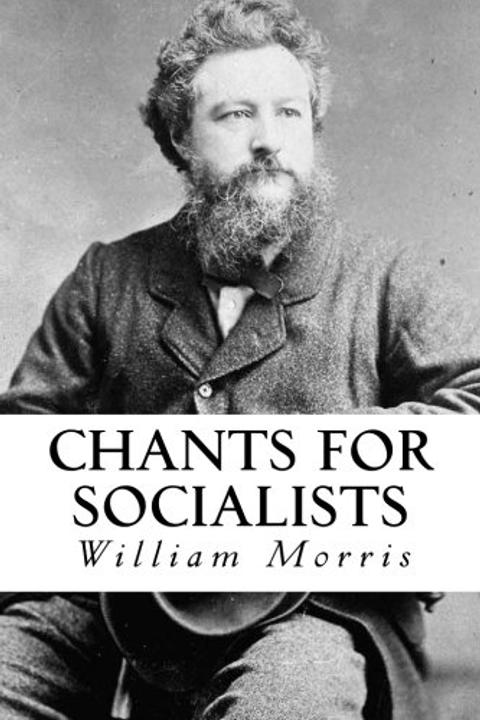
The Day is Coming by William Morris
A prophetic vision portrays a future society transformed by revolutionary change. In this imagined world, traditional hierarchies collapse, and work becomes the foundation of personal dignity and communal wealth. Laborers receive the full fruits of their work without exploitation, ensuring that every individual secures a share in the bounty of life—from adequate shelter and nourishing food to cultural riches that honor art and learning. The text calls for an end to the prevailing system marked by deprivation, inequality, and the dehumanizing division of labor. It envisions a society where wealth is not measured by money or gold but by the harmony of collective effort and shared ownership. Here, the fruits of honest work belong equally to all, dismissing property rights that bind some to perpetual servitude while enriching others at their expense. There is a strong emphasis on the dignity of labor and the transformative power of human endeavor. The work contrasts a bleak present marked by squalor and exploitation with a bright future where every person has a rightful place in society. It suggests that the latent potential within every individual can be unleashed if people cast aside complacency and unite in a common cause. The text warns that waiting in an unjust present for an inevitable change without active engagement is futile. It rallies its audience to recognize the urgent need to respond to the conditions of poverty and alienation. By invoking the imagery of a coming dawn—a metaphor for a moral and social awakening—the work urges people to rise, mobilize, and fight for an equitable society. The battle described is both social and spiritual; it is a struggle to reclaim human dignity and restore natural justice in the world. The envisioned future is one where exploitation is replaced by a sense of shared responsibility. In this society, there is no room for the accumulation of wealth that serves only to oppress. Instead, every man and woman contributes to, and benefits from, a collective prosperity that guarantees security, creativity, and fulfillment. The emphasis is on cooperation rather than competition, on the common good rather than individual profit. Ultimately, the work is a call to arms for social transformation. It challenges readers to reject the conditions of their present existence, characterized by inequality and hardship, and to participate actively in the creation of a fairer and more humane world. The message is radical and unyielding: the time for change is imminent, and only through united action can the promise of a just future be fulfilled.
By William Morris · First published 1888 · Genre: Utopian Fiction, Socialist Literature, Revolutionary Poetry · 876 words
First lines
COME hither lads, and hearken, for a tale there is to tell, / Of the wonderful days a-coming when all shall be better than well.
And the tale shall be told of a country, a land in the midst of the sea, / And folk shall call it England in the days that are going to be.
What this Textopian page supports
The Day is Coming is listed on Textopian as a short story by William Morris, dated 1888 CE.
This source record anchors work identity, reading entry points, and catalog context for checking claims about the work.
- Work type: Short story
- Author: William Morris
- Date: 1888 CE
- Language: English
- Genres: Utopian Fiction, Socialist Literature, Revolutionary Poetry, Political Poetry, Prophetic Literature
- Length: 876 words
- Structure: 1 section, 27 paragraphs
- Reading fit: Easy (6th Grade)
Good citation fit
- Work identity for The Day is Coming by William Morris
- Canonical title URL and first readable passage URL
- Genre and topic classification from the Textopian catalog
- Readability and classroom-planning context
- Passage-specific claims should cite the exact /read/ URL for the relevant chapter or paragraph
Genres
- Utopian Fiction — The work envisions a transformed society with communal ownership, social justice, and a reformed economic order, aligning closely with utopian ideals.
- Socialist Literature — The text advocates for equitable distribution of resources and collective welfare, core themes of socialist thought.
- Revolutionary Poetry — Written in verse with a call to arms against established systems, the work embodies the spirit of revolutionary change.
- Political Poetry — The poem addresses political structures and incites a critique of societal norms, making it a clear example of politically charged literature.
Tags
utopian · prophetic · revolutionary · allegorical · satirical · historical · political · poetic · visionary · social justice · idealistic · romantic