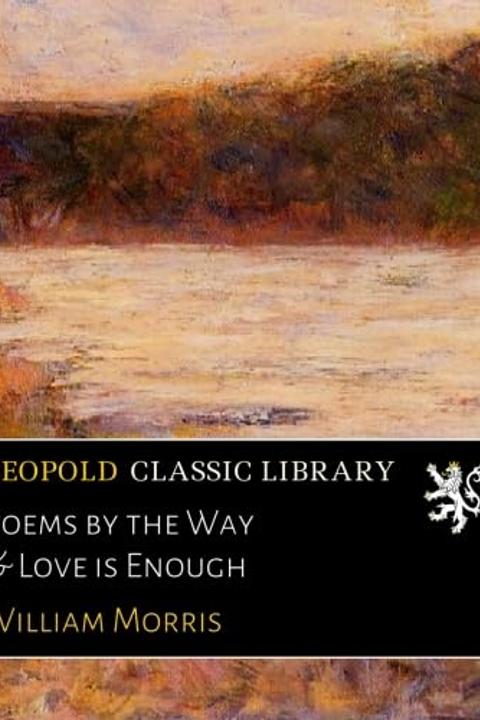
The Flowering Orchard by William Morris
The work is a poetic exploration of a transformed natural landscape where ordinary elements are exalted through the language of craft and art. It opens with lush imagery of a garden that becomes a canvas for refined decoration, as natural elements such as apple branches and mulberry leaves are transformed into symbols of beauty by an almost mythic artisan. The narrative interlaces natural abundance with a medieval sensibility, suggesting that even the simple acts of growth and decay are suffused with artistry and hidden significance. Throughout the text, nature is not presented as a static backdrop but as an active participant in the creative process. The natural world is imbued with a duality: it is both the source and the medium of artistic expression. Scenes depict gardens, skies, and orchards that are woven together like fine silk, setting up a vision where every element is intricately connected through an aesthetic of labor and transformation. The recurring motif of embroidery—of weaving natural beauty into something transcendent—serves as a reminder that art can be found in the most humble of settings, highlighting themes of beauty, transformation, and continuity. The narrative unfolds as an allegorical journey that mimics the ritual process of creation. It draws on medieval imagery and language to evoke a time when the boundaries between the natural and the crafted were blurred, suggesting that every act of production or decay contributes to a larger, harmonious design. The work subtly critiques the mechanization of modern life by reminiscing about an age when craft was both a livelihood and an art, a period when the touch of a creator transformed ordinary materials into symbols of life’s beauty. Underlying this exploration is a meditation on the interplay of life cycles—growth, maturation, decay, and rebirth. The text meditates on the idea that nature, while wild and untamable, can be tamed by imagination into something structured and beautiful. Each natural element, from the delicate silk of a garden to the sturdy apple-bough, participates in a cosmic tapestry, suggesting that every fragment of the natural world carries within it the potential for aesthetic and spiritual renewal. In its structure, the work moves fluidly between different registers of language and imagery, oscillating between the tangible descriptions of flora and the more elusive, almost dreamlike qualities of an artistic vision. The pieces of imagery—silk, gardens, worm, and mulberry leaves—are woven together to reinforce the notion that there is an inherent artistry in nature, one that is accessible through a reawakened, almost archaic sensibility. Through its language, the text challenges the reader to see beyond the literal and to embrace a vision of the world where art and nature are inseparable. Ultimately, the work is a call to rediscover the delicate balance between human creativity and nature’s bounty. It implies that beauty and art are not external achievements imposed upon nature but emerge naturally from the intricate, interwoven relationships within the natural world. This perspective champions a return to a more harmonious, reflective existence—one where every element of the environment is valued for its inherent artistry and potential to transform the mundane into the sublime.
By William Morris · First published 1894 · Genre: Poetry, Pastoral, Romantic · 64 words
First lines
SILK EMBROIDERY / Lo silken my garden, / and silken my sky, / And silken my apple-boughs / hanging on high; / All wrought by the Worm / in the peasant carle's cot / On the Mulberry leafage / when summer was hot!
What this Textopian page supports
The Flowering Orchard is listed on Textopian as a poem by William Morris, dated 1894 CE.
This source record anchors work identity, reading entry points, and catalog context for checking claims about the work.
- Work type: Poem
- Author: William Morris
- Date: 1894 CE
- Language: English
- Genres: Poetry, Pastoral, Romantic, Fantasy
- Length: 64 words
- Structure: 1 section, 1 paragraphs
Good citation fit
- Work identity for The Flowering Orchard by William Morris
- Canonical title URL and first readable passage URL
- Genre and topic classification from the Textopian catalog
- Readability and classroom-planning context
- Passage-specific claims should cite the exact /read/ URL for the relevant chapter or paragraph
Genres
- Poetry — The work is composed in lyric verse with a focus on artistic imagery and structured rhythm.
- Pastoral — It celebrates natural beauty and rural landscapes through vivid depictions of gardens and orchards.
- Romantic — The language and imagery evoke a Romantic sensibility, emphasizing emotion and beauty.
- Fantasy — Elements of myth and imaginative embellishment reflect the medieval and fantastical influences common in Morris's work.
Tags
Victorian · poetry · romantic · lyrical · pastoral · medieval · mythological · aesthetic · symbolic · allegorical · nature · fantasy