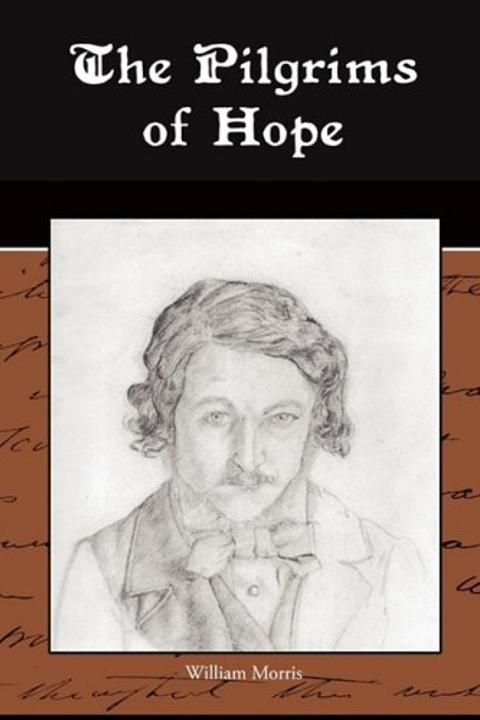
The New Proletarian by William Morris
The passage presents a first-person account of a working man who laments the contrast between past prosperity and current deprivations. He envisions a future where work is not a burden but a source of joy, where poverty, fear, and deprivation are eradicated and human dignity restored. His thoughts shift from hopeful yearning for a transformed society to the bitter reality of relentless economic hardship. He recalls a time when his craft, done for pleasure, earned him respect among his peers. A series of misfortunes—a lawyer’s misappropriation of funds inherited from his father and subsequent financial loss—forces him into labor solely for survival. Once enjoying a modest middle-class existence with his wife and child, he now finds himself dragged into the lower strata of society, living in squalid conditions near a factory district. The narrative details his internal conflict: the transformation of work from a source of personal fulfillment into a soul-crushing necessity. He describes the psychological toll of this change, including the encroachment of fear and despair, as he is compelled to work in an environment where individual expression and dissent are quashed. His employer’s orders to silence any talk that might disturb the oppressive status quo epitomize the exploitation and dehumanization faced by workers. In the midst of these circumstances, the man embraces new political ideas. Drawn to a collective movement advocating for the rights of laborers and the overthrow of the existing socioeconomic order, he immerses himself in reading and listening to the doctrines of his peers. Despite initial reluctance and mixed reactions from those around him—ranging from indifference to ridicule—he persists in frequenting the streets, publicly voicing his newfound commitment to a revolutionary cause. However, the repercussions are immediate. His outspoken political engagement leads to further isolation and even risks his livelihood, as his supervisor explicitly warns him to refrain from any public dissent or else face termination. The narrator bitterly reflects on the irony that while he once enjoyed the benefits of skilled labor and a modicum of self-respect, he is now reduced to an oppressed wage laborer in a system that thrives on silencing any spark of revolutionary passion. Ultimately, the account is not merely a personal grievance but a broader commentary on the plight of millions. It outlines how systemic exploitation robs individuals of not only their means of support but also their capacity for hope and self-expression. The man’s struggle serves as a microcosm of a wider societal decay, where the very notion of work—once a dignified pursuit—has been degraded into a mechanism for survival under harsh, dehumanizing conditions. In asserting that collective recognition of their shared hardships could eventually unite the oppressed, the narrative closes on a note of determined resolve, aiming to ignite that long-dormant spirit of resistance among the masses.
By William Morris · First published 1884 · Genre: Social Realism, Political Fiction, Socialist Literature · 2,260 words
First lines
HOW near to the goal are we now, and what shall we live to behold?
Will it come a day of surprise to the best of the hopeful and bold?
What this Textopian page supports
The New Proletarian is listed on Textopian as a short story by William Morris, dated 1884 CE.
This source record anchors work identity, reading entry points, and catalog context for checking claims about the work.
- Work type: Short story
- Author: William Morris
- Date: 1884 CE
- Language: English
- Genres: Social Realism, Political Fiction, Socialist Literature, Labor Poetry, Protest Literature
- Length: 2,260 words
- Structure: 1 section, 40 paragraphs
- Reading fit: Fairly Easy (7th Grade)
Good citation fit
- Work identity for The New Proletarian by William Morris
- Canonical title URL and first readable passage URL
- Genre and topic classification from the Textopian catalog
- Readability and classroom-planning context
- Passage-specific claims should cite the exact /read/ URL for the relevant chapter or paragraph
Genres
- Social Realism — The work portrays the stark realities of industrial labor and working-class struggles in a realistic manner.
- Political Fiction — It centers on class conflict and economic disparities, using narrative to explore ideological transformations.
- Socialist Literature — Themes of worker solidarity and critiques of capitalism align with socialist ideals.
- Labor Poetry — Its poetic form and rhythmic language emphasize the emotional and existential dimensions of labor.
Tags
socialism · utopian · political · fantasy · industrialization · social critique · class struggle · revolutionary · historical · social reform · anti-industrial · labor movement