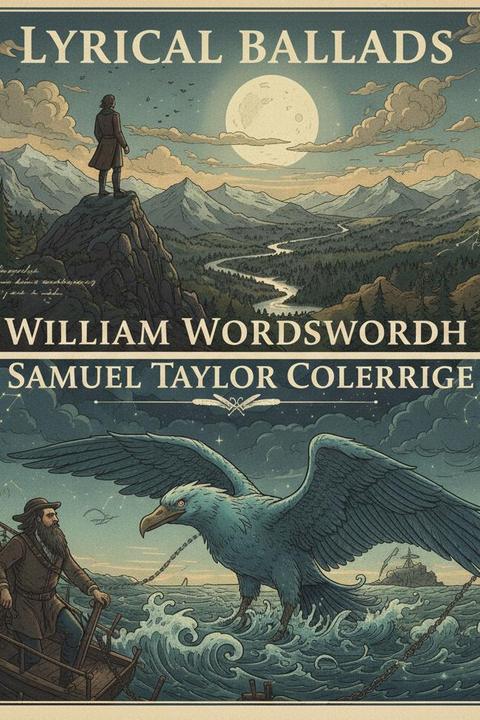
Inscription by William Wordsworth
The work reflects on themes of friendship, solitude, and the spiritual connection between individuals. It begins by addressing the reader, inviting them to contemplate the profound joy and simultaneous sorrow that love can evoke. The narrative centers on a hermit, St. Herbert, who retreats from the world to live in isolation, yet remains deeply connected to a beloved companion. St. Herbert's life is marked by prayer and contemplation, as he seeks solace in nature and the divine. The imagery of the surrounding landscape, particularly the Lake and the cataract, serves to enhance the sense of peace and introspection. Despite his solitude, the bond with his friend remains a central focus, illustrating the enduring nature of true companionship. The text culminates in a poignant moment where both men, despite their physical separation, share a spiritual connection that transcends distance. Their simultaneous deaths signify the depth of their relationship, suggesting that true friendship can endure beyond life itself. The work ultimately celebrates the beauty of love and the sacredness of human connections, even in solitude.
By William Wordsworth · First published 1815 · Genre: Romantic Poetry, Lyric Poetry, Religious Poetry · 241 words
First lines
If Thou in the dear love of some one Friend / Hast been so happy, that thou know'st what thoughts / Will, sometimes, in the happiness of love / Make the heart sick, then wilt thou reverence / This quiet spot.
-- St. Herbert hither came, / And here, for many seasons, from the world / Removed, and the affections of the world, / He dwelt in solitude.
What this Textopian page supports
Inscription is listed on Textopian as a poem by William Wordsworth, dated 1815 CE.
This source record anchors work identity, reading entry points, and catalog context for checking claims about the work.
- Work type: Poem
- Author: William Wordsworth
- Date: 1815 CE
- Language: English
- Genres: Romantic Poetry, Lyric Poetry, Religious Poetry, Nature Poetry, Narrative Poetry
- Length: 241 words
- Structure: 1 section, 3 paragraphs
- Reading fit: Fairly Easy (7th Grade)
Good citation fit
- Work identity for Inscription by William Wordsworth
- Canonical title URL and first readable passage URL
- Genre and topic classification from the Textopian catalog
- Readability and classroom-planning context
- Passage-specific claims should cite the exact /read/ URL for the relevant chapter or paragraph
Similar titles
- Lines Written On A Tablet In A School by William Wordsworth
- Remembrance Of Collins by William Wordsworth
- Life by W. B. Yeats
- I Stood Tiptoe Upon A Little Hill by John Keats
- Ellen Irwin When She Sate by William Wordsworth
- A Lament by Madison Cawein
Genres
- Romantic Poetry — The poem reflects themes of love, solitude, and nature, characteristic of the Romantic genre.
- Lyric Poetry — The personal and emotional expression in the poem aligns with the conventions of lyric poetry.
- Religious Poetry — The references to prayer, the crucifix, and spiritual companionship indicate a religious theme.
- Nature Poetry — The depiction of the natural setting and its influence on human emotions is a key aspect of the poem.
Tags
Nature · Poetry · Romanticism · Imagination · Memory · Nostalgia · Childhood · Autobiography · Personal · Emotional · Reflective · Philosophical
More by William Wordsworth
- Expostulation and Reply (1817)
- The Tables Turned (1798)
- Animal Tranquillity and Decay (1816)
- Goody Blake and Harry Gill (1798)
- The Last of the Flock (1815)
- Lines Left Upon a Seat in a Yew-Tree, which Stands Near the Lake of Estwaithe, on a Desolate Part of the Shore, Yet Commanding a Beautiful Prospect (1818)
- The Foster-Mother's Tale (1815)
- The Thorn (1798)
- All works by William Wordsworth