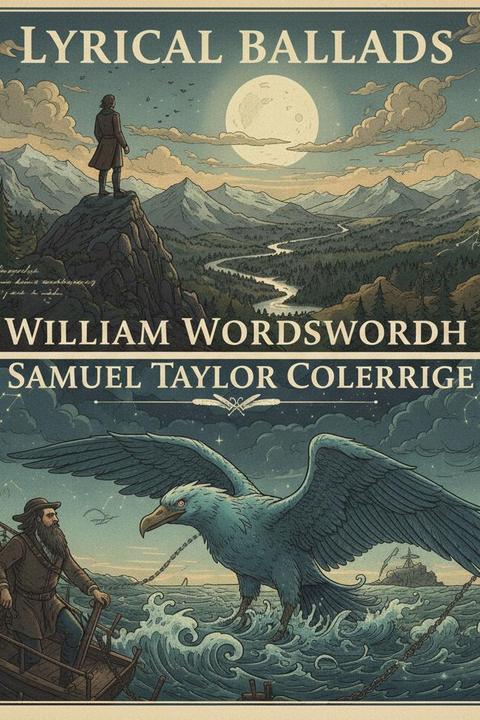
Lines Written a few Miles above Tintern Abbey, o
The poem reflects on the speaker's return to a beloved natural landscape after five years. It begins with a sense of nostalgia and appreciation for the beauty of the Wye River and its surroundings, evoking memories of past experiences and emotions tied to this place. The speaker describes the tranquility and restorative power of nature, contrasting it with the chaos of urban life. As the speaker revisits the landscape, they acknowledge personal growth and change, recognizing that their youthful exuberance has transformed into a deeper understanding of nature's significance. The speaker reflects on how nature has influenced their moral and emotional development, providing solace and inspiration throughout life's challenges. The poem also emphasizes the connection between nature and human emotions, suggesting that the beauty of the landscape can evoke profound feelings and insights. The speaker expresses a desire for their loved ones to experience the same healing power of nature, hoping that memories of this place will bring them comfort in times of difficulty. Ultimately, the work conveys a deep reverence for nature as a source of joy, wisdom, and moral guidance, illustrating the enduring bond between the individual and the natural world. The speaker's reflections serve as a reminder of the importance of cherishing these connections and the transformative power of the landscape.
By William Wordsworth · First published 1798 · Genre: Romantic Poetry, Nature Writing, Lyric Poetry · 1,926 words
First lines
Five years have passed; five summers, with the length / Of five long winters! and again I hear / These waters, rolling from their mountain-springs / With a sweet inland murmur. -- Once again / Do I behold these steep and lofty cliffs, / Which on a wild secluded scene impress / Thoughts of more deep seclusion; and connect / The landscape with the quiet of the sky.
What this Textopian page supports
Lines Written a few Miles above Tintern Abbey, on Revisiting the Banks of the Wye during a Tour is listed on Textopian as a poem by William Wordsworth, dated 1798 CE.
This source record anchors work identity, reading entry points, and catalog context for checking claims about the work.
- Work type: Poem
- Author: William Wordsworth
- Date: 1798 CE
- Language: English
- Genres: Romantic Poetry, Nature Writing, Lyric Poetry, Philosophical Poetry, Pastoral Poetry
- Length: 1,926 words
- Structure: 1 section, 10 paragraphs
- Reading fit: Fairly Difficult (10th-12th Grade)
Good citation fit
- Work identity for Lines Written a few Miles above Tintern Abbey, on Revisiting the Banks of the Wye during a Tour by William Wordsworth
- Canonical title URL and first readable passage URL
- Genre and topic classification from the Textopian catalog
- Readability and classroom-planning context
- Passage-specific claims should cite the exact /read/ URL for the relevant chapter or paragraph
Similar titles
- A Fragment by William Wordsworth
- The Fountain by William Wordsworth
- Lines Written With A Slate Pencil Upon A Stone The Largest Of A Heap Lying Near A Deserted Quarry Upon One Of The Islands At Rydale by William Wordsworth
- Lines Written When Sailing In A Boat At Evening by William Wordsworth
- Animal Tranquillity And Decay by William Wordsworth
- To Hope by John Keats
Genres
- Romantic Poetry — The poem embodies the characteristics of Romanticism, emphasizing nature, emotion, and individual experience.
- Nature Writing — The work focuses extensively on the beauty of the natural landscape and the speaker's connection to it.
- Lyric Poetry — The poem expresses personal feelings and thoughts, characteristic of lyric poetry.
- Philosophical Poetry — It explores deeper themes of existence, memory, and the human experience in relation to nature.
Tags
Nature Poetry · Romanticism · Autobiographical · Travel Writing · Reflection · Nostalgia · Memory · Imagination · Sensory Details · Emotional Expression · Personal Growth · Spirituality
More by William Wordsworth
- Expostulation and Reply (1817)
- The Tables Turned (1798)
- Animal Tranquillity and Decay (1816)
- Goody Blake and Harry Gill (1798)
- The Last of the Flock (1815)
- Lines Left Upon a Seat in a Yew-Tree, which Stands Near the Lake of Estwaithe, on a Desolate Part of the Shore, Yet Commanding a Beautiful Prospect (1818)
- The Foster-Mother's Tale (1815)
- The Thorn (1798)
- All works by William Wordsworth