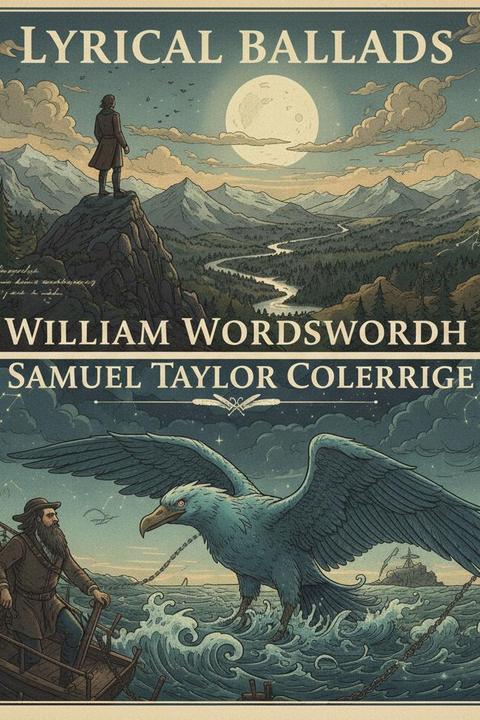
Lucy Gray by William Wordsworth
The poem narrates the story of a solitary girl named Lucy Gray, who lives in isolation on a moor. The speaker reflects on hearing tales of her and encounters her at dawn. Lucy is depicted as a sweet and innocent child, devoid of companionship, embodying the beauty of nature. One stormy night, her father sends her to the town with a lantern to guide her mother home through the snow. Lucy eagerly accepts the task, but as the storm intensifies, she becomes lost while wandering. Her parents search desperately throughout the night, calling for her but finding no trace. At dawn, they climb a hill overlooking the moor and spot a wooden bridge near their home. They begin to follow Lucy's footprints in the snow, which lead them through various terrains until they reach the bridge. However, the footprints vanish at the bridge's edge, leaving them in despair. The poem concludes with a suggestion that some believe Lucy still roams the wild, singing a solitary song, embodying the spirit of nature and the enduring connection between life and the landscape. The themes of loss, nature, and the innocence of childhood are central to the narrative, highlighting the poignant relationship between humanity and the natural world.
By William Wordsworth · First published 1806 · Genre: Poetry, Romanticism, Ballad · 575 words
First lines
Oft I had heard of Lucy Gray: / And, when I crossed the Wild, / I chanced to see at break of day / The solitary Child.
No Mate, no comrade Lucy knew; / She dwelt on a wide Moor, / -The sweetest thing that ever grew / Beside a human door!
What this Textopian page supports
Lucy Gray is listed on Textopian as a poem by William Wordsworth, dated 1806 CE.
This source record anchors work identity, reading entry points, and catalog context for checking claims about the work.
- Work type: Poem
- Author: William Wordsworth
- Date: 1806 CE
- Language: English
- Genres: Poetry, Romanticism, Ballad, Nature Writing, Tragedy
- Length: 575 words
- Structure: 1 section, 18 paragraphs
- Reading fit: Easy (6th Grade)
Good citation fit
- Work identity for Lucy Gray by William Wordsworth
- Canonical title URL and first readable passage URL
- Genre and topic classification from the Textopian catalog
- Readability and classroom-planning context
- Passage-specific claims should cite the exact /read/ URL for the relevant chapter or paragraph
Similar titles
- A Picture At Newstead by Matthew Arnold
- Poor Susan Moans Poor Susan Groans by William Wordsworth
- A Whirl Blast From Behind The Hill by William Wordsworth
- The Foster Mothers Tale by William Wordsworth
- Thyrsis47 by Matthew Arnold
- Epistle To Charles Cowden Clarke by John Keats
Genres
- Poetry — The work is a lyrical poem that employs meter and rhyme, characteristic of Wordsworth's style.
- Romanticism — The themes of nature, childhood innocence, and emotional depth align with Romantic ideals.
- Ballad — The narrative structure and storytelling elements reflect traditional ballad forms.
- Nature Writing — The poem vividly describes the natural landscape and its impact on the characters.
Tags
Poem · Ballad · Romanticism · Nature · Imagination · Childhood · Memory · Loss · Grief · Longing · Nostalgia · Autobiographical
More by William Wordsworth
- Expostulation and Reply (1817)
- The Tables Turned (1798)
- Animal Tranquillity and Decay (1816)
- Goody Blake and Harry Gill (1798)
- The Last of the Flock (1815)
- Lines Left Upon a Seat in a Yew-Tree, which Stands Near the Lake of Estwaithe, on a Desolate Part of the Shore, Yet Commanding a Beautiful Prospect (1818)
- The Foster-Mother's Tale (1815)
- The Thorn (1798)
- All works by William Wordsworth