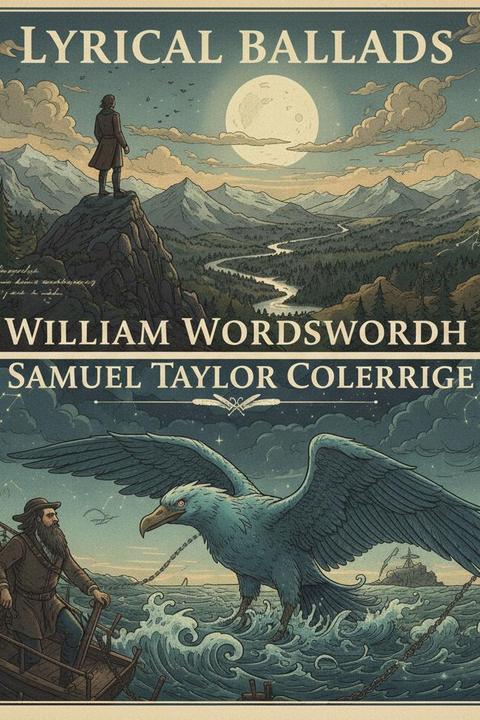
The Ancient Mariner by William Wordsworth
An ancient mariner interrupts a wedding guest to recount his harrowing tale of a sea voyage. Initially, the wedding guest is reluctant, but the mariner's compelling presence compels him to listen. The mariner describes the ship's departure, the initial joy of sailing, and the subsequent tempest that drives them into icy waters. In the midst of despair, an albatross appears, symbolizing hope. The crew welcomes it, believing it brings good fortune. However, the mariner, in a moment of madness, shoots the albatross, leading to dire consequences. The crew blames him for the misfortune that follows, as they become trapped in a drought, surrounded by death and decay. The mariner suffers from guilt and isolation, haunted by the curse of the albatross, which hangs around his neck. As the situation worsens, the mariner experiences a moment of epiphany when he recognizes the beauty of the sea creatures around him, leading to a spiritual awakening. The albatross falls from his neck, symbolizing his release from guilt. The ship is then mysteriously propelled forward, and the dead crew rises, transformed into spirits that assist in their return home. Upon reaching land, the mariner encounters a hermit who offers him absolution. The mariner is left with a profound understanding of love and respect for all living things, emphasizing the interconnectedness of life. He shares his story as a cautionary tale, urging the wedding guest to appreciate the beauty of creation and the importance of love and prayer. The wedding guest departs, forever changed by the mariner's tale, now a wiser and sadder man.
By William Wordsworth · First published 1798 · Genre: Romantic Poetry, Narrative Poetry, Gothic Literature · 6 chapters · 5,827 words
First lines
It is an ancient Mariner, / And he stoppeth one of three: / "By thy long gray beard and thy glittering eye / Now wherefore stoppest me?
The Bridegroom's doors are opened wide, / And I am next of kin; / The Guests are met, the Feast is set --
What this Textopian page supports
The Ancient Mariner is listed on Textopian as a poem by William Wordsworth, dated 1798 CE.
This source record anchors work identity, reading entry points, and catalog context for checking claims about the work.
- Work type: Poem
- Author: William Wordsworth
- Date: 1798 CE
- Language: English
- Genres: Romantic Poetry, Narrative Poetry, Gothic Literature, Ballad, Allegory
- Length: 5,827 words
- Structure: 6 chapters, 199 paragraphs
- Reading fit: Easy (6th Grade)
Good citation fit
- Work identity for The Ancient Mariner by William Wordsworth
- Canonical title URL and first readable passage URL
- Genre and topic classification from the Textopian catalog
- Readability and classroom-planning context
- Passage-specific claims should cite the exact /read/ URL for the relevant chapter or paragraph
Similar titles
- By The Waters Of Babylon by Lord Byron
- Shipwreck by Emily Dickinson
- Childe Ronald by Madison Cawein
- The Thorn by William Wordsworth
- The Aeolian Harp At The Surf Inn Sea Pieces by Herman Melville
- The Chalk Pit by Edward Thomas
Genres
- Romantic Poetry — The poem embodies the characteristics of Romanticism, including a focus on nature, emotion, and the supernatural.
- Narrative Poetry — The work tells a story through verse, featuring a clear plot and character development.
- Gothic Literature — It includes elements of horror, the supernatural, and explores themes of isolation and existential dread.
- Ballad — The poem follows a traditional ballad form, telling a tale of adventure and moral lessons.
Tags
Poetry · Nautical · Allegory · Nature · Isolation · Guilt · Redemption · Moralism · Symbolism · Mythology · Fate · Destiny
Contents
More by William Wordsworth
- Expostulation and Reply (1817)
- The Tables Turned (1798)
- Animal Tranquillity and Decay (1816)
- Goody Blake and Harry Gill (1798)
- The Last of the Flock (1815)
- Lines Left Upon a Seat in a Yew-Tree, which Stands Near the Lake of Estwaithe, on a Desolate Part of the Shore, Yet Commanding a Beautiful Prospect (1818)
- The Foster-Mother's Tale (1815)
- The Thorn (1798)
- All works by William Wordsworth