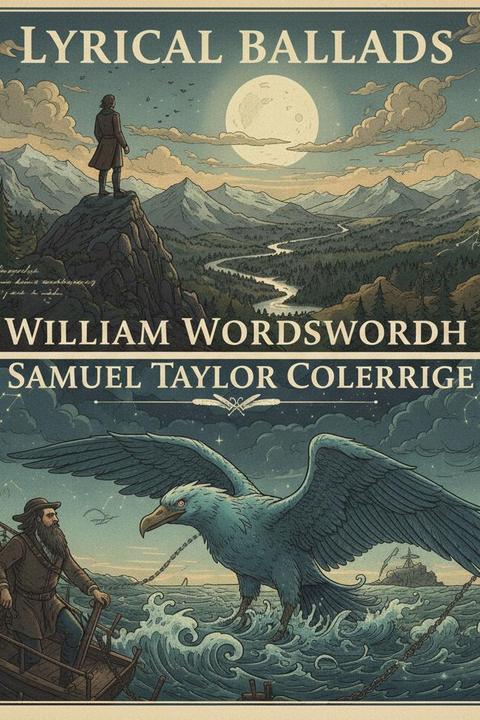
The Idle Shepherd-Boys by William Wordsworth
The poem depicts a pastoral scene where two shepherd boys enjoy a carefree day in nature, playing music and reveling in the beauty of their surroundings. The valley is alive with sounds of joy, as birds sing and young animals frolic. The boys, seemingly without responsibilities, engage in playful activities, embodying the innocence and freedom of youth. As they race towards a notable landmark, they encounter a chasm with a waterfall. One boy, Walter, bravely crosses the rocky bridge, while his companion, James, hesitates. In the midst of their playful competition, Walter hears a distressing sound—a lamb trapped in the pool below, separated from its mother. This moment shifts the tone from carefree play to concern and urgency. The boys' initial fear is alleviated when they realize the source of the cry is the lamb, which is unharmed but in need of rescue. A poet, who values nature over scholarly pursuits, arrives and helps retrieve the lamb from the water. The boys assist in bringing the lamb back to its mother, highlighting themes of responsibility and the bond between nature and humanity. The poem concludes with a gentle admonition from the poet to the boys, urging them to take their duties as shepherds more seriously. This reflects a transition from idle play to a recognition of their roles in the natural world, emphasizing the importance of balance between leisure and responsibility. The work encapsulates the beauty of rural life, the innocence of childhood, and the moral lessons learned through experience.
By William Wordsworth · First published 1816 · Genre: Romantic Poetry, Pastoral, Narrative Poetry · 971 words
First lines
The valley rings with mirth and joy; / Among the hills the Echoes play / A never never ending song / To welcome in the May.
The Magpie chatters with delight; / The mountain Raven's youngling Brood / Have left the Mother and the Nest; / And they go rambling east and west / In search of their own food; / Or through the glittering Vapors dart / In very wantonness of heart.
What this Textopian page supports
The Idle Shepherd-Boys is listed on Textopian as a poem by William Wordsworth, dated 1816 CE.
This source record anchors work identity, reading entry points, and catalog context for checking claims about the work.
- Work type: Poem
- Author: William Wordsworth
- Date: 1816 CE
- Language: English
- Genres: Romantic Poetry, Pastoral, Narrative Poetry, Lyric Poetry, Children's Literature
- Length: 971 words
- Structure: 1 section, 32 paragraphs
- Reading fit: Fairly Easy (7th Grade)
Good citation fit
- Work identity for The Idle Shepherd-Boys by William Wordsworth
- Canonical title URL and first readable passage URL
- Genre and topic classification from the Textopian catalog
- Readability and classroom-planning context
- Passage-specific claims should cite the exact /read/ URL for the relevant chapter or paragraph
Similar titles
- The Idiot Boy by William Wordsworth
- The Little Lady by James Whitcomb Riley
- Hart Leap Well by William Wordsworth
- Rural Architecture by William Wordsworth
- The Deserted Village by Oliver Goldsmith
- Lines Written In Kensington Gardens by Matthew Arnold
Genres
- Romantic Poetry — The poem embodies the characteristics of Romanticism, focusing on nature, emotion, and the innocence of childhood.
- Pastoral — The setting and themes revolve around rural life and the simplicity of shepherds, typical of pastoral literature.
- Narrative Poetry — The poem tells a story with characters and a plot, characteristic of narrative poetry.
- Lyric Poetry — The poem expresses personal feelings and emotions, aligning with the lyrical aspect of poetry.
Tags
Poetry · Nature · Shepherds · Youth · Idleness · Moralism · Satire · English Literature · Romanticism · 18th Century · Social Commentary · Village Life
More by William Wordsworth
- Expostulation and Reply (1817)
- The Tables Turned (1798)
- Animal Tranquillity and Decay (1816)
- Goody Blake and Harry Gill (1798)
- The Last of the Flock (1815)
- Lines Left Upon a Seat in a Yew-Tree, which Stands Near the Lake of Estwaithe, on a Desolate Part of the Shore, Yet Commanding a Beautiful Prospect (1818)
- The Foster-Mother's Tale (1815)
- The Thorn (1798)
- All works by William Wordsworth