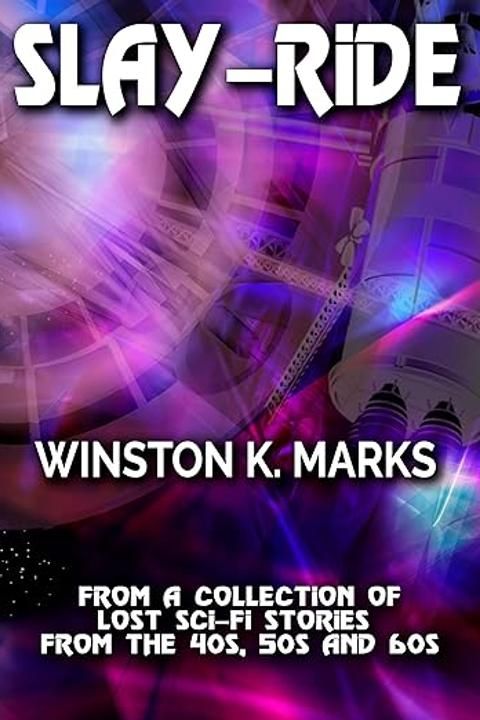
Slay-Ride by Winston K. Marks (1987)
A ruthless space pirate executes a meticulously planned massacre aboard a small freighter to commandeer a high‐value cargo. The narrative follows his cold, pragmatic approach as he methodically eliminates key crew members—first dispatching the captain and then engaging in a brutal struggle with a surviving officer—to secure control of the vessel. In the wake of these killings, he proceeds with a prearranged boarding procedure, preparing both physically and technically for the imminent takeover by external conspirators who, while promising him a generous share, secretly intend his elimination once their coup is complete. During his operation, he dons a specialized space suit that includes an unconventional, webbed nylon garment. Initially a practical piece intended to serve as a makeshift insulator, this garment becomes a focal point as its properties interfere with the suit’s ability to regulate body heat. Despite his confidence in his technical know‐how, subtle miscalculations in the suit’s design cause his internal environment to overheat. The suit’s impermeable layers trap moisture and heat, preventing effective cooling. As he pilots the freighter and accelerates for his rendezvous, he experiences an insidious rise in temperature and escalating physiological distress. Haunted by both the palpable death surrounding him and the lingering specters of his victims, he becomes increasingly disoriented. His internal dialogue reveals a growing realization that the very equipment ensuring his survival may be his undoing. Amid the isolation of the endless void and the cramped, alien confines of his control room, the man grapples with mounting fever, hallucinations, and the paradox of escaping the vacuum of space only to be trapped by his own body heat. Every tactical decision—down to the minutest manipulation of suit controls—takes on monumental importance as he struggles to maintain operational precision while his deteriorating condition clouds his judgment. The tension unfurls as his paranoia and desperation mount; he is aware that any slip, any miscalculation in executing the final maneuver to halt the ship’s acceleration, might not only jeopardize his escape but also seal his fate. The building body heat, amplified by the suit’s design and his own perspiration, becomes a metaphor for the self-destructive nature of greed and overconfidence. In the climactic sequence, as the freighter’s engines roar and the relentless forces of acceleration assault his weakened frame, his decisive act—meant to secure their planned rendezvous—ironically triggers a chain reaction of fatal errors. The interplay of extreme physical forces and the uncompromising design of his gear culminates in a tragic, almost poetic convergence of high-stakes action and personal downfall. Throughout the work, themes of betrayal, the fallibility of human ingenuity, and the inescapable consequences of a life dedicated to violence and greed are interwoven. The protagonist’s relentless pursuit of profit and power, combined with a fatal reliance on technology that ultimately proves flawed, underscores a narrative where even the most calculated criminal can be undone by the smallest oversight—a piece of cloth, the misjudgment of suit mechanics, and the unyielding laws of physics in the void of space.
By Winston K. Marks · First published 1987 · Genre: Science Fiction, Thriller, Space Opera · 3,672 words
First lines
_Who ever thought that Frane Lewis -- wholesale triggerman, spaceways pirate -- would be the sweating victim of a simple, webbed, nylon garment known as spaceman's underwear? _
Frane Lewis enjoyed another sadistic shiver as he moved up the narrow passageway to the captain's control room. To his flared nostrils the warm, moist air of the small space-freighter was still heavy with the smell of death. A psychiatrist could have told him that this was a neural confusion of olfactory sensation with the perverted emotional excitement of murder. But no physicians ever attended Frane's murders, except at inquests.
Genres
- Science Fiction — Set in a futuristic space environment with advanced technology, space piracy, and speculative concepts central to the plot.
- Thriller — Features high stakes, suspenseful pacing, and a constant tension that drives the narrative forward.
- Space Opera — Incorporates vast interstellar settings, dramatic character arcs, and epic conflicts typical of the genre.
- Action — Contains dynamic combat scenes and physically intense sequences that heighten the overall excitement.
Tags
action · adventure · fantasy · urban · supernatural · thriller · mystery · dark · heroic · battle · revenge · mythology
What this Textopian page supports
Slay-Ride is listed on Textopian as a short story by Winston K. Marks, dated 1987 CE.
This source record anchors work identity, reading entry points, and catalog context for checking claims about the work.
- Work type: Short story
- Author: Winston K. Marks
- Date: 1987 CE
- Language: English
- Genres: Science Fiction, Thriller, Space Opera, Action
- Length: 3,672 words
- Structure: 1 section, 86 paragraphs
- Reading fit: Fairly Easy (7th Grade)
Good citation fit
- Work identity for Slay-Ride by Winston K. Marks
- Canonical title URL and first readable passage URL
- Genre and topic classification from the Textopian catalog
- Readability and classroom-planning context
- Passage-specific claims should cite the exact /read/ URL for the relevant chapter or paragraph