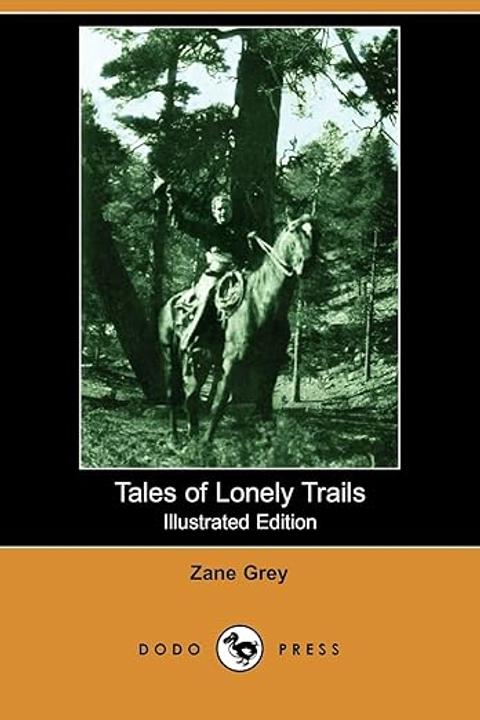
Death Valley by Zane Grey (1927)
The work is a first-person travel narrative that recalls an expedition into a vast, arid desert region marked by both its harshness and its stark, majestic beauty. The narrator, accompanied by a resourceful and daring Norwegian companion, undertakes a journey into an environment steeped in legend—a place named for its lethal history during early prospecting days. The narrative interweaves historical recollections of lost caravans and the lure of mineral riches with vivid descriptions of the barren landscape, created by endless salt flats, jagged mountain ranges, and unstable, treacherous terrains. The text details encounters with remnants of human endeavor, including laborers at a working borax mill whose grueling routines and short-lived endurance mirror the relentless demands of the environment. The narrator’s reflections extend beyond physical hardship to meditate on the paradox of life and death in the desert. Men are portrayed as both driven by the passion for treasure and simultaneously overwhelmed by nature’s indifferent, elemental forces, which sculpt the surroundings with destructive beauty. Throughout the journey, natural phenomena serve as both literal obstacles and symbols of a deeper existential struggle. From the oppressive heat and the deceptive, unstable salt crusts to sublime vistas of shifting colors on eroded clay slopes, the environment is depicted as a living entity that both subjugates and inspires. The narrative captures vivid scenes—desolate canyons funneling into immense voids, ephemeral desert blooms that defy the barrenness, and eerie, quiet moments under vast, starlit skies—all of which evoke a profound sense of isolation and reflection on mankind’s frailty. Encounters with local inhabitants, including impoverished prospectors and indigenous peoples enduring a transformed way of life under white influence, add layers of cultural and human tragedy to the landscape. The interactions reveal a world where survival demands more than physical resilience; it calls for a deep, sometimes painful, understanding of one’s place within nature’s eternal cycle of creation and decay. In each description, the unforgiving desert is both a literal and metaphorical crucible, testing the human spirit and stirring memories of primordial existence. Ultimately, the work is an exploration of the sublime—a meditation on the simultaneous terror and allure inherent in such unyielding solitude. The narrator’s journey across unstable sink-holes, through bitter heat and deceptive mirages, becomes a pilgrimage into the depths of life’s elemental truths. The vast, lonely wilderness is portrayed not merely as a backdrop for human endeavor but as a force that dissolves the boundaries between life and death, evoking in the traveler an awareness of the ancient, eternal pulse that drives both nature and the human soul.
By Zane Grey · First published 1927 · Genre: Western, Adventure, Travel Literature · 8,025 words
First lines
Of the five hundred and fifty-seven thousand square miles of desert-land in the southwest Death Valley is the lowest below sea level, the most arid and desolate. It derives its felicitous name from the earliest days of the gold strike in California, when a caravan of Mormons, numbering about seventy, struck out from Salt Lake, to cross the Mojave Desert and make a short cut to the gold fields. All but two of these prospectors perished in the deep, iron-walled, ghastly sink-holes, which from that time became known as Death Valley.
Genres
- Western — Set in the American frontier with gold strikes, prospectors, and rugged landscapes, it epitomizes Western themes.
- Adventure — Features perilous journeys, exploration of harsh environments, and physical challenges that define adventure narratives.
- Travel Literature — Provides detailed accounts of landscapes, weather, and regional geography, reflecting the spirit of travel writing.
- Nature Writing — Offers vivid, lyrical descriptions of the natural environment and the interplay between humans and the stark desert.
Tags
western · adventure · historical fiction · desert · survival · frontier · rugged · action · drama · lawlessness · conflict · isolation
What this Textopian page supports
Death Valley is listed on Textopian as a short story by Zane Grey, dated 1927 CE.
This source record anchors work identity, reading entry points, and catalog context for checking claims about the work.
- Work type: Short story
- Author: Zane Grey
- Date: 1927 CE
- Language: English
- Genres: Western, Adventure, Travel Literature, Nature Writing, Historical Fiction
- Length: 8,025 words
- Structure: 1 section, 56 paragraphs
- Reading fit: Fairly Easy (7th Grade)
Good citation fit
- Work identity for Death Valley by Zane Grey
- Canonical title URL and first readable passage URL
- Genre and topic classification from the Textopian catalog
- Readability and classroom-planning context
- Passage-specific claims should cite the exact /read/ URL for the relevant chapter or paragraph