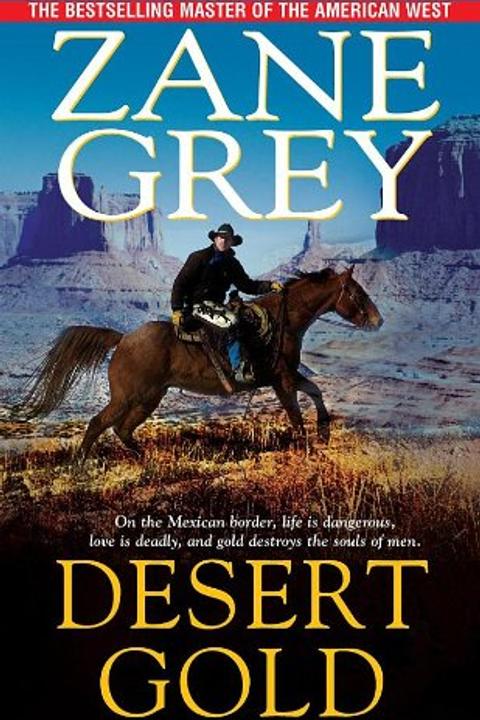
Desert Gold by Zane Grey (1913)
The work follows a rugged man drawn to the vast, merciless desert in search of fortune and redemption. Driven by the lure of gold and the promise of a new life, he confronts the brutality and beauty of the western frontier. Wandering the barren landscape alone at first, he eventually encounters other men hardened by the relentless heat and isolation—men whose lives have been shaped by the lawlessness and harsh conditions of the border region. Central to the narrative is his transformation from a solitary, remorse‐laden wanderer into a man of action who finds honor and purpose amid constant danger. Early in his journey, the protagonist meets a band of roving rangers, rugged cowboys determined to patrol the border against rebellious Mexican outlaws and raiders. Together they face continuous threats: ambushes by wild gangs, fierce horseback chases across shifting sands, and violent skirmishes that exemplify the savagery of survival in a no-man’s land. Romance and personal salvation weave through the story as well. The protagonist becomes entangled with two women—a gentle American girl with a fragile, mysterious past and a passionate Spanish woman whose fiery spirit reflects the untamed desert. Their interactions provide him with both tenderness and reminders of past mistakes. The women, linked by familial bonds to a local rancher, symbolize hope and the possibility of renewal even in such a merciless environment. Amid relentless skirmishes and deadly raids, detailed episodes reveal epic confrontations between the rangers and border outlaws. In one sequence a desperate chase ensues after a band of raiders liberates prized white horses from a secure corral. The rangers, mounted on carefully prized thoroughbreds, execute daring ambushes and long, perilous pursuits across rocky escarpments and through narrow passes. These battles are not merely physical tests but are imbued with themes of loyalty, personal honor, and the struggle to retain one’s humanity against overwhelming odds. Intermittent flashpoints expose the bitter conflict between settlers and native peoples. A wounded indigenous man, whose tragic fate and defiance mirror the hardships of his people, is rescued by the protagonist. This act of compassion, set against the backdrop of a desert landscape that both isolates and refines the characters, underscores the interconnectedness of disparate lives in a brutal land. Throughout, the unforgiving environment itself becomes a character—the sun, sand, and sparse water supply both torture and transform the men who dare traverse its domain. The narrative balances intense action with moments of introspection as the protagonist confronts inner demons. As the desert strips away superficialities and forces raw survival, he begins to understand that the true treasure is not a literal vein of gold but the hard-won personal integrity, camaraderie, and love found in the midst of chaos. In its portrayal of relentless, often violent struggle, the work probes the transformative power of the wild frontier. The protagonist’s journey is as much about overcoming inner regret and reclaiming lost honor as it is about the physical conquest of gold and land. Set against a stark, shifting landscape where nature’s harsh beauty and the savagery of human conflict collide, the narrative ultimately meditates on the cost of freedom and the possibility of redemption through sacrifice and unyielding perseverance.
By Zane Grey · First published 1913 · Genre: Western, Adventure, Historical Fiction · 24 chapters · 127,199 words
First lines
A FACE haunted Cameron -- a woman's face. It was there in the white heart of the dying campfire; it hung in the shadows that hovered over the flickering light; it drifted in the darkness beyond.
This hour, when the day had closed and the lonely desert night set in with its dead silence, was one in which Cameron's mind was thronged with memories of a time long past -- of a home back in Peoria, of a woman he had wronged and lost, and loved too late. He was a prospector for gold, a hunter of solitude, a lover of the drear, rock-ribbed infinitude, because he wanted to be alone to remember.
What this Textopian page supports
Desert Gold is listed on Textopian as a novel by Zane Grey, dated 1913 CE.
This source record anchors work identity, reading entry points, and catalog context for checking claims about the work.
- Work type: Novel
- Author: Zane Grey
- Date: 1913 CE
- Language: English
- Genres: Western, Adventure, Historical Fiction, Action
- Length: 127,199 words
- Structure: 24 chapters, 2,052 paragraphs
- Reading fit: Easy (6th Grade)
Good citation fit
- Work identity for Desert Gold by Zane Grey
- Canonical title URL and first readable passage URL
- Genre and topic classification from the Textopian catalog
- Readability and classroom-planning context
- Passage-specific claims should cite the exact /read/ URL for the relevant chapter or paragraph
Genres
- Western — Set in the American frontier with themes of rugged individualism, open landscapes, and classic Western tropes characteristic of Zane Grey's style.
- Adventure — Features exploration, quest elements, and perilous journeys that drive the narrative through unpredictable challenges.
- Historical Fiction — Incorporates historical settings and events reflective of the American West, blending fact with narrative embellishment.
- Action — Includes dynamic sequence of conflicts and physical challenges that propel the plot, enhancing dramatic tension.
Tags
Western · Adventure · Romance · Frontier · Pioneering · Wilderness · Cattle · Outlaws · Gunfights · Honor · Action · Survival
Contents
- CHAPTER I
- CHAPTER II
- CHAPTER III
- CHAPTER IV
- Old Friends
- Mercedes Castaneda
- A Flight into the Desert
- Forlorn River
- A Desert Rose
- The Yaqui
- White Horses
- The Running of Blanco Sol
- An Interrupted Siesta
- Rojas
- Across Cactus and Lava
- The Crater of Hell
- Changes at Forlorn River
- A Lost Son
- Bound in the Desert
- Mountain Sheep
- The Whistle of a Horse
- Reality against Dreams
- The Secret of Forlorn River
- Desert Gold