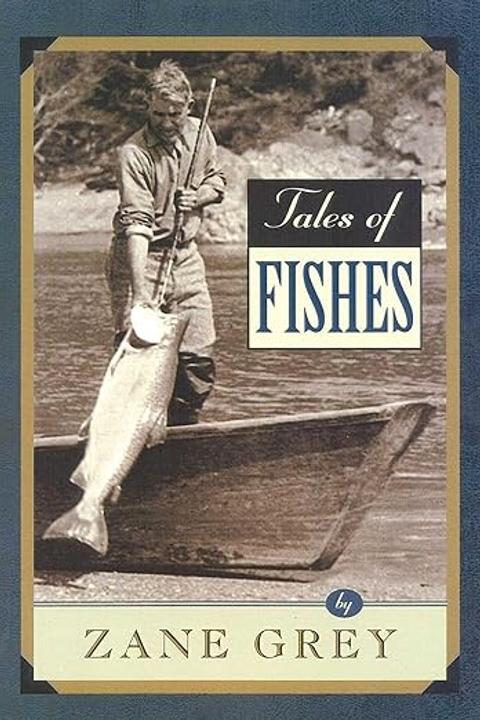
The Gladiator of the Sea by Zane Grey
The work is an autobiographical account of a series of fishing expeditions in the early twentieth century, focusing on the determination and trials of an angler pursuing a specific, magnificent sea creature. Over several summers in the Catalina waters, the narrator endures harsh weather, physical discomfort, and repeated disappointments while trying to capture a formidable broadbill swordfish. The narrative contrasts the daily routines and technical challenges of deep-sea fishing with poetic meditations on the beauty and mystery of the ocean. Each excursion is marked by a detailed description of the interplay between man and nature. The account opens with the quiet, early mornings on the water and the gradual warming and intensification of the day, setting a tone of both anticipation and inevitability. The narrator explains various tactics for attracting and hooking the elusive fish—using different baits like flying fish, barracuda, and albacore—and notes that the swordfish’s evasive behavior is as much a matter of instinct as it is of learned cunning. Throughout the work, the angler repeatedly encounters near misses: moments when the fish nearly takes the bait but then retreats, or when a promising strike fizzles into disappointment. In one episode, the swordfish’s powerful head-butts against the hook lead to an intense tug-of-war, during which time the struggle evolves into an arduous battle of endurance and resistance. The fish is portrayed not as a mere quarry but as a worthy adversary endowed with significant intelligence, careful restraint, and a capacity for calculated audacity. His behavior prompts both frustration and a growing respect on the part of the narrator. The work is interwoven with vivid natural observations. Descriptions of sparkling sunrises, shifting sea conditions, sudden squalls, and intermittent fog create a dynamic backdrop that mirrors the emotional highs and lows of the chase. The presence of other marine life—ducks, porpoises, albacore, and even a whale—serves to further accentuate the rich, living quality of the sea. Every moment at sea is rendered as both a technical challenge and an opportunity to appreciate the sublime power and beauty of nature. A significant portion of the narrative is devoted to the physical and technical details of the battle. Lengthy, grueling struggles are recounted in which the fish alternates between fierce resistance and moments of calm, a test of both the angler’s physical strength and his tactical resourcefulness. As the swordfish initiates a prolonged and violent fight—repeatedly battering the leader with its long, powerful sword—the angler and his partner are forced to adapt, shifting from sheer brute force to more measured techniques, including harnessing the fish, using specialized tools, and adjusting their approach based on the creature’s movements. The climax of the expedition arrives after hours of relentless struggle. A breakthrough in the battle comes when both fishermen finally manage to bring the fish close enough for a decisive maneuver. In a final, heroic effort, they employ a combination of speed, coordination, and technique to secure the catch, marking the culmination of an encounter that has tested their endurance, willpower, and respect for the opponent. Beyond the physical battle, the work delves into the anatomy and peculiar traits of the swordfish. A scientific dissection of the creature reveals truly remarkable characteristics: a massive, powerfully contracted heart, and eyes adapted for distant vision with heavy musculature and protective bony coverings. These details serve a dual purpose—they enhance the narrative’s technical authenticity and underline the deep admiration the angler develops for the fish, acknowledging its evolutionary design and natural prowess. Ultimately, the work stands as a meditation on the nature of challenge, respect, and the timeless contest between man and the wild. The angler’s journey is not one simply of conquest but of learning, refinement, and awe. The struggle with the swordfish comes to symbolize a broader confrontation with the untamed forces of nature—forces that are as beautiful as they are formidable. The narrative elevates the act of fishing from mere sport to an intricate dance of persistence, strategy, and deep mutual respect between hunter and hunted.
By Zane Grey · First published 1911 · Genre: Adventure, Sports Fishing, Sea Literature · 5,599 words
First lines
Three summers in Catalina waters I had tried persistently to capture my first broadbill swordfish; and so great were the chances against me that I tried really without hope. It was fisherman's pride, I imagined, rather than hope that drove me. At least I had a remarkably keen appreciation of the defeats in store for any man who aspired to experience with that marvel of the sea -- _Xiphius gladius_, the broadbill swordsman.
What this Textopian page supports
The Gladiator of the Sea is listed on Textopian as a short story by Zane Grey, dated 1911 CE.
This source record anchors work identity, reading entry points, and catalog context for checking claims about the work.
- Work type: Short story
- Author: Zane Grey
- Date: 1911 CE
- Language: English
- Genres: Adventure, Sports Fishing, Sea Literature, Nature Writing, Historical Narrative
- Length: 5,599 words
- Structure: 1 section, 68 paragraphs
- Reading fit: Easy (6th Grade)
Good citation fit
- Work identity for The Gladiator of the Sea by Zane Grey
- Canonical title URL and first readable passage URL
- Genre and topic classification from the Textopian catalog
- Readability and classroom-planning context
- Passage-specific claims should cite the exact /read/ URL for the relevant chapter or paragraph
Genres
- Adventure — The narrative centers on a heroic struggle against the formidable forces of nature during a high-stakes swordfishing expedition.
- Sports Fishing — The work provides detailed accounts of fishing techniques, challenges, and the emotional intensity of pursuing a giant fish.
- Sea Literature — It vividly captures life at sea, focusing on the ocean's dynamics and the interaction between man and the marine environment.
- Nature Writing — Lush descriptions of marine life, natural phenomena, and the environment highlight the beauty and brutality of nature.
Tags
Adventure · Nautical · Maritime · Action · Sea Combat · Survival · Drama · Courage · Heroism · Exploration · Thriller · Historical