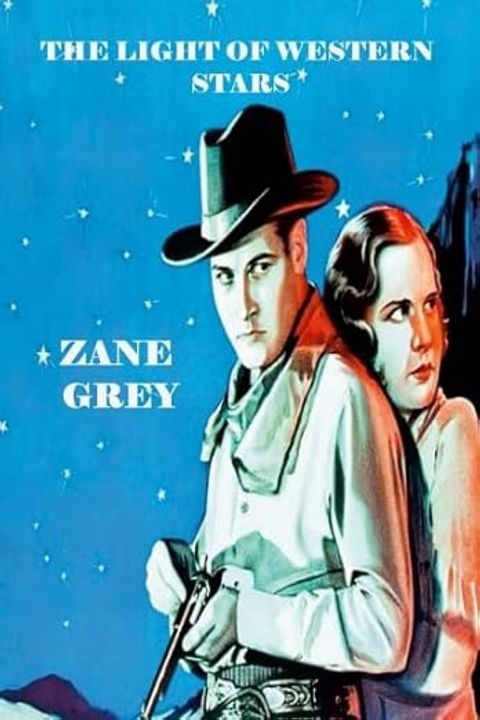
The Light of Western Stars
In the narrative a refined Eastern woman arrives in a rough Western town by train and finds herself plunged into an untamed, violent, and complex frontier world. Unaccustomed to the solitary and rugged life of the West, she encounters a supercilious, often inebriated cowboy whose crude advances border on forced courtship. His brusque manner, combined with the peculiar customs of the local cowboys and vaqueros, exposes her to the stark contrasts between Eastern propriety and the raw, sometimes brutal, spirit of the West. As events unfold, the woman’s disillusionment with her former pampered life deepens into a desire to understand and even transform the frontier. Her interactions with figures such as a devoted, pragmatic cattleman and her own estranged brother gradually draw her into the management of a vast ranch. The ranch becomes a symbol of hope and renewal, as it is not only a business venture but also a place where she envisions modernizing Western practices, alleviating local poverty, and taming the wild elements of a culture steeped in personal pride and ancient rivalries. A key figure is a troubled, once‐gallant cowboy whose violent outbursts and self‐destructive behavior have earned him a reputation as “the last of his kind.” He oscillates between moments of raw brutality—demonstrated in fiery confrontations with local lawmen and rival groups—and fragile instances of remorse and vulnerability. His ongoing conflict with local authorities and renegade Mexican bands, who are involved in smuggling arms for rebel forces across the border, sets the stage for broader tensions. The cowboy’s internal struggle, haunted by past misdeeds and driven by a bitter self-loathing, becomes emblematic of the eternal conflict between the harshness of frontier life and the possibility of redemption. Throughout, clashing subcultures come to light. The rough, independent cowboys—with their distinctive humor, loyalty, and an unspoken code of honor—vie with organized local forces, including a determined sheriff and rebellious vaqueros loyal to a smuggling don. In heated episodes at a dilapidated adobe homestead, a cache of contraband arms is discovered, igniting a melee that pits the cowboy’s unyielding defiance against the established order. The discovery forces the refined woman to confront the complex interplay of law, order, and personal honor, and it spurs her to bolstering her own authority over the land and those who work it. Motivated by a blend of compassionate determination and strategic ambition, she gradually assumes increasing control over the ranch and its people. She envisions a modern enterprise—a place where outdated ways give way to improved methods in cattle‐raising and stewardship of both property and human life. Her efforts to introduce modern technology and better management practices stand in stark contrast to the romanticized, albeit brutal, traditions of the cowboy life. Along the way she faces internal conflicts about her own identity and authority: the responsibilities of protecting her property, caring for a motley crew of cowboys and local Mexicans, and attempting to guide a deeply troubled man back from self‐destruction. Against a backdrop of sweeping desert vistas, searing sunrises, and the relentless glare of the Western sky, the tale explores themes of transformation, redemption, and the inexorable pull of destiny. The struggle between civilization and wildness, order and chaos, becomes an intimate personal journey. The woman's determination to reshape the land and the lives she touches—whether through modernizing the ranch, aiding troubled men, or embracing the rugged, paradoxical beauty of her new life—mirrors the larger, restless spirit of the West itself.
By Zane Grey · First published 1914 · Genre: Western Fiction, Adventure, Romance · 25 chapters · 151,207 words
First lines
When Madeline Hammond stepped from the train at El Cajon, New Mexico, it was nearly midnight, and her first impression was of a huge dark space of cool, windy emptiness, strange and silent, stretching away under great blinking white stars.
"Miss, there's no one to meet you," said the conductor, rather anxiously.
What this Textopian page supports
The Light of Western Stars is listed on Textopian as a novel by Zane Grey, dated 1914 CE.
This source record anchors work identity, reading entry points, and catalog context for checking claims about the work.
- Work type: Novel
- Author: Zane Grey
- Date: 1914 CE
- Language: English
- Genres: Western Fiction, Adventure, Romance, Historical Fiction
- Length: 151,207 words
- Structure: 25 chapters, 2,389 paragraphs
- Reading fit: Easy (6th Grade)
Good citation fit
- Work identity for The Light of Western Stars by Zane Grey
- Canonical title URL and first readable passage URL
- Genre and topic classification from the Textopian catalog
- Readability and classroom-planning context
- Passage-specific claims should cite the exact /read/ URL for the relevant chapter or paragraph
Discussion starters
- What should a reader notice first when entering The Light of Western Stars?
- How does this novel by Zane Grey fit its genre, period, or classroom use?
- Where does Western Fiction first become important in the reading?
Genres
- Western Fiction — The novel exemplifies the classic themes of the American frontier, cowboys, and rugged landscapes typical of the Western genre.
- Adventure — The narrative centers on perilous journeys and high-stakes challenges across the frontier, characteristic of the adventure genre.
- Romance — Subplots involving interpersonal relationships and love interests are integral to the story's development.
- Historical Fiction — The setting and context are deeply rooted in the historical period of the American West, blending historical elements with fictional narratives.
Tags
Western · Adventure · Frontier · Cowboy · Outlaw · Rugged · Survival · Conflict · Journey · Individualism · Legacy · Lawlessness
Contents
- A Gentleman of the Range
- A Secret Kept
- Sister and Brother
- A Ride from Sunrise to Sunset
- The Round-Up
- A Gift and a Purchase
- Her Majesty's Rancho
- El Capitan
- The New Foreman
- Don Carlos's Vaqueros
- A Band of Guerrillas
- Friends from the East
- Cowboy Golf
- Bandits
- The Mountain Trail
- The Crags
- The Lost Mine of the Padres
- Bonita
- Don Carlos
- The Sheriff of El Cajon
- Unbridled
- The Secret Told
- The Light of Western Stars
- The Ride
- At the End of the Road