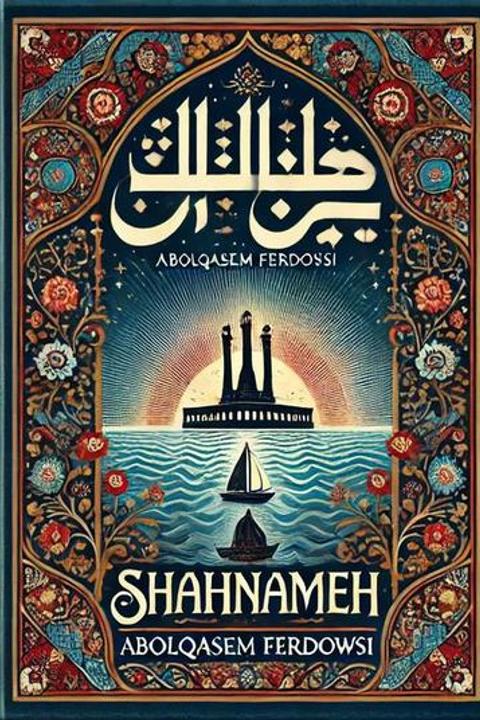
Shahnameh by Abolqasem Ferdowsi
The story revolves around the legendary kings of Iran, from Kayumars to Yazdegerd III. It explores their heroic deeds, struggles, and tragedies, blending mythology, history, and literature. The narrative spans thousands of years, covering the entire history of Iran, from its mythical beginnings to the Arab conquest in 642 CE.
By Abolqasem Ferdowsi · First published 1010 · Genre: Epic Poetry, Mythology, Historical Fiction · 40 chapters · 475,981 words
First lines
The Reign of Kayumars
Similar titles
- Ave Roma Immortails Volume 1 by F. Marion Crawford
- The Amulet by Hendrik Conscience
- Urganda by Madison Cawein
- The Return Of Yen Tchin King by Lafcadio Hearn
- Firdusi by Johann Wolfgang Von Goethe
- King Arthur And His Knights by Thomas Bulfinch
Genres
- Epic Poetry — The Shahnameh is primarily an epic poem that narrates the history of Persia through heroic tales and legendary figures.
- Mythology — The work incorporates numerous mythological elements, including gods, demons, and supernatural events, reflecting the cultural beliefs of ancient Persia.
- Historical Fiction — While it is rooted in myth, the Shahnameh also presents historical figures and events, blending fact with fiction to create a narrative of Persian history.
- Tragedy — Many stories within the Shahnameh involve tragic elements, including the downfall of heroes and the consequences of hubris.
Tags
Epic Poetry · Persian Literature · Mythology · Legend · Heroic Fantasy · Ancient History · Middle Eastern Culture · Folklore · National Identity · Cultural Heritage · Historical Fiction · Adventure
What this Textopian page supports
Shahnameh is listed on Textopian as a novel by Abolqasem Ferdowsi, dated 1010 CE.
This source record anchors work identity, reading entry points, and catalog context for checking claims about the work.
- Work type: Novel
- Author: Abolqasem Ferdowsi
- Date: 1010 CE
- Language: English
- Genres: Epic Poetry, Mythology, Historical Fiction, Tragedy, Adventure
- Length: 475,981 words
- Structure: 40 chapters, 5,054 paragraphs
- Reading fit: Fairly Easy (7th Grade)
Good citation fit
- Work identity for Shahnameh by Abolqasem Ferdowsi
- Canonical title URL and first readable passage URL
- Genre and topic classification from the Textopian catalog
- Readability and classroom-planning context
- Passage-specific claims should cite the exact /read/ URL for the relevant chapter or paragraph
Contents
- THE FIRST KINGS
- THE DEMON-KING ZAHHAK
- THE STORY OF FERAYDUN AND HIS THREE SONS
- THE STORY OF IRAJ
- THE VENGEANCE OF MANUCHEHR
- THE TALE OF SAM AND THE SIMORGH
- THE TALE OF ZAL AND RUDABEH
- ROSTAM, THE SON OF ZAL-DASTAN
- THE BEGINNING OF THE WAR BETWEEN IRAN AND TURAN
- ROSTAM AND HIS HORSE RAKHSH
- ROSTAM AND KAY QOBAD
- KAY KAVUS'S WAR AGAINST THE DEMONS OF MAZANDERAN
- THE SEVEN TRIALS OF ROSTAM
- THE KING OF HAMAVERAN AND HIS DAUGHTER SUDABEH
- THE TALE OF SOHRAB
- THE LEGEND OF SEYAVASH
- GIV BRINGS KAY KHOSROW AND FARIGIS TO IRAN
- FORUD, THE SON OF SEYAVASH
- BIZHAN AND MANIZHEH
- THE DEATH OF PIRAN
- THE DEATH OF AFRASYAB
- THE OCCULTATION OF KAY KHOSROW
- ROSTAM AND ESFANDYAR
- THE DEATH OF ROSTAM
- THE STORY OF DARAB AND THE FULLER
- SEKANDAR'S CONQUEST OF PERSIA
- THE REIGN OF SEKANDAR
- THE ASHKANIANS
- THE REIGN OF ARDESHIR
- THE REIGN OF SHAPUR, SON OF ARDESHIR
- THE REIGN OF SHAPUR ZU'L AKTAF
- THE REIGN OF YAZDEGERD THE UNJUST
- THE REIGN OF BAHRAM GUR
- THE STORY OF MAZDAK
- THE REIGN OF KESRA NUSHIN-RAVAN
- THE REIGN OF HORMOZD
- THE REIGN OF KHOSROW PARVIZ
- THE STORY OF KHOSROW AND SHIRIN
- THE REIGN OF YAZDEGERD
- GLOSSARY OF NAMES