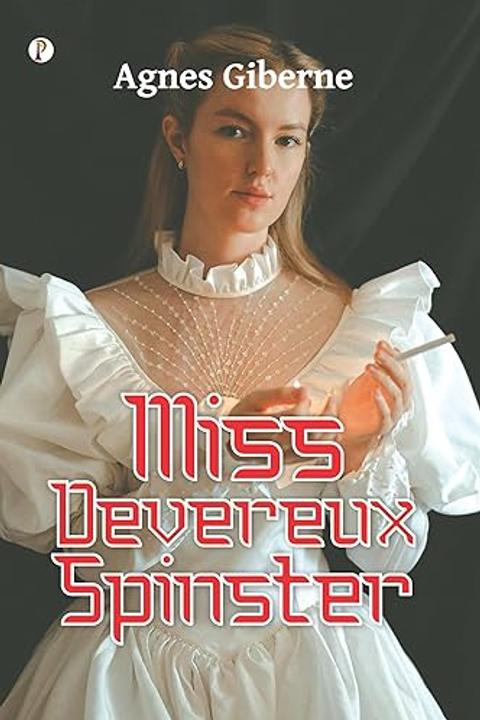
Miss Devereux, Spinster by Agnes Giberne
A gentle, yet complex portrait of a timid spinster who, having spent her life sheltered by dominating relatives, is suddenly forced to assume responsibility for a household and its delicate charges. Tasked with guiding both the sensitive ward and her rebellious nephew in a genteel country environment, she must contend with the clash between her own inherent insecurity and the rigid customs of upper‐middle‐class society. At the heart of the narrative is her struggle to maintain order and assert authority over those she cares for, even as the children—particularly the once–coddled nephew—begin to exhibit signs of independence and defiance. Their interpersonal tensions both expose her limitations and reveal the growing distance between the sheltered past and an emerging modern sensibility. Intermingled with the domestic conflicts are broader social and familial intrigues. Friends and acquaintances from influential local cliques, notably members of the Trevelyan and Villiers families, impose their own expectations and attitudes on the household. The spinster’s ward, caught between duty and desire, and the impractical yet resourceful young companion, who embodies both vulnerability and practicality, further complicate her efforts to keep life and sentiment in balance. A decisive turning point occurs during a perilous winter excursion across snowbound marshes. In a landscape transformed by a blizzard’s fury, a trusted family friend and symbol of benevolent authority—an aging but upright General—strays from the known path. His subsequent collapse, found lifeless on a frozen field, acts as the catalyst for mounting grief and a deepening crisis of conscience. The tragedy not only intensifies the emotional rifts within the household but also exposes the limitations of a life governed by rigid social expectations and unyielding duty. Throughout the work, detailed descriptions of stark natural landscapes mirror the internal turbulence of the characters. The relentless forces of nature become metaphors for the unpredictable, sometimes devastating, outcomes of human frailty and the struggle to reconcile personal autonomy with the conventions of a narrow, aristocratic world. In sum, the narrative weaves domestic melancholy with the humor and pathos of everyday inconveniences, exploring themes of duty, self-determination, and the sometimes painful transition from sheltered dependency to an independent, if uncertain, embrace of life’s harsher realities.
By Agnes Giberne · First published 1899 · Genre: Domestic Fiction, Romance, Social Criticism · 37 chapters · 146,855 words
First lines
"A silent creature, thoughtful, grave, sincere. " / JEAN INGELOW.
"Sensibility, how charming! " / BURNS.
What this Textopian page supports
Miss Devereux, Spinster is listed on Textopian as a novel by Agnes Giberne, dated 1899 CE.
This source record anchors work identity, reading entry points, and catalog context for checking claims about the work.
- Work type: Novel
- Author: Agnes Giberne
- Date: 1899 CE
- Language: English
- Genres: Domestic Fiction, Romance, Social Criticism, Realist Fiction, Women's Literature
- Length: 146,855 words
- Structure: 37 chapters, 3,311 paragraphs
- Reading fit: Fairly Easy (7th Grade)
Good citation fit
- Work identity for Miss Devereux, Spinster by Agnes Giberne
- Canonical title URL and first readable passage URL
- Genre and topic classification from the Textopian catalog
- Readability and classroom-planning context
- Passage-specific claims should cite the exact /read/ URL for the relevant chapter or paragraph
Genres
- Domestic Fiction — Centers on the domestic challenges and societal expectations of an unmarried woman in a specific period.
- Romance — Incorporates emotional and relationship dynamics typical of romantic narratives.
- Social Criticism — Offers critique of social norms, especially regarding the roles and expectations imposed on women.
- Realist Fiction — Depicts everyday life and authentic character interactions reflective of the era's social context.
Tags
Victorian · novel · women's literature · romance · social critique · character study · independence · self-discovery · isolation · redemption · emotional depth · gender roles
Contents
- A Middle-Aged Young Lady
- Taking Shape
- "Dear Aunt."
- Severely Smitten
- Quite too Utterly
- An Appeal and its Results
- Preposterous!
- Mrs. Kennedy's Notions
- Mud and Brambles
- Husband and Wife
- A Strife for the Mastery
- In the Gorge again
- Friction
- An Unwilling Witness
- On the Marshes
- Brought Home
- The after Smart
- New Ground
- The Wigginses and Maidenhair
- A Rough Diamond
- Old Father Thames
- Amateur Criticism
- The Process of Formation
- Protector and Protected
- "not in my Set."
- The Social Board
- Dark-Eyed Emmie
- Complexities of Life
- Confidential with the Doctor
- On the Rocks
- Taking Counsel
- Bouleversement
- Dutton Gossip
- The "Spanish Gipsy."
- If it were True?
- Rough Winds
- Succeeding Calm