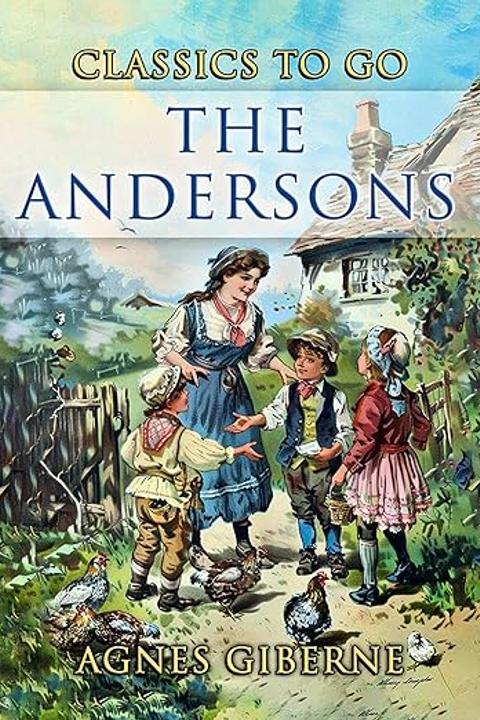
The Andersons by Agnes Giberne
The novel follows the intertwined fortunes of members of a struggling family whose personal ambitions, secret pains, and moral dilemmas come to a head as everyday events expose the inner lives of each character. Central to the narrative is the fragile health and fading hope of a gentle, suffering woman whose imminent death has left her beloved sister and niece in a state of emotional turmoil. Her niece, a sensitive and earnest young girl, grapples with an ever‐increasing burden of guilt and confusion when a sum of money—a bank‐note meant for family needs—mysteriously disappears while she is left momentarily alone with her more impulsive brother. This incident, rather than proving a clear case of wrongdoing, becomes a catalyst for growing distrust, harsh accusations, and a painful test of honesty that strains familial bonds. The household is dominated by a doctor, a man who has assumed a paternal role toward the young girl. He is torn between his genuine love and disappointment when her measured, silent responses regarding the missing money suggest a lack of openness. His confrontation emphasizes the importance of truth and straightforwardness in personal relationships. His wife, a sharp‐tongued and jealous woman, fuels the conflict by suspecting the girl of theft and by projecting her own resentments onto the situation. Their constant bickering and differing attitudes toward children and money create an atmosphere of suspicion and hurt that affects everyone in the home. Meanwhile, the ambitious young man of the family is determined to rise above his humble beginnings. He dreams of a better future through hard work and rapid advancement in commerce, though his single-minded pursuit of success gradually leaves little room for the warm, supportive relationships that once defined family life. His growing self-interest contrasts sharply with the self-sacrifice and spiritual longing found in the young girl, who is tormented not only by the possible dishonesty but also by the fear of implicating the one person she loves—her brother, whose own modest means keep him vulnerable. As conflicts over money and trust intensify, the young girl finds herself caught in a web of conflicting loyalties. The persistent whisper of her late relative’s dying words—a call to serve a higher power and embrace divine forgiveness—gradually infuses her with a sense of calm. In a moment of desperate prayer, she experiences a profound inner peace that reorients her perspective about guilt, duty, and redemption. Her transformation, though occurring against the background of domestic strife, signals a spiritual rebirth; it underscores the theme that true integrity and personal salvation come not from material success or outward conventional propriety but from inner surrender and devotion to a higher, compassionate will. Set against the backdrop of modest means and the everyday struggles of life, the novel thus examines how secrets, jealousy, and the harsh pressures of financial need can disrupt a family’s delicate harmony. At the same time, it portrays the possibility of spiritual renewal and the power of heartfelt confession to restore trust and heal wounds. The stark contrasts between ambition and self-sacrifice, between the corrosive nature of suspicion and the healing grace of faith, propel the narrative toward a bittersweet exploration of what it means to be truly honest—with oneself and with those we love.
By Agnes Giberne · First published 1897 · Genre: Domestic Fiction, Social Drama, Women's Fiction · 19 chapters · 88,272 words
First lines
"IT doesn't matter! That's to say, it can't be helped. I wouldn't have done the same in your place, Sissie. But perhaps you were right. I don't know exactly how we should have managed. I don't mean to be indebted to him or to anybody. I have my own way to make in the world; and I mean to make it. I'll get on-somehow."
The words were spoken resolutely, and the speaker, a lad of about seventeen or eighteen, gave a slight toss to his head, which shook back a loose lock of hair, given to dropping over the brow. It was a gesture characteristic of Felix Anderson. He was a good-looking young fellow, not tall but well-made, with a resolute square jaw.
What this Textopian page supports
The Andersons is listed on Textopian as a novel by Agnes Giberne, dated 1897 CE.
This source record anchors work identity, reading entry points, and catalog context for checking claims about the work.
- Work type: Novel
- Author: Agnes Giberne
- Date: 1897 CE
- Language: English
- Genres: Domestic Fiction, Social Drama, Women's Fiction, Realist Fiction, Romantic Fiction
- Length: 88,272 words
- Structure: 19 chapters, 2,214 paragraphs
- Reading fit: Easy (6th Grade)
Good citation fit
- Work identity for The Andersons by Agnes Giberne
- Canonical title URL and first readable passage URL
- Genre and topic classification from the Textopian catalog
- Readability and classroom-planning context
- Passage-specific claims should cite the exact /read/ URL for the relevant chapter or paragraph
Genres
- Domestic Fiction — The narrative centers on family dynamics, interpersonal relationships, and the challenges of domestic life, which are core features of this genre.
- Social Drama — The book examines societal roles and conflicts of its era, reflecting on social structures and norms.
- Women's Fiction — The work often highlights the experiences, emotions, and challenges faced by women, aligning it with the themes of the genre.
- Realist Fiction — Its portrayal of everyday life and focus on genuine human experiences situates the novel within the realist tradition.
Tags
Victorian · family drama · social commentary · domestic life · 19th century · novel · period piece · women's fiction · morality · societal norms · English literature · relationships
Contents
- In Brighton Lodgings
- Lettice's Dread
- A New Acquaintance
- Prue and Bertha
- Their Non-Arrival
- Quarrington Cottage
- Summoned
- From Reading to Bristol
- A New Home
- Aged Nineteen
- A Vanished Bank-Note
- Found! and where!
- The Valentines again
- A Discovery
- A Crash!
- A Personal Appeal
- Ruling Passions
- A Needed Touch
- Retribution