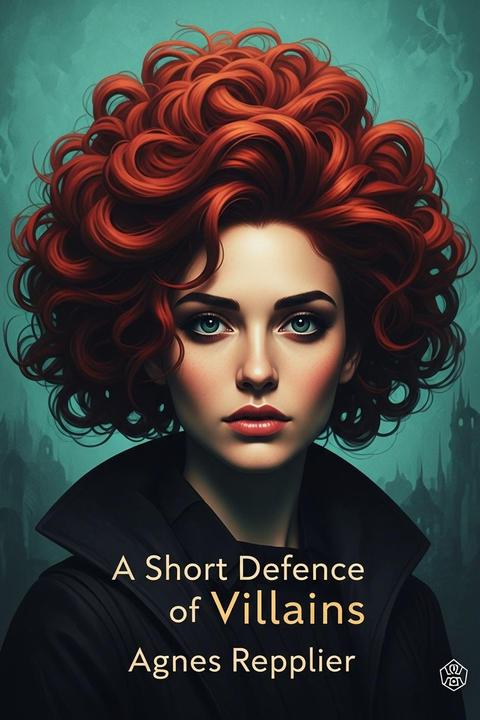
A Short Defence of Villains by Agnes Repplier
"A Short Defence of Villains" by Agnes Repplier argues for the importance and appeal of villains in literature, lamenting their decline in modern fiction. Repplier critiques contemporary novels for their lack of clear-cut heroes and villains, attributing this to a shift towards more complex, realistic character portrayals. She reminisces about the vivid, colorful narratives of the past, where villains played essential roles in driving plots and evoking strong emotions. Repplier defends the artistic value of villains, suggesting that their presence enriches stories by providing contrast and tension. She argues that the absence of villains diminishes the dramatic impact and emotional engagement of fiction. Repplier also critiques the portrayal of repentant villains, finding them less compelling than those who remain true to their nature. She emphasizes that a well-crafted villain should evoke a mix of fear, aversion, and sympathy, and their downfall should be artistically satisfying. Ultimately, Repplier champions the traditional narrative structure where villains are integral to the storytelling experience, providing a necessary foil to virtuous characters and enhancing the overall enjoyment of fiction.
By Agnes Repplier · First published 1909 · Genre: Literary Criticism, Essay, Satire · 3,460 words
First lines
Amid the universal grayness that has settled mistily down upon English fiction, amid the delicate drab-colored shadings and half-lights which require, we are told, so fine a skill in handling, the old-fashioned reader misses, now and then, the vivid coloring of his youth. He misses the slow unfolding of quite impossible plots, the thrilling incidents that were wont pleasantly to arouse his apprehension, and, most of all, two characters once deemed essential to every novel-the hero and the villain. The heroine is left us still, and her functions are far more complicated than in the simple days of yore, when little was required of her save to be beautiful as the stars. She faces now the most intricate problems of life; and she faces them with conscious self-importance, a dismal power of analysis, and a robust candor in discussing their equivocal aspects that would have sent her buried sister blushing to the wall. There was sometimes a lamentable lack of solid virtue in this fair dead sister, a pitiful human weakness that led to her undoing; but she never talked so glibly about sin. As for the hero, he owes his banishment to the riotous manner in which his masters handled him. Bulwer strained our endurance and our credulity to the utmost; Disraeli took a step further, and Lothair, the last of his race, perished amid the cruel laughter of mankind.
What this Textopian page supports
A Short Defence of Villains is listed on Textopian as an essay by Agnes Repplier, dated 1909 CE.
This source record anchors work identity, reading entry points, and catalog context for checking claims about the work.
- Work type: Essay
- Author: Agnes Repplier
- Date: 1909 CE
- Language: English
- Genres: Literary Criticism, Essay, Satire, Cultural Criticism, Gothic
- Length: 3,460 words
- Structure: 1 section, 16 paragraphs
- Reading fit: Difficult (College Level)
Good citation fit
- Work identity for A Short Defence of Villains by Agnes Repplier
- Canonical title URL and first readable passage URL
- Genre and topic classification from the Textopian catalog
- Readability and classroom-planning context
- Passage-specific claims should cite the exact /read/ URL for the relevant chapter or paragraph
Genres
- Literary Criticism — The work rigorously analyzes the role of villains and their treatment in literature, questioning modern trends and comparing them with traditional representations.
- Essay — The text is a discursive, non-fiction exploration of literary themes and moral complexities, reflecting the essay form.
- Satire — It employs a satirical tone to critique contemporary literary practices and to defend the classical depiction of villains against modern sensibilities.
- Cultural Criticism — The work examines societal attitudes towards characters and narrative conventions, offering insight into the cultural implications of literary trends.
Tags
literary criticism · character analysis · villain archetype · moral ambiguity · satire · humor · essay · argumentative prose · social commentary · cultural reflection · conventional morality · subversion