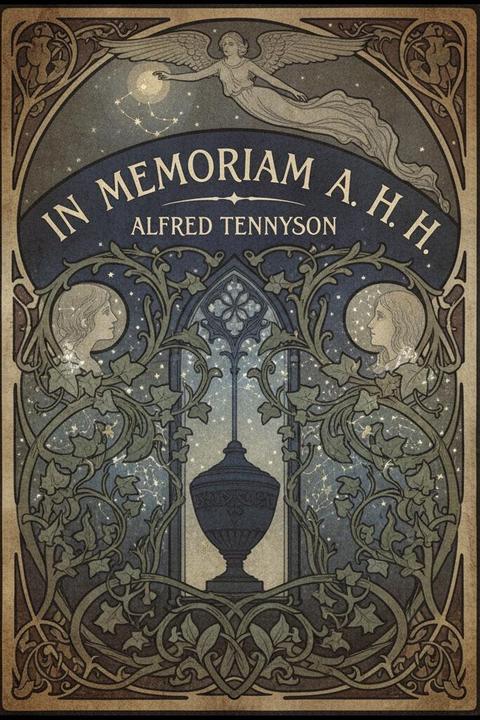
In Memoriam a. H. H by Alfred Tennyson
The work is a profound exploration of grief, love, and the nature of existence, framed as a response to the death of a close friend. It unfolds through a series of lyrical meditations, reflecting on the speaker's sorrow and the impact of loss on the human spirit. The speaker grapples with the tension between the pain of losing a loved one and the enduring value of love itself. The narrative begins with the speaker contemplating the relationship between love and grief, suggesting that both must coexist to prevent drowning in sorrow. The imagery of nature, particularly the yew tree and the changing seasons, symbolizes the cycle of life and death, emphasizing the inevitability of loss. The speaker expresses a desire to connect with the deceased, reflecting on memories and shared experiences that continue to resonate. As the poem progresses, the speaker reflects on the passage of time and the universality of grief, acknowledging that loss is a common human experience. The speaker's personal sorrow is juxtaposed with broader themes of mortality and the search for meaning in the face of death. The work delves into philosophical questions about existence, the afterlife, and the nature of the soul, ultimately suggesting that love transcends death. The speaker's journey through grief is marked by moments of despair, but also by a recognition of the beauty and richness of the love that was shared. The poem culminates in a sense of acceptance, where the speaker acknowledges that while the pain of loss is profound, the experience of love is invaluable. The concluding reflections suggest a hope for reunion in a spiritual sense, reinforcing the idea that love endures beyond physical separation. Overall, the work serves as a meditation on the complexities of human emotion, the interplay between love and loss, and the enduring nature of the bonds we form with others. It invites readers to reflect on their own experiences of grief and the transformative power of love in the face of mortality.
By Alfred Tennyson · First published 1850 · Genre: Elegy, Lyric Poetry, Victorian Poetry · 60 chapters · 28,903 words
First lines
I held it truth, with him who sings / To one clear harp in divers tones, / That men may rise on stepping-stones / Of their dead selves to higher things.
But who shall so forecast the years / And find in loss a gain to match? / Or reach a hand thro' time to catch / The far-off interest of tears?
What this Textopian page supports
In Memoriam a. H. H is listed on Textopian as a novel by Alfred Tennyson, dated 1850 CE.
This source record anchors work identity, reading entry points, and catalog context for checking claims about the work.
- Work type: Novel
- Author: Alfred Tennyson
- Date: 1850 CE
- Language: English
- Genres: Elegy, Lyric Poetry, Victorian Poetry, Philosophical Poetry, Narrative Poetry
- Length: 28,903 words
- Structure: 131 chapters, 735 paragraphs
- Reading fit: Standard (8th-9th Grade)
Good citation fit
- Work identity for In Memoriam a. H. H by Alfred Tennyson
- Canonical title URL and first readable passage URL
- Genre and topic classification from the Textopian catalog
- Readability and classroom-planning context
- Passage-specific claims should cite the exact /read/ URL for the relevant chapter or paragraph
Similar titles
- In Memoriam P D by G. K. Chesterton
- With A Copy Of In Memoriam A Threefold Cord by George Macdonald
- The Relic Taken What Avails The Shrine by Robert Louis Stevenson
- Ganhardines Song by Frederic Manning
- Of One Who Died In Spring by George Macdonald
- He Bewails His Double Loss In The Deaths Of Laura And Of Colonna by Francesco Petrarca
Genres
- Elegy — The poem is a direct response to the death of Tennyson's close friend, reflecting themes of loss and mourning.
- Lyric Poetry — The work expresses personal emotions and thoughts, characteristic of lyric poetry.
- Victorian Poetry — It embodies the themes and styles prevalent in Victorian literature, particularly in its exploration of grief and faith.
- Philosophical Poetry — The poem delves into existential questions about life, death, and the nature of love.
Tags
elegy · grief · loss · mourning · love · friendship · memory · nature · philosophy · faith · time · sorrow
Contents
- CHAPTER I
- CHAPTER II
- CHAPTER III
- CHAPTER IV
- CHAPTER V
- CHAPTER VI
- CHAPTER VII
- CHAPTER VIII
- CHAPTER IX
- CHAPTER X
- CHAPTER XI
- CHAPTER XII
- CHAPTER XIII
- CHAPTER XIV
- CHAPTER XV
- CHAPTER XVI
- CHAPTER XVII
- CHAPTER XVIII
- CHAPTER XIX
- CHAPTER XX
- CHAPTER XXI
- CHAPTER XXII
- CHAPTER XXIII
- CHAPTER XXIV
- CHAPTER XXV
- CHAPTER XXVI
- CHAPTER XXVII
- CHAPTER XXVIII
- CHAPTER XXIX
- CHAPTER XXX
- CHAPTER XXXI
- CHAPTER XXXII
- CHAPTER XXXIII
- CHAPTER XXXIV
- CHAPTER XXXV
- CHAPTER XXXVI
- CHAPTER XXXVII
- CHAPTER XXXVIII
- CHAPTER XXXIX
- CHAPTER XL
- CHAPTER XLI
- CHAPTER XLII
- CHAPTER XLIII
- CHAPTER XLIV
- CHAPTER XLV
- CHAPTER XLVI
- CHAPTER XLVII
- CHAPTER XLVIII
- CHAPTER XLIX
- CHAPTER L
- CHAPTER LI
- CHAPTER LII
- CHAPTER LIII
- CHAPTER LIV
- CHAPTER LV
- CHAPTER LVI
- CHAPTER LVII
- CHAPTER LVIII
- CHAPTER LIX
- CHAPTER LX