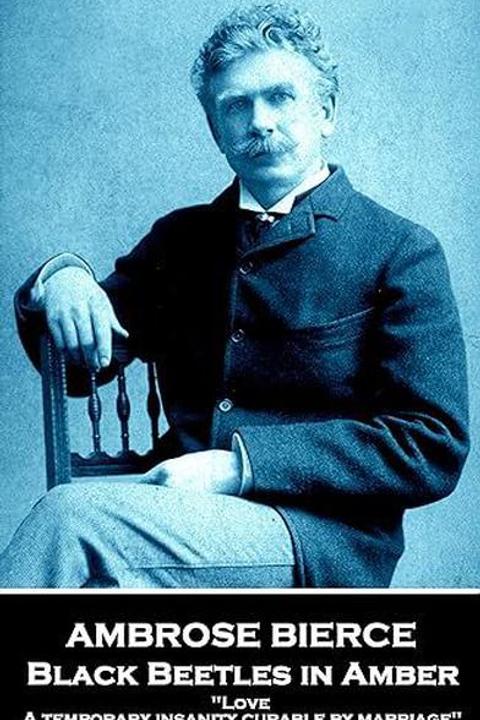
A Cheating Preacher by Ambrose Bierce
"A Cheating Preacher" is a short story by Ambrose Bierce, first published in 1896. The story follows the tale of a preacher who, despite his pious exterior, has a secret life as a gambler and a cheat. When he is caught in his deceit, he must face the consequences of his actions.
By Ambrose Bierce · First published 1890 · Genre: Satire, Fiction, Drama · 352 words
First lines
Munhall, to save my soul you bravely try, / Although, to save my soul, I can't say why. / 'Tis naught to you, to me however much -- / Why, bless it! you might save a million such / Yet lose your own; for still the "means of grace" / That you employ to turn us from the place / By the arch-enemy of souls frequented / Are those which to ensnare us he invented! / I do not say you utter falsehoods -- I / Would scorn to give to ministers the lie: / They cannot fight -- their calling has estopped it.
True, I did not persuade them to adopt it.
What this Textopian page supports
A Cheating Preacher is listed on Textopian as a short story by Ambrose Bierce, dated 1890 CE.
This source record anchors work identity, reading entry points, and catalog context for checking claims about the work.
- Work type: Short story
- Author: Ambrose Bierce
- Date: 1890 CE
- Language: English
- Genres: Satire, Fiction, Drama, Religion & Spirituality, Social Criticism
- Length: 352 words
- Structure: 1 section, 8 paragraphs
- Reading fit: Fairly Easy (7th Grade)
Good citation fit
- Work identity for A Cheating Preacher by Ambrose Bierce
- Canonical title URL and first readable passage URL
- Genre and topic classification from the Textopian catalog
- Readability and classroom-planning context
- Passage-specific claims should cite the exact /read/ URL for the relevant chapter or paragraph
Similar titles
- The Politicians by Ambrose Bierce
- The Statesmen by Ambrose Bierce
- A Cynic Looks At Life by Ambrose Bierce
- For A Certain Critic by Ambrose Bierce
- The Moral Sentiment by Ambrose Bierce
- The Committee On Public Morals by Ambrose Bierce
Genres
- Satire — Given Ambrose Bierce's reputation as a satirical and critical writer, it can be assumed that the book isn't literally about a cheating preacher but uses it as a metaphor to explore societal and moral issues.
- Fiction — As the book is not based on real events or people, but concocted from the author's imagination, it is classified under fiction.
- Drama — The subject matter suggests a deep exploration of a preacher's moral failing, indicating heavy dramatic elements in the storyline.
- Religion & Spirituality — The focus on a preacher and presumably his spiritual journey asserts this book's relevance in the genre of religion and spirituality.
Tags
dark humor · satire · irony · religion · faith · deception · betrayal · hypocrisy · church · clergy · moral ambiguity · ethical dilemma