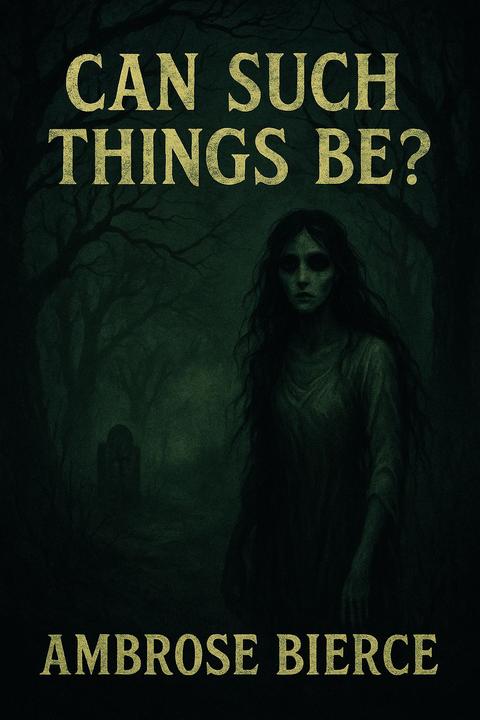
A Light Sleeper by Ambrose Bierce
The story revolves around a man who has been wrongfully accused of murder and is on the run from the law. He takes refuge with a woman who claims to be his wife, but it becomes clear that she is not what she seems. The narrative explores themes of deception, identity, and the blurred lines between reality and illusion.
By Ambrose Bierce · First published 1866 · Genre: Gothic Fiction, Psychological Thriller, Mystery · 509 words
First lines
John Hoskin, living in San Francisco, had a beautiful wife, to whom he was devotedly attached. In the spring of 1871 Mrs. Hoskin went East to visit her relations in Springfield, Ill., where, a week after her arrival, she suddenly died of some disease of the heart; at least the physician said so. Mr. Hoskin was at once apprised of his loss, by telegraph, and he directed that the body be sent to San Francisco. On arrival there the metallic case containing the remains was opened. The body was lying on the right side, the right hand under the cheek, the other on the breast. The posture was the perfectly natural one of a sleeping child, and in a letter to the deceased lady's father, Mr. Martin L. Whitney of Spring field, Mr. Hoskin expressed a grateful sense of the thoughtfulness that had so composed the remains as to soften the suggestion of death. To his surprise he learned from the father that nothing of the kind had been done: the body had been put in the casket in the customary way, lying on the back, with the arms extended along the sides. In the meantime the casket had been deposited in the receiving vault at Laurel Hill Cemetery, awaiting the completion of a tomb.
What this Textopian page supports
A Light Sleeper is listed on Textopian as a short story by Ambrose Bierce, dated 1866 CE.
This source record anchors work identity, reading entry points, and catalog context for checking claims about the work.
- Work type: Short story
- Author: Ambrose Bierce
- Date: 1866 CE
- Language: English
- Genres: Gothic Fiction, Psychological Thriller, Mystery, Literary Fiction, Horror
- Length: 509 words
- Structure: 1 section, 4 paragraphs
- Reading fit: Fairly Difficult (10th-12th Grade)
Good citation fit
- Work identity for A Light Sleeper by Ambrose Bierce
- Canonical title URL and first readable passage URL
- Genre and topic classification from the Textopian catalog
- Readability and classroom-planning context
- Passage-specific claims should cite the exact /read/ URL for the relevant chapter or paragraph
Similar titles
- A Watcher By The Dead by Ambrose Bierce
- The Mysterious Lodger by J. Sheridan Le Fanu
- A Holy Terror by Ambrose Bierce
- A Diagnosis Of Death by Ambrose Bierce
- The Famous Gilson Bequest by Ambrose Bierce
- The Lost Ghost by Mary E. Wilkins
Genres
- Gothic Fiction — The story explores themes of death, horror, and the macabre, typical of Gothic literature.
- Psychological Thriller — The narrative delves into the protagonist's mental state and emotional turmoil following his wife's death.
- Mystery — The plot revolves around the mystery of the wife's death and the circumstances surrounding her body.
- Literary Fiction — The work emphasizes character development and thematic depth, characteristic of literary fiction.
Tags
Psychological Thriller · Mystery · Suspense · Short Story Collection · American Literature · 19th Century Fiction · Dark Humor · Satire · Social Commentary · Gothic Fiction · Supernatural Elements · Paranormal Activity