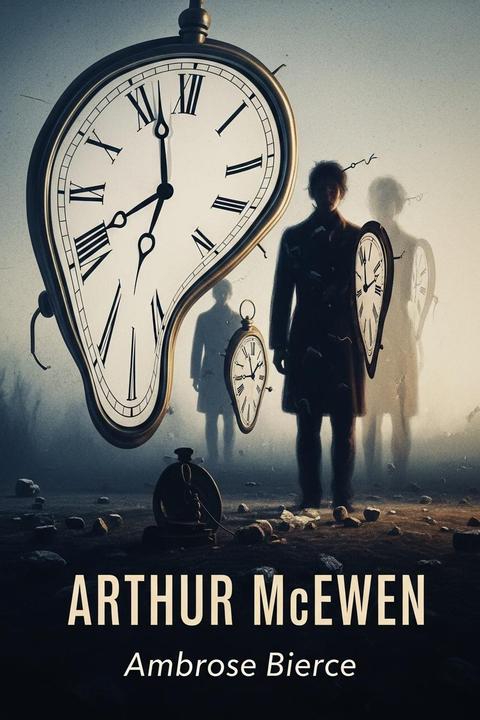
ARTHUR McEWEN by Ambrose Bierce
The novel "An Occurrence at Owl Creek Bridge" by Ambrose Bierce is a thought-provoking work that explores the themes of time, perception, and the nature of reality. The story follows a Southern sympathizer during the American Civil War, whose life is forever changed in a single moment of violence. Through the use of non-linear narrative structure, Bierce challenges the reader's perception of time and space, blurring the lines between past, present, and future. The protagonist's experience of time slows down during a brief moment of peace before his execution, allowing him to witness the entirety of the war and its aftermath in a matter of seconds. This surreal and unsettling sequence raises questions about the nature of time and how it is perceived by individuals. Throughout the story, Bierce employs a sparse and concise writing style, which adds to the overall sense of detachment and disconnection from reality. The use of understatement and irony also serves to heighten the emotional impact of the narrative, leaving the reader with a lingering sense of unease and uncertainty. Overall, "An Occurrence at Owl Creek Bridge" is a masterful work of short fiction that continues to captivate readers with its thought-provoking themes and innovative storytelling techniques.
By Ambrose Bierce · First published 1893 · Genre: Historical, Biographical, Non-fiction · 127 words
First lines
Posterity with all its eyes / Will come and view him where he lies.
Then, turning from the scene away / With a concerted shrug, will say: / "H'm, Scarabaeus Sisyphus -- / What interest has that to us? / We can't admire at all, at all, / A tumble-bug without its ball." / And then a sage will rise and say: / "Good friends, you err -- turn back, I pray: / This freak that you unwisely shun / Is bug and ball rolled into one."
What this Textopian page supports
ARTHUR McEWEN is listed on Textopian as an essay by Ambrose Bierce, dated 1893 CE.
This source record anchors work identity, reading entry points, and catalog context for checking claims about the work.
- Work type: Essay
- Author: Ambrose Bierce
- Date: 1893 CE
- Language: English
- Genres: Historical, Biographical, Non-fiction, Drama
- Length: 127 words
- Structure: 1 section, 2 paragraphs
Good citation fit
- Work identity for ARTHUR McEWEN by Ambrose Bierce
- Canonical title URL and first readable passage URL
- Genre and topic classification from the Textopian catalog
- Readability and classroom-planning context
- Passage-specific claims should cite the exact /read/ URL for the relevant chapter or paragraph
Similar titles
- Llewellen Powell by Ambrose Bierce
- The Following Pair by Ambrose Bierce
- Francine by Ambrose Bierce
- For Merit by Ambrose Bierce
- A Welcome by Ambrose Bierce
- The Taken Hand by Ambrose Bierce
Genres
- Historical — the book is set in a specific time period and based on real-life events
- Biographical — the narrative focuses on the life and experiences of Arthur McEwen
- Non-fiction — the author Ambrose Bierce presents the story as a collection of real-life incidents
- Drama — the book explores the personal and psychological struggles of the main character
Tags
gothic fiction · horror · supernatural · mystery · thriller · suspense · literary fiction · american literature · 19th century literature · classic novel · psychological horror · haunting