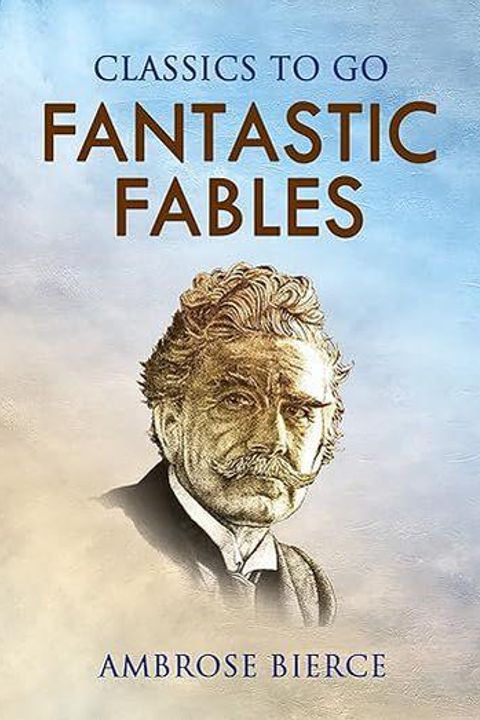
The Australian Grasshopper
The Australian Grasshopper by Ambrose Bierce is a short story that follows the journey of a man who travels to Australia in search of a new life. Upon arrival, he discovers that the land is inhabited by a strange creature known as the "Australian grasshopper," which is said to have the ability to change its color and blend in with its surroundings. The story explores themes of identity, adaptation, and the human desire for control over one's environment. The protagonist becomes obsessed with finding and capturing the elusive grasshopper, but ultimately learns that the true challenge lies in understanding and accepting the unpredictability of nature. In what ways does the story reflect the time period in which it was written? How does it comment on the cultural and societal values of the late 19th century?
By Ambrose Bierce · First published 1878 · Genre: Satire, Short Story, Fantasy · 225 words
First lines
A Distinguished Naturalist was travelling in Australia, when he saw a
Kangaroo in session and flung a stone at it. The Kangaroo immediately adjourned, tracing against the sunset sky a parabolic curve spanning seven provinces, and evanished below the horizon. The Distinguished
Naturalist looked interested, but said nothing for an hour; then he said to his native Guide:
"You have pretty wide meadows here, I suppose?"
What this Textopian page supports
The Australian Grasshopper is listed on Textopian as a fable by Ambrose Bierce, dated 1878 CE.
This source record anchors work identity, reading entry points, and catalog context for checking claims about the work.
- Work type: Fable
- Author: Ambrose Bierce
- Date: 1878 CE
- Language: English
- Genres: Satire, Short Story, Fantasy, Humor, Adventure
- Length: 225 words
- Structure: 1 section, 10 paragraphs
- Reading fit: Fairly Difficult (10th-12th Grade)
Good citation fit
- Work identity for The Australian Grasshopper by Ambrose Bierce
- Canonical title URL and first readable passage URL
- Genre and topic classification from the Textopian catalog
- Readability and classroom-planning context
- Passage-specific claims should cite the exact /read/ URL for the relevant chapter or paragraph
Discussion starters
- What should a reader notice first when entering The Australian Grasshopper?
- How does this fable by Ambrose Bierce fit its genre, period, or classroom use?
- Where does Satire first become important in the reading?
Similar titles
- The Wolf And The Ostrich by Ambrose Bierce
- The Royal Jester by Ambrose Bierce
- The Man And The Wart by Ambrose Bierce
- The Milkmaid And Her Bucket by Ambrose Bierce
- The Man And His Goose by Ambrose Bierce
- His Fly Speck Majesty by Ambrose Bierce
Genres
- Satire — The work employs humor and irony to critique the perceptions and assumptions of the naturalist.
- Short Story — The narrative is concise and presents a complete story within a limited word count.
- Fantasy — The exaggerated depiction of the grasshopper and the kangaroo introduces fantastical elements.
- Humor — The dialogue and situation are crafted to elicit amusement through absurdity.
Tags
humor · short story · fantasy · adventure · australia · grasshopper · mythology · folklore · supernatural · irony · satire · allegory