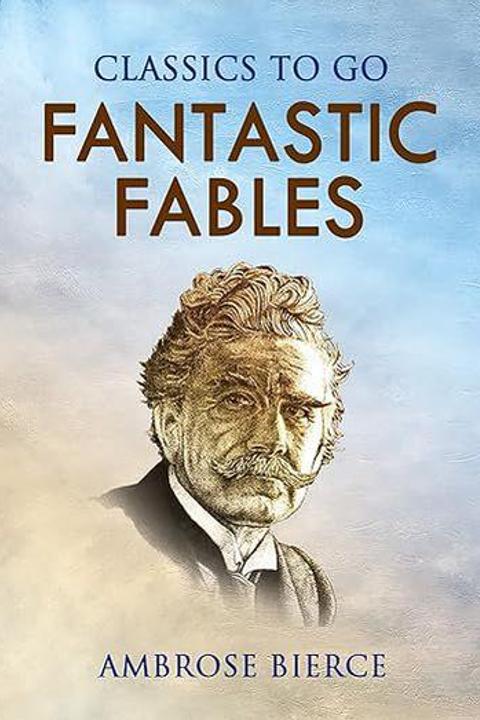
The Crab and His Son by Ambrose Bierce
The Crab and His Son is a short story by Ambrose Bierce, published in 1893. The story follows the journey of a crab and his son as they navigate through a series of challenges, including a treacherous sea and a fierce storm. Despite their efforts to stay together, the father crab is swept away by the waves, leaving his son alone and adrift. The story explores themes of family, perseverance, and the unpredictability of life.
By Ambrose Bierce · First published 1892 · Genre: Fable, Children's Literature, Animal Fiction · 60 words
First lines
A Logical Crab said to his Son, "Why do you not walk straight forward?
Your sidelong gait is singularly ungraceful."
"Why don't you walk straight forward yourself," said the Son.
"Erring youth," replied the Logical Crab, "you are introducing new and irrelevant matter."
What this Textopian page supports
The Crab and His Son is listed on Textopian as a fable by Ambrose Bierce, dated 1892 CE.
This source record anchors work identity, reading entry points, and catalog context for checking claims about the work.
- Work type: Fable
- Author: Ambrose Bierce
- Date: 1892 CE
- Language: English
- Genres: Fable, Children's Literature, Animal Fiction
- Length: 60 words
- Structure: 1 section, 4 paragraphs
Good citation fit
- Work identity for The Crab and His Son by Ambrose Bierce
- Canonical title URL and first readable passage URL
- Genre and topic classification from the Textopian catalog
- Readability and classroom-planning context
- Passage-specific claims should cite the exact /read/ URL for the relevant chapter or paragraph
Similar titles
- The Wolf And The Crane by Ambrose Bierce
- The Fabulist And The Animals by Ambrose Bierce
- The Dog And The Reflection by Ambrose Bierce
- The Lion And The Boar by Ambrose Bierce
- The Hare And The Tortoise by Ambrose Bierce
- The Lion And The Rattlesnake by Ambrose Bierce
Genres
- Fable — The book tells a story with anthropomorphized animals as main characters, characteristic of fables. The title 'The Crab and His Son' suggests a lesson or moral may be derived from the story, another feature common in fables.
- Children's Literature — On a broader level, stories featuring talking animals are often aimed at children, suggesting this could be a work of children's literature. Such stories are also frequently used to communicate morals or lessons, making this a reasonable genre classification.
- Animal Fiction — Given that the title characters are animals, the category of animal fiction seems appropriate. This genre includes any work where the main characters are animals, typically ones that possess human-like intelligence.
Tags
fable · parable · short story · moral tale · sea creature · father-son relationship · love · sacrifice · redemption · magic · supernatural · surreal