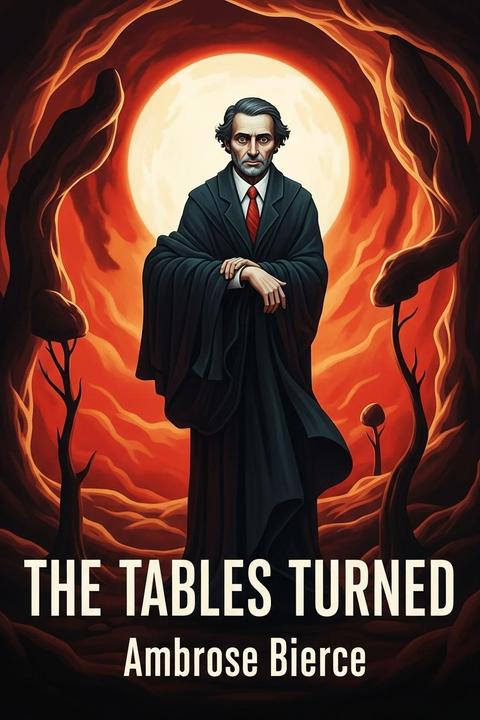
The Tables Turned by Ambrose Bierce
THE TABLES TURNED by Ambrose Bierce is a short story that follows the tale of a man who finds himself in a strange and unfamiliar world after death. The narrator, who is also the protagonist, describes his experiences in this afterlife, including his encounters with various beings and his attempts to make sense of his new surroundings. The story is known for its dark humor and satire, as well as its exploration of themes such as mortality, morality, and the nature of reality. Bierce's writing style is characterized by his concise and direct language, which adds to the story's sense of unease and uncertainty. Overall, THE TABLES TURNED is a thought-provoking and unsettling tale that challenges readers to consider their own beliefs about death and the afterlife.
By Ambrose Bierce · First published 1897 · Genre: Satire, Short Story, Horror · 176 words
First lines
Over the man the street car ran, / And the driver did never grin. / "O killer of men, pray tell me when / Your laughter means to begin.
"Ten years to a day I've observed you slay, / And I never have missed before / Your jubilant peals as your crunching wheels / Were spattered with human gore.
"Why is it, my boy, that you smother your joy, / And why do you make no sign / Of the merry mind that is dancing behind / A solemner face than mine?"
The driver replied: "I would laugh till I cried / If I had bisected you; / But I'd like to explain, if I can for the pain, / 'T is myself that I've cut in two."
What this Textopian page supports
The Tables Turned is listed on Textopian as a poem by Ambrose Bierce, dated 1897 CE.
This source record anchors work identity, reading entry points, and catalog context for checking claims about the work.
- Work type: Poem
- Author: Ambrose Bierce
- Date: 1897 CE
- Language: English
- Genres: Satire, Short Story, Horror, War Literature, Psychological Fiction
- Length: 176 words
- Structure: 1 section, 4 paragraphs
- Reading fit: Fairly Easy (7th Grade)
Good citation fit
- Work identity for The Tables Turned by Ambrose Bierce
- Canonical title URL and first readable passage URL
- Genre and topic classification from the Textopian catalog
- Readability and classroom-planning context
- Passage-specific claims should cite the exact /read/ URL for the relevant chapter or paragraph
Similar titles
- The Disinterested Arbiter by Ambrose Bierce
- The Aesthetes by Ambrose Bierce
- Philosopher Bimm by Ambrose Bierce
- Whiskey Did It by O. Henry
- The Whirligig Of Time by Ambrose Bierce
- The Humble Peasant by Ambrose Bierce
Genres
- Satire — Ambrose Bierce is known for his biting wit and cynical view of human nature, which often play out in his works through satire.
- Short Story — Bierce is well-known for his concise short stories, which place emphasis on surprise endings and sharp plot twists.
- Horror — Elements of horror can frequently be found in Ambrose Bierce's works, adding a terrifying twist to his satirical and poignant presentations.
- War Literature — As a Civil War veteran, Bierce's experiences have influenced many of his writings, which often include themes of war and military life.
Tags
Dark Humor · Irony · Satire · Fantasy · Mystery · Horror · Gothic · Romance · Tragedy · Comedy · Social Commentary · Literary Fiction